Kaikoura whale watching: an honest visitor's guide
What you need to know about whale watching in Kaikoura: which operator to pick, how boats vs planes vs helicopters compare, cancellations and seasickness.
Should you go?
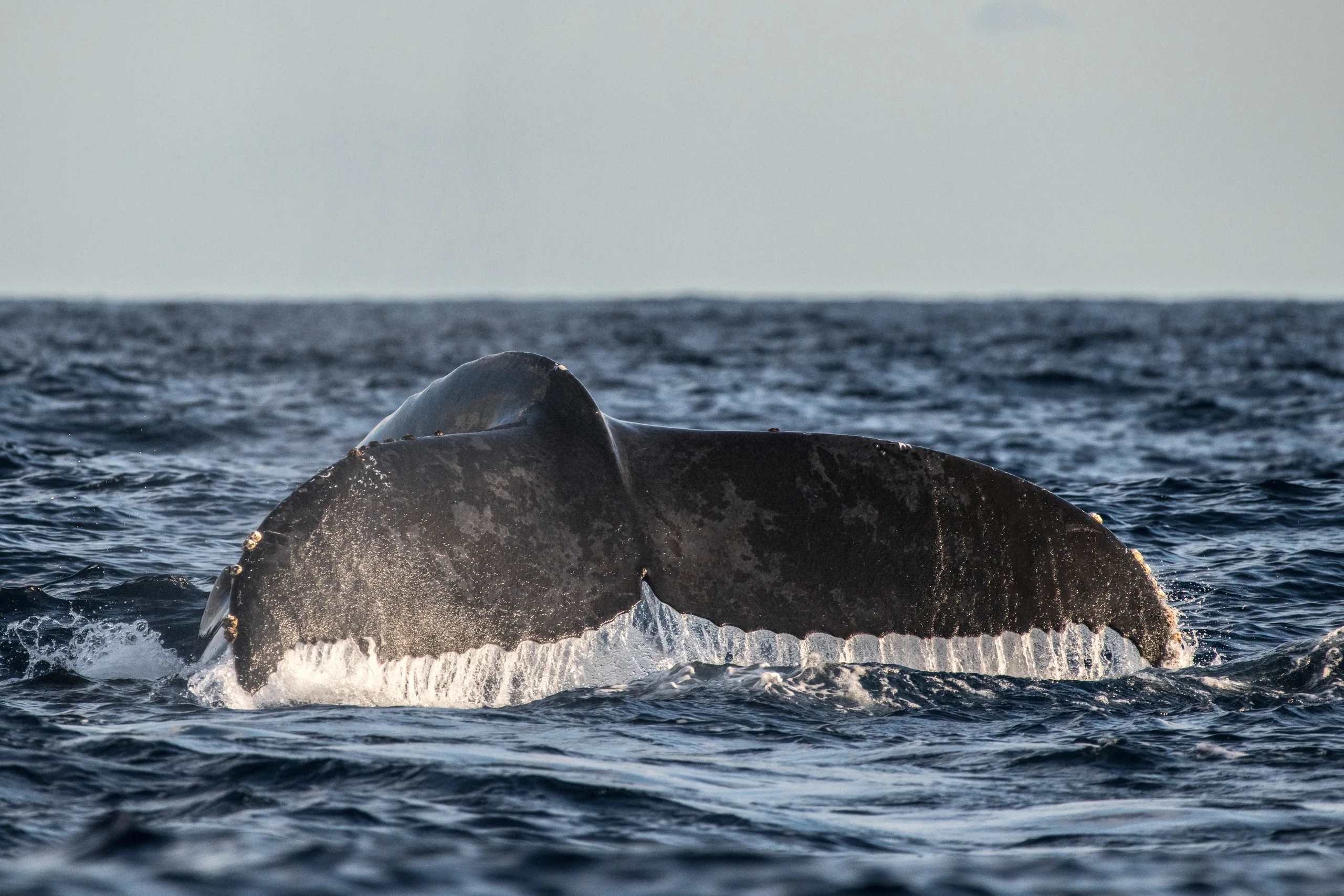
If you’ve ever wanted to see a sperm whale, this is the place. Kaikoura is one of a handful of spots on the planet where the deep ocean comes right up to the coast: a submarine canyon plunging more than 1,000 metres begins just a couple of kilometres offshore, and that canyon is where giant squid live, which is what sperm whales come here to eat. They’re resident year-round. You can drive two and a half hours from Christchurch and be on a boat watching one by lunch.
But “worth it” cuts a few different ways. The marine wildlife is genuinely world-class: sperm whales most of the year, dusky dolphin pods that can number in the hundreds, a permanent New Zealand fur seal colony you can walk to for free, wandering albatross with three-metre wingspans, and migratory humpbacks, orcas and southern right whales in winter. If you care even slightly about wildlife, Kaikoura punches above its weight.
The honest version: this is a wildlife trip, not a scenic-cruise trip. The boat heads straight out, slows when whales are detected by hydrophone, and you watch the surface for the blow. You’re not winding through fjords. If you want fjords, that’s Milford. If you want to see a 16-metre apex predator surface, breathe for ten minutes, and sound with its fluke in the air, you come here.
The marquee experiences
There are four core ways to see whales and marine life in Kaikoura. Most travellers do one. People who care about wildlife do two. Here’s how they compare.
Whale Watch Kaikoura (boat)
Whale Watch Kaikoura is the original and the one everyone knows. It’s a Maori-owned operation, founded by the Ngai Tahu hapu of the region, and it built the global Kaikoura industry from a small loan in 1987 into the dominant operator on the coast. The boats are purpose-built catamarans with stadium-style outdoor decks, indoor heated cabins, and large screens that play a pre-trip briefing on the local marine environment.
A tour runs about three hours door to door, with two and a quarter hours on the water. The skipper uses hydrophones to locate sperm whales by their feeding clicks (the loudest sound made by any animal on earth), positions the boat respectfully off to the side, and you watch the whale recover at the surface between dives. You’ll usually see one to three whales per trip. Dusky dolphins, fur seals, albatross and shearwaters are common bycatch.
Prices from NZD $175 adult, $80 child in the 2025-26 season. They run multiple sailings daily. Sightings success sits around 80% across the year, with an 80% refund if you don’t see a whale. Worth knowing: the refund covers no-sighting, not weather cancellation. (Weather cancellations get a full refund or reschedule.)
Wings Over Whales and Kaikoura Helicopters (scenic flight)
If you don’t want to be on a boat, or the seas are rough, the air is your friend. Two operators run scenic flights over the whales: Wings Over Whales (fixed-wing) and Kaikoura Helicopters (rotary).
Wings Over Whales flies eight-seat Cessna 207s out of Kaikoura Airport, with every seat a window seat. Flights are 30 minutes airborne, plus briefing, and cost from around NZD $220 adult. They use spotter pilots and radio coordination with boats, which means a high spotting rate and quick turnaround if weather closes the window. The downside is you’re moving, so you get circling passes rather than sustained watching.
Kaikoura Helicopters flies from a base at the airport and can hover near whales, giving you longer holds and more flexibility on flight path. Trips run 30 to 50 minutes depending on the package and start around NZD $275 per person (some packages run higher). The footage you’ll get is the reason photographers pay the premium.
Both flights are weather-dependent but operate in conditions that ground the boats, which makes them a useful Plan B when the marine forecast turns. Many travellers book a boat trip first and use a flight as a backup if the boat cancels.
Dolphin Encounter (swim)
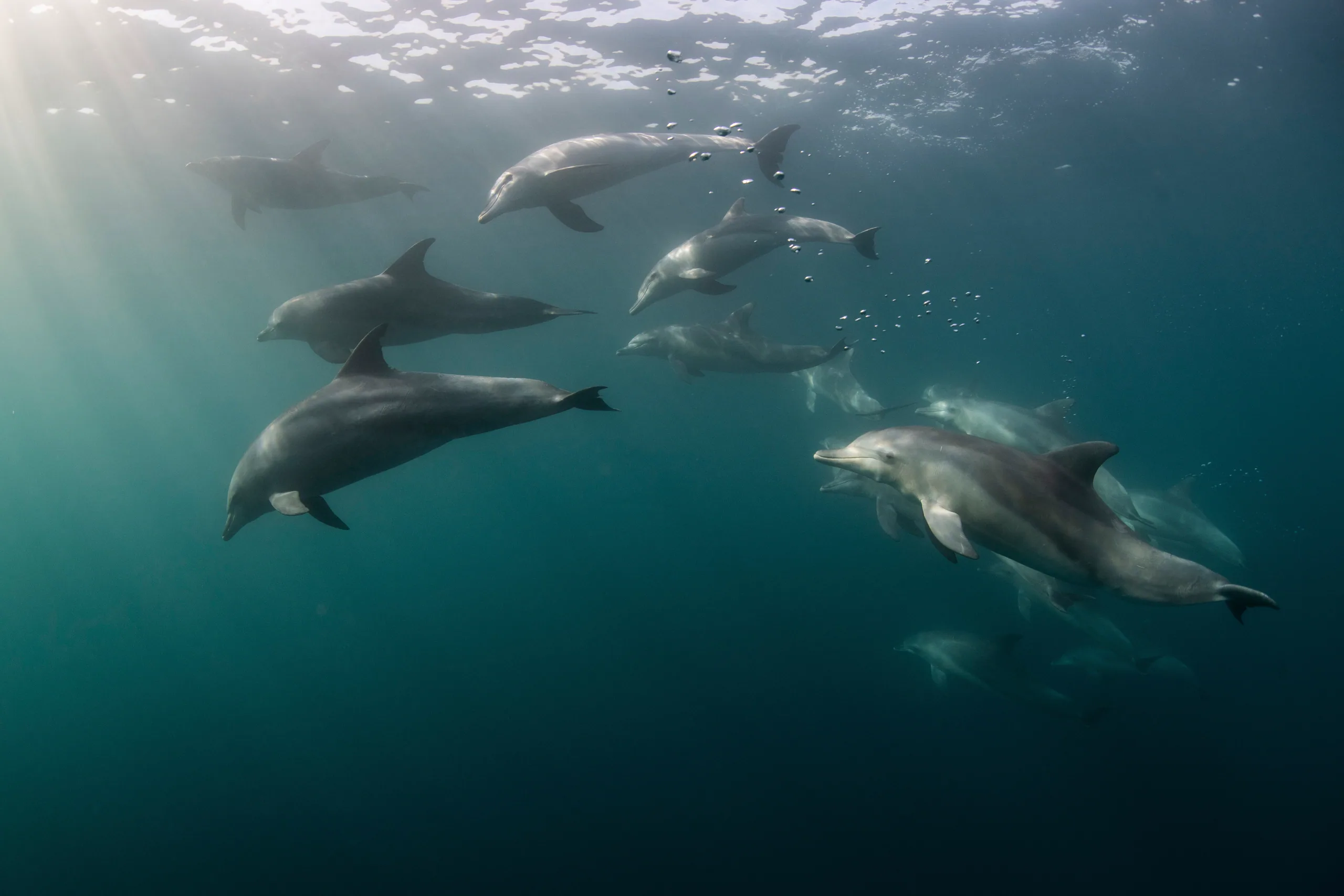
Dolphin Encounter runs swim-with-wild-dolphin and dolphin-viewing tours focused on the resident pods of dusky dolphins. Duskies are small, fast, and almost absurdly social: pods can number in the hundreds, and they routinely approach boats and swimmers out of curiosity.
You’ll be kitted out with a 5mm wetsuit, hood, snorkel and fins, then dropped into the water near a pod. The trick is to make sounds underwater (hum, sing, whatever feels least ridiculous): the dolphins are intrigued by novel sound and often circle in close. Trips run 3.5 hours total and cost from around NZD $245 swim / $165 viewing in 2025-26. Morning sailings have the best dolphin activity.
This is a separate trip from the whale tour. If you only have one day, pick whales for the bucket-list moment, dolphins for the more interactive one. With two days, do both.
Seal swims and shore-based viewing
You don’t have to pay anything to see seals. The Point Kean seal colony at the eastern tip of the Kaikoura Peninsula has a permanent New Zealand fur seal population lounging on the rocks at the end of the car park. Walk down, keep ten metres away (they bite, and the law requires distance), and watch from the rocks. It’s free, busy, and one of the better casual wildlife encounters in New Zealand.
For the in-water version, Seal Swim Kaikoura runs guided snorkelling trips with the colony from October to May (the warmer months, when seals are most active in the water). Prices from around NZD $130 adult. Less famous than the whale or dolphin trips but a strong addition for keen swimmers.
Getting there
Kaikoura sits on State Highway 1 between Christchurch and Picton, hugging the east coast of the South Island. Two realistic approaches.
From Christchurch
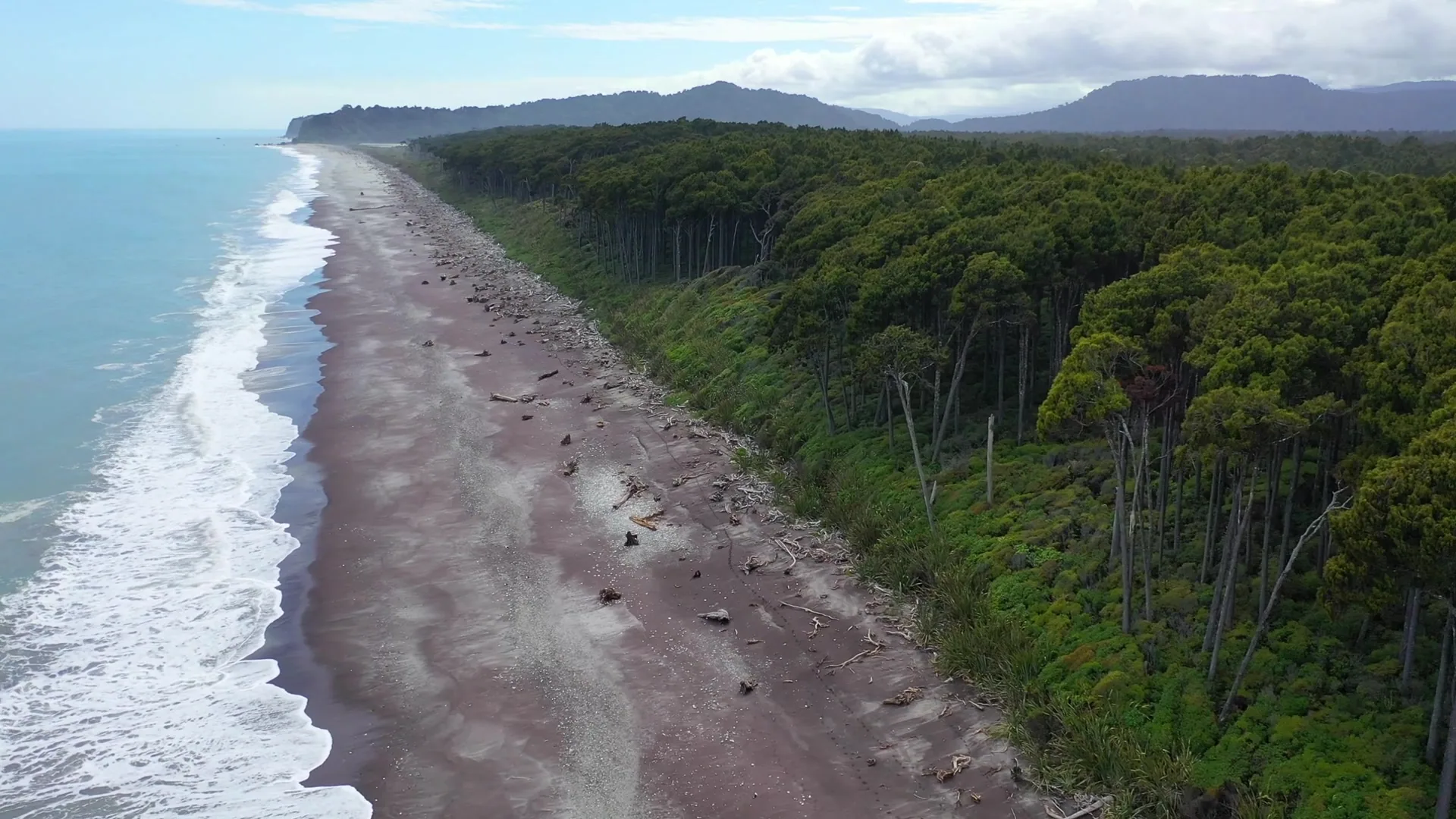
180 km, 2.5 hours by car on SH1. The road runs inland for the first stretch then meets the coast at Oaro and follows the shoreline north into Kaikoura. The whole coastal section was rebuilt and upgraded after the 2016 earthquake (more on that below) and now includes proper pull-offs, walkways and sealed shoulders. It’s one of the more pleasant 2.5-hour drives in the country.
Alternatives:
- Coastal Pacific train (KiwiRail) runs Christchurch to Picton via Kaikoura, seasonally. Roughly 3 hours to Kaikoura. Scenic, slow, comfortable.
- InterCity coach runs daily from Christchurch and takes around 2h45m.
- Day tours from Christchurch bundle return transport with a whale tour. Long day (12 hours plus) but logistically painless.
From Picton (ferry)
If you’re coming off the Cook Strait ferry from Wellington, Kaikoura is 156 km, around 2 hours south on SH1. Allow more time for stops at Ohau Stream (seal pup waterfall in winter), the Waipara wine country detour (further south), or just to break up the drive. Most travellers staying in Picton overnight do Kaikoura as a stop on the way south to Christchurch.
A note about the 2016 earthquake: a 7.8-magnitude quake on November 14, 2016 lifted the Kaikoura coastline by up to 6 metres in places, destroying both road and rail links. SH1 was closed for over a year. The rebuild was one of the largest infrastructure projects in New Zealand history, and the town itself rebuilt around the new normal. You’ll still see exposed seabed at Ohau Point that used to be underwater. The town and its tourism economy are fully open and have been for years.
When to go
Kaikoura is genuinely year-round. The whales are here every month. What changes is the weather and the supporting species.
October to April (spring through autumn) brings the calmest seas and the fewest weather cancellations. Days are long, dolphin pods are active, and the supporting wildlife (albatross, shearwaters, fur seals) is at peak visibility. This is also peak tourism season, so book ahead.
May to September (winter) is colder, wetter, and has shorter daylight, but it brings migratory species: humpbacks transiting between Antarctic feeding grounds and tropical breeding areas, orcas chasing rays in the shallows, and the chance of southern right whales. Sea state is more variable. You’re more likely to get cancelled, but a clear winter day with snow on the Seaward Kaikoura Range behind the boat is hard to beat.
If you have flexibility, November and April are the sweet spots: shoulder weather, fewer crowds, and you can usually rebook the next day if your first sailing cancels.
Skip this if…
We don’t think everyone needs to put Kaikoura on the itinerary. A few honest reasons to drop it:
- You get severely seasick and won’t take the flight. The Pacific off Kaikoura is open ocean. Even on calm days you’ll feel the swell. The catamarans are stable, but they’re not yachts in a sheltered fjord. If marine motion is a hard no and you’re not willing to pay for the scenic flight, skip the whale tour and stick with the seal walk.
- You’re on a tight South Island loop and you’ve already booked Akaroa or another marine wildlife day. Akaroa’s Hector’s dolphins (the smallest dolphin in the world) are a different experience but a shared theme. If you’re tight on days, pick one.
- You’re only here in a one-day window and the marine forecast is grim. Cancellations are common in poor weather. If you have a single fixed day, the odds of a full programme are lower than you’d hope. Build in a buffer day, or be ready to pivot to the scenic flight or the seal walk.
- You don’t care about wildlife at all. This is the trip’s whole pitch. There are no waterfalls, no fjords, no glaciers. Just whales, dolphins, seals and big sea.
The practical stuff nobody mentions
A short list of things that will save your day.
- Weather cancellations are common. Plan for it. Build a buffer day into your itinerary, or book a morning sailing so you have the afternoon to rebook if it cancels. The operators will rebook you onto the next available trip or refund in full. What they can’t do is conjure flat seas.
- The 80% money-back guarantee is real but narrow. Whale Watch Kaikoura’s guarantee covers you 80% of the fare if no whales are sighted on a tour that actually sailed. It does not cover weather cancellations (those get a full refund) and it does not cover seasickness regret.
- Take Sea-Legs before you board, not after you board. Local pharmacies in Kaikoura stock them. Take one to two tablets at least an hour before departure. Wristbands work for some people. Ginger tablets are mild backup. If you’re seriously prone, ask your GP about scopolamine patches before you travel.
- Dress for ten degrees cooler than the forecast. The wind on the deck strips heat fast. A warm windproof layer, a beanie, sunglasses, and closed shoes make the difference between enjoying the trip and shivering through it. Sunscreen even in winter. The reflection off the water is brutal.
- Book the flight as your Plan B, not your Plan A. If you really care about seeing a whale on a specific date, book the boat for the morning and the flight for the afternoon of the same day. If the boat sails and delivers, cancel the flight (most operators allow free cancellation up to 24 hours out). If the boat cancels, the flight is your backup.
- Phone signal is fine in town but patchy out at sea. You won’t be Instagramming live. Bring a real camera or a phone with proper optical zoom (digital zoom is useless on whales at 100 metres).
- The town is small and books out. Especially in summer and over public holidays. If you’re driving up from Christchurch, book accommodation before you book the tour. The Kaikoura Peninsula motels and the seafront properties go first.
If you have wildlife on your South Island wishlist and you can spare a day (ideally two), Kaikoura earns its place. Pick the boat for the close-up, the flight for the scale, and the seal walk because it’s free and ten minutes from town. Just plan for the weather to have an opinion — check MetService the night before and have a travel insurance policy with adventure cover lined up.