
Taupō: an honest visitor's guide
What Taupō is like, how it compares to Rotorua, and how to use it as a base for the Tongariro Alpine Crossing, Huka Falls and Lake Taupō.
Should you go?
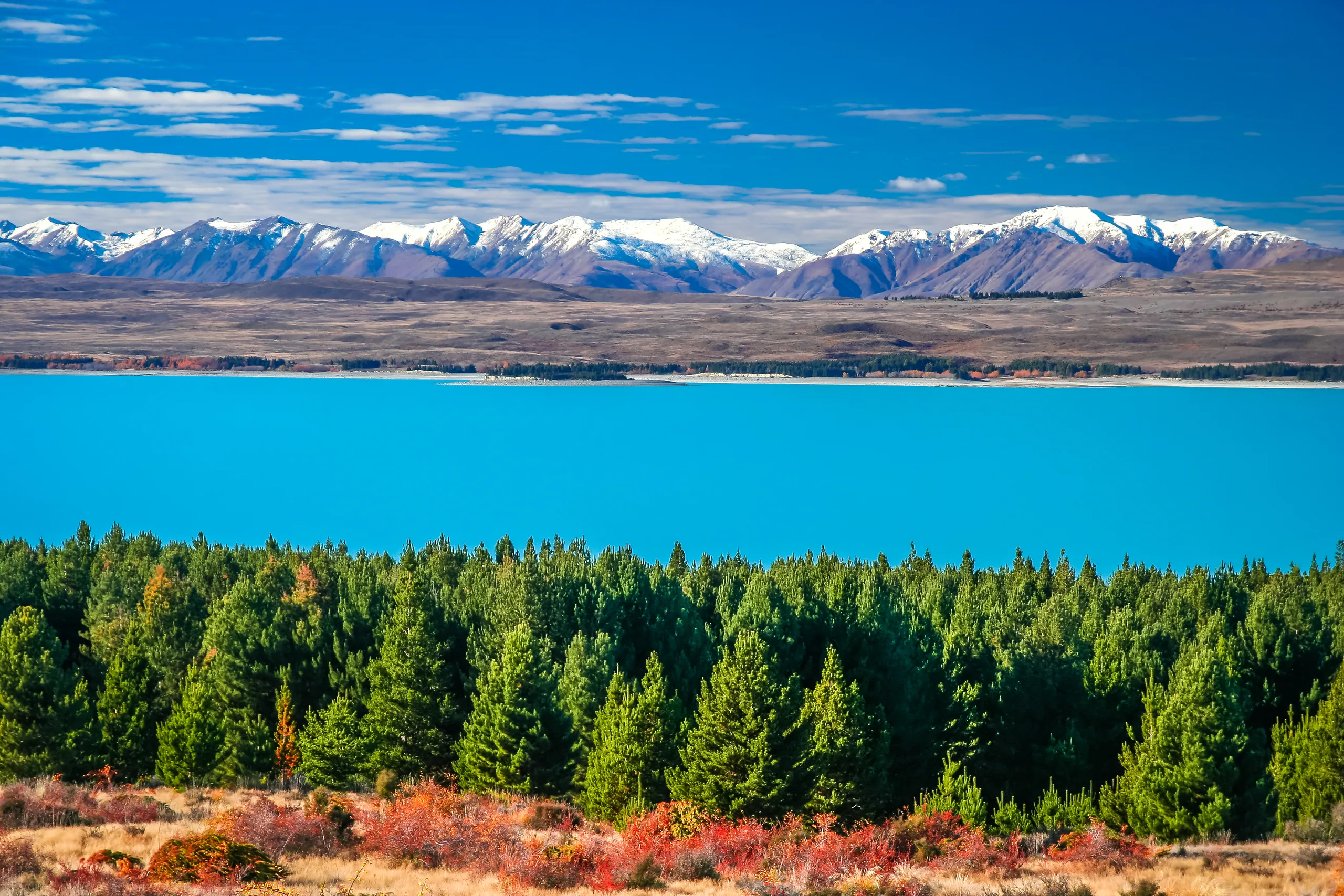
Yes, with a caveat. Taupō is one of the most logistically useful stops in the North Island, and on a good day the lake is genuinely beautiful. It sits in the caldera of a supervolcano that last erupted around 1,800 years ago, the surface is the size of Singapore (around 616 square kilometres), and on a still morning the Tongariro peaks reflect across it like a postcard. That doesn’t always happen. Wind on Lake Taupō is its own personality.
The caveat is that Taupō is mostly a base, not a destination in the way Queenstown is. Most of what’s worth doing is 10 to 90 minutes outside town: Huka Falls, Craters of the Moon, the Tongariro Alpine Crossing, the rock carvings at Mine Bay, the Aratiatia dam release. The town itself is compact, geared around lakefront walks, family restaurants, and mid-range accommodation that fills fast in summer.
Compared to Rotorua an hour north, Taupō is calmer, less sulphurous, and more lake-oriented. People try to choose between the two. They do different jobs. Rotorua is the cultural and geothermal capital. Taupō is the lake, the trout, and the Tongariro gateway. If you have three days here, do both.
The version that disappoints is one night, in town, in winter, no plan. The version that earns its place is two nights with a deliberate mix: one geothermal walk, one lake experience, and either the Tongariro Crossing or a Huka Falls jet boat.
Getting there
Taupō sits almost exactly in the middle of the North Island. That’s why it works as a hub. Most travellers arrive by road.
From Auckland
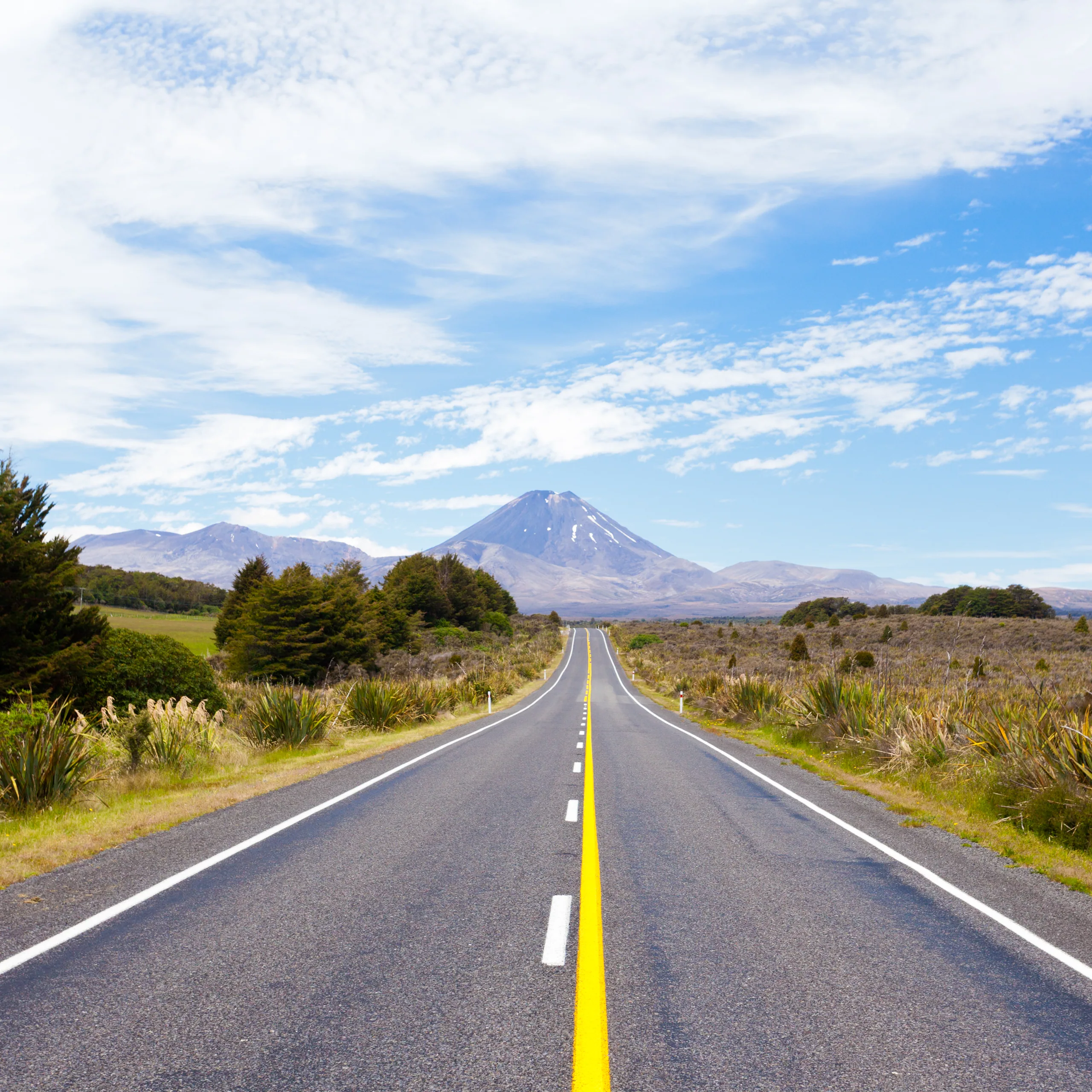
Auckland to Taupō is roughly 280 km, around 3.5 hours on State Highway 1. Easy motorway-then-state-highway, with Hamilton at the halfway mark and good break stops in Tirau or at the Blue Springs near Putaruru. Confident drivers do it in one go. With kids, factor in a stop. Driving advice in our NZ driving guide.
Air New Zealand flies Auckland to Taupō (TUO) on turboprops, about an hour, with limited daily frequency. Worth it if time is tight. Most travellers drive because they need the car at the other end.
From Wellington, Rotorua, or Napier
- Wellington to Taupō: around 375 km, 4.5 to 5 hours via SH1, climbing onto the Desert Road through Tongariro National Park. The Desert Road is a beautiful drive on a clear day, but it can close in winter for snow or high wind. The detour west adds an hour or more. Check the NZTA Journey Planner before you leave.
- Rotorua to Taupō: around 80 km, 1 hour. The easiest hop in the country. Add Wai-O-Tapu or Huka Falls as a stop in between.
- Napier to Taupō: around 140 km, 2 to 2.5 hours via SH5, climbing over the Te Pohue ranges. Scenic, and the drive doubles as the back end of a Hawke’s Bay loop.
If you’re choosing: Rotorua to Taupō is the easiest. Napier to Taupō is the scenic one. Wellington to Taupō is a serious driving day, and you should not tack it onto the end of a Tongariro Crossing.
Top things to do
A short, opinionated list. You won’t run out in two days. You can in five.
Huka Falls
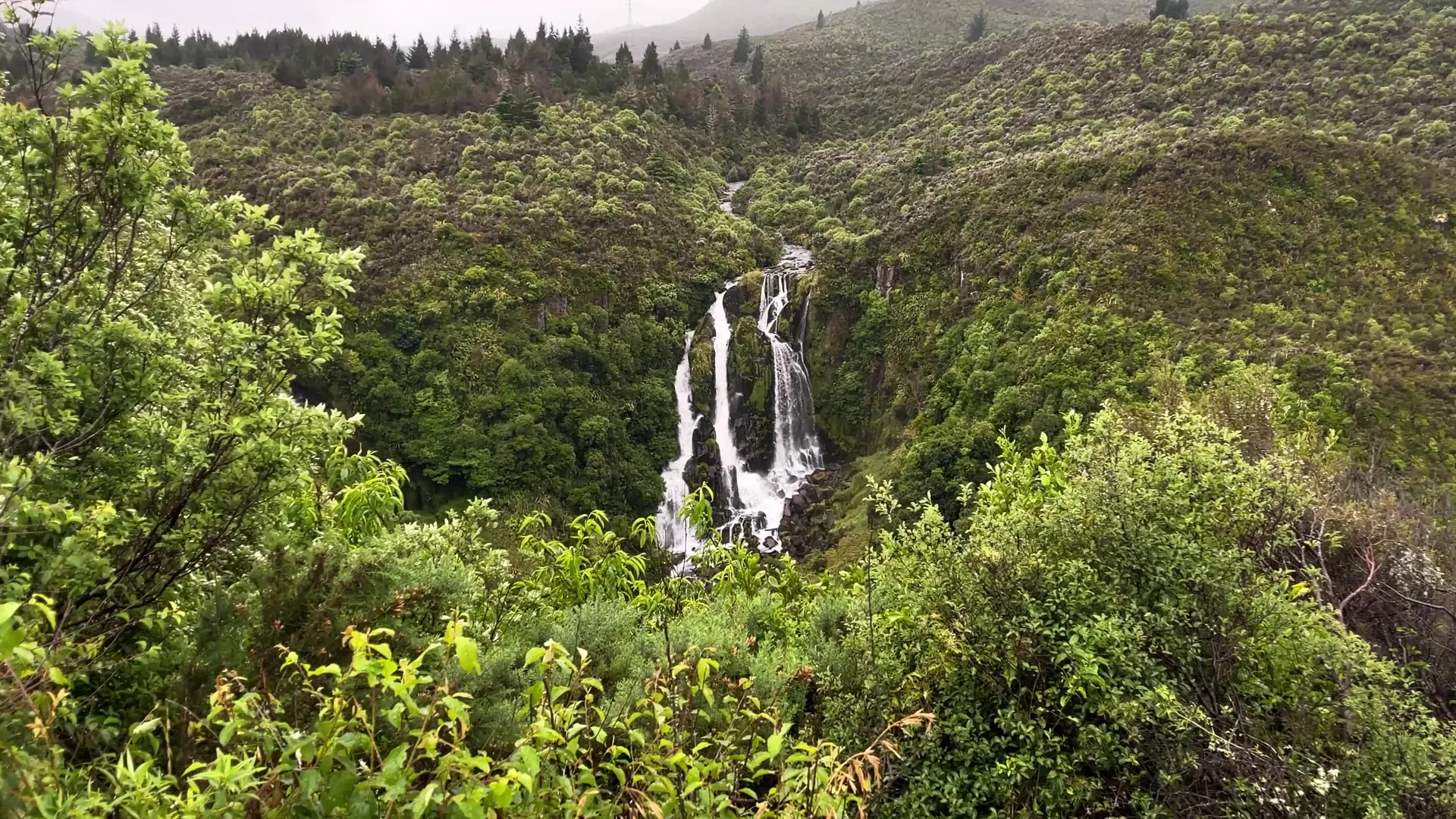
Huka Falls is 10 minutes from town and is the most-visited natural attraction in New Zealand. Free, a 5-minute walk from the car park to the lookout, and it deserves the hype: the Waikato River, draining Lake Taupō, gets squeezed from around 100 metres wide into an 11-metre gorge and drops over an 11-metre fall. The volume is loud. The colour is real.
Two ways to do it well:
- Walk the Huka Falls Walkway from Spa Park into the falls. A flat 3 km riverside path, around 45 minutes one way. Bring togs. There’s a free natural hot spring at the Otumuheke Stream junction, one of the small great pleasures of New Zealand on a winter morning. Access remains free and open following recent terrace and decking upgrades by Taupō District Council, with only occasional temporary closures for flooding or high river levels.
- Huka Falls Jet runs jet-boat trips up to the base of the falls. Closest you can legally get. Around 30 minutes on the water. Direct-operator pricing for the 1 October 2025 to 30 September 2026 season is NZD $149 adult, $99 child (15 and under), and $397 family pass (two adults plus two children at the same address).
If you only have an hour, the lookout is enough. If you have half a day, walk it.
Tongariro Alpine Crossing (use Taupō as base)
The Tongariro Alpine Crossing is widely regarded as the best one-day hike in New Zealand. A 19.4 km point-to-point traverse of an active volcanic landscape: red craters, emerald lakes, lava fields, and views of Ngauruhoe (the Mount Doom stand-in). Most people take 7 to 9 hours.
Taupō works as a base if you’re prepared for an early start. The Mangatepopo trailhead is around 90 minutes south of Taupō, and you’ll need a shuttle because the track ends 19 km away at Ketetahi. National Park Village and Tūrangi are closer (around 40 to 60 minutes), and serious hikers often stay there.
A few hard truths:
- The full alpine route is realistic only late October to late April. Outside that window, expect snow, ice, and high-wind conditions needing crampons and experience.
- Booking is now required in peak season. The system has been tightened in recent years to manage numbers, with DOC time-limiting parking at Ketetahi and effectively pushing peak-season visitors onto shuttle passes. Check the DOC Tongariro Alpine Crossing page for current booking rules and any track-fee changes before you commit.
- Weather makes or breaks it. Check MetService and the GeoNet volcanic alert level the night before, and have a flex day in your itinerary.
Craters of the Moon geothermal walk
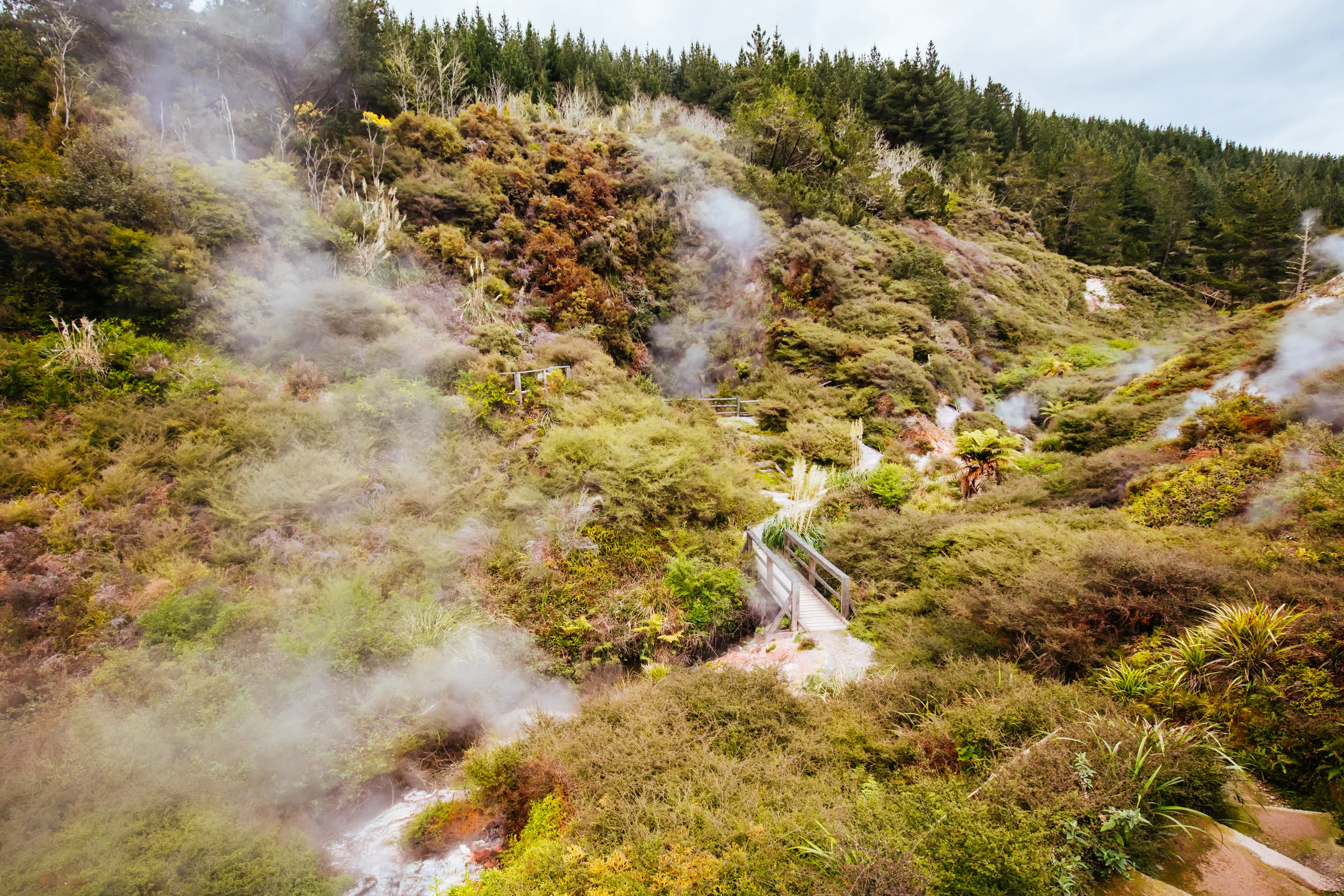
A 45-minute boardwalk loop through steaming vents, bubbling mud pools, and silica-stained ground, 10 minutes north of Taupō. The site was intensified by the construction of the Wairakei geothermal power station in the 1950s, which lowered the underground water table and let steam vent through. It’s the cheapest, easiest geothermal walk in the central North Island. Entry is a few dollars per adult, well below the Wai-O-Tapu price near Rotorua.
Not as theatrical as Wai-O-Tapu’s Champagne Pool, but a third of the price with a fraction of the crowd. If you’ve already done the big Rotorua parks, skip it. If you haven’t, it’s a strong 45 minutes.
Maori Rock Carvings boat trip (Mine Bay)
The Mine Bay rock carvings are a set of large modern Maori carvings, the central figure around 14 metres tall, cut into a cliff face on the western shore of Lake Taupō. They were carved in the late 1970s and early 1980s by Matahi Whakataka-Brightwell as a contemporary work, not an ancient site, and they’re only reachable by water.
Several operators run the trip, from the Sail Barbary classic yacht (slow, atmospheric, around 2 to 2.5 hours) to faster catamarans and jet-boats. Sail Barbary is the one most repeat visitors recommend. Standard scenic boat cruises (roughly 1.5 to 2.5 hours) sit in the NZD $55 to $90 adult range, with child fares lower and guided kayak tours running NZD $90 to $150 plus.
Lake Taupō (kayak, sail, swim, jet boat)
Beyond the carvings trip, the lake is the lake. A few honest options:
- Kayak from Acacia Bay or Kinloch on calm mornings. Wind picks up by midday, so do this before lunch.
- Swim at town beaches in summer. The water is genuinely clean and genuinely cold outside January and February.
- Sail or motor cruise from Taupō Marina.
- Fishing. Lake Taupō is one of the most famous trout fisheries in the world. You need a separate Taupō Fishing District licence, not the standard Fish and Game licence used elsewhere. Plenty of charter operators run half-day trips, typically around NZD $130 to $200 per person depending on boat size and inclusions.
If your kids have hit their limit on walks and lookouts, get them on the lake. It usually resets the mood.
Skydiving
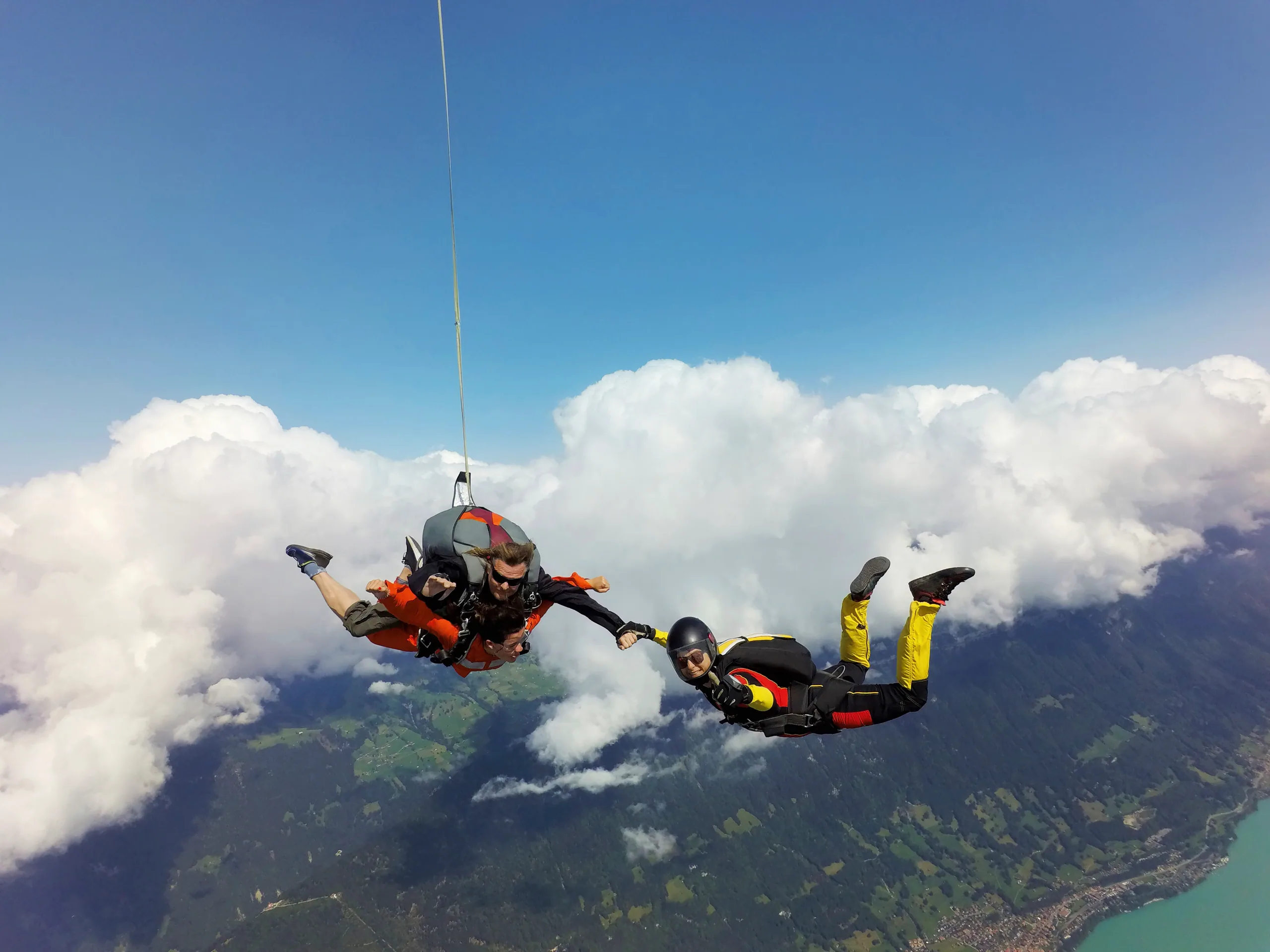
Taupō Tandem Skydive and Skydive Taupō have for years marketed themselves as among the most affordable tandem skydives in New Zealand, with the jump running over Lake Taupō and Tongariro on a clear day. Genuinely one of the best aerial views in the country.
Pricing is altitude-tiered (typically 12,000ft, 15,000ft, 18,000ft), and photo and video packages add meaningfully. Standard tandem jumps in Taupō sit in the NZD $250 to $350 range, with the 12,000ft option typically at the lower end and photo or video upsells stacking on top. Cancellations for wind and cloud are common, so don’t book it for your last day.
Where to stay
Taupō accommodation falls into four buckets.
Lakefront, north of town (Acacia Bay, Five Mile Bay): Quiet, residential, holiday-house style. Best for families. You’ll drive for most things.
Lakefront town strip (Lake Terrace): Mid-range hotels and motels with lake views, walking distance to the cafes. Most “Taupō with a view” bookings end up here. Ask for north-facing rooms so you get the lake, not the carpark.
Town centre (off Tongariro Street, Heuheu Street): Budget motels, hostels, and a few newer boutique hotels. No view but closest to food. Best value for solo travellers and one-night stops.
Out of town (Wairakei, Kinloch): Resort-style lodges, golf and spa properties, holiday parks. Quieter and often nicer, but you commit to driving for everything.
A few notes nobody mentions:
- School holidays and Easter push prices up sharply and book out months ahead.
- Winter is shoulder pricing. Lakefront rooms in June and July often go for less than half the January rate.
- Holiday parks (Taupō Top 10, Taupō DeBretts) are excellent value for families and campervans. DeBretts has thermal hot pools on site.
When to go (and what to avoid)
December to February (summer) is peak. Warm enough to swim, everything open and full. Book ahead. The Tongariro Crossing is at its best. Tourism New Zealand and Hamilton & Waikato Tourism data show the central plateau filling primarily with domestic visitors from Auckland, Bay of Plenty, and Wellington in summer school holidays, alongside an Australian, UK, German, and North American international mix that uses Taupō as a 2 to 3 night base on the classic Auckland to Rotorua to Tongariro corridor. Because Taupō functions as the main base for the Tongariro Alpine Crossing, DOC peak-season booking slots and shuttle passes saturate fast in December and January, so lock both your bed and your shuttle in well before you arrive.
March to early April is the sweet spot. Warm days, cooler nights, lower prices, settled weather, autumn light. The Crossing is still fully open.
Late April to October is shoulder and winter. The lake is moodier, the geothermal walks are dramatic in the cold, the town is quiet. The Tongariro Alpine Crossing is no longer a normal day hike: you’re looking at the multi-day Tongariro Northern Circuit or guided alpine winter trips. Whakapapa and Tūroa ski fields on Ruapehu have historically given the area a winter purpose, but the Ruapehu operation has been through financial and operational uncertainty in recent seasons, so check the current operator’s website for the 2025 season status before you commit to a snow trip.
The bit nobody mentions: wind. Lake Taupō can go from glassy to whitecapped inside an hour. Boat trips, kayaking, calm-water photos: do them first thing in the morning.
Three things to avoid:
- The Desert Road in a winter storm. It closes for a reason. The detour west adds 90+ minutes.
- Booking the Tongariro Crossing with no flex. Roughly 30 to 40 percent of shoulder-season attempts are weather-affected. Have a Plan B day.
- Underestimating sun. Taupō town sits around 360m above sea level and the Crossing tops out near 1,886m. UV is fierce. Hats, sunblock, water.
Skip this if…
A few honest reasons to drop Taupō:
- You have one full day between Auckland and Wellington and Rotorua is already on your list. Pick Rotorua. It does more in one day.
- You don’t drive. Without a car, the best things (Tongariro trailhead, Huka Falls, Mine Bay) become awkward or expensive. Shuttles exist but eat the budget.
- Your trip is two weeks, South Island only. Don’t fly up just for Taupō.
- You want theatrical big-budget geothermal. Rotorua does that better. Taupō’s geothermal is honest and cheap, not staged.
If you want a calm lake town, a base for one of the world’s best day hikes, and a half-week of quiet North Island that isn’t Rotorua, Taupō is exactly that. Combine with our 10-day NZ itinerary for the wider route.
The practical stuff nobody mentions
A short list of details that will save you time and money.
- Mobile signal in town is fine, but it patches out on the Desert Road, on most of the Tongariro Crossing, and on stretches of SH5 to Napier. Download offline maps.
- Petrol is cheaper in Taupō than at Tongariro or on the Desert Road. Fill up before you head south.
- The Aratiatia Dam release is still operated by Mercury, with the standard summer pattern running four times a day at 10am, noon, 2pm, and 4pm, and a reduced winter schedule (often three releases, commonly 10am, noon, and 2pm). The river goes from a trickle to a torrent in minutes. Free, 30 minutes, mostly missed.
- The Spa Park hot spring (Otumuheke Stream) is free, open, and managed as a public thermal stream within Spa Thermal Park, with terrace and decking upgrades by Taupō District Council in recent years. Temporary closures still happen for flooding, high river levels, or maintenance. Taupō DeBretts and AC Baths are paid hot pools in town that almost always work.
- Fishing requires a separate Taupō Fishing District licence, not the standard Fish and Game licence used elsewhere. Buy it online from DOC before you cast a line.
- Cash is essentially dead in Taupō. Every shuttle, cafe, jet boat, and skydive takes cards or contactless.
- The town goes quiet by 9pm. If you want late dinner, eat by 8.
If you do Taupō well, it’s two nights, three activities, one decent lakefront breakfast, and a clear-day photo of Tongariro from the southern lakefront. That’s the trip. Don’t try to do six things and end up driving the whole time.