
Bay of Islands: an honest visitor's guide
What's worth doing in the Bay of Islands, where to base yourself between Paihia, Russell and Kerikeri, and when weather and crowds break the trip.
Should you go?
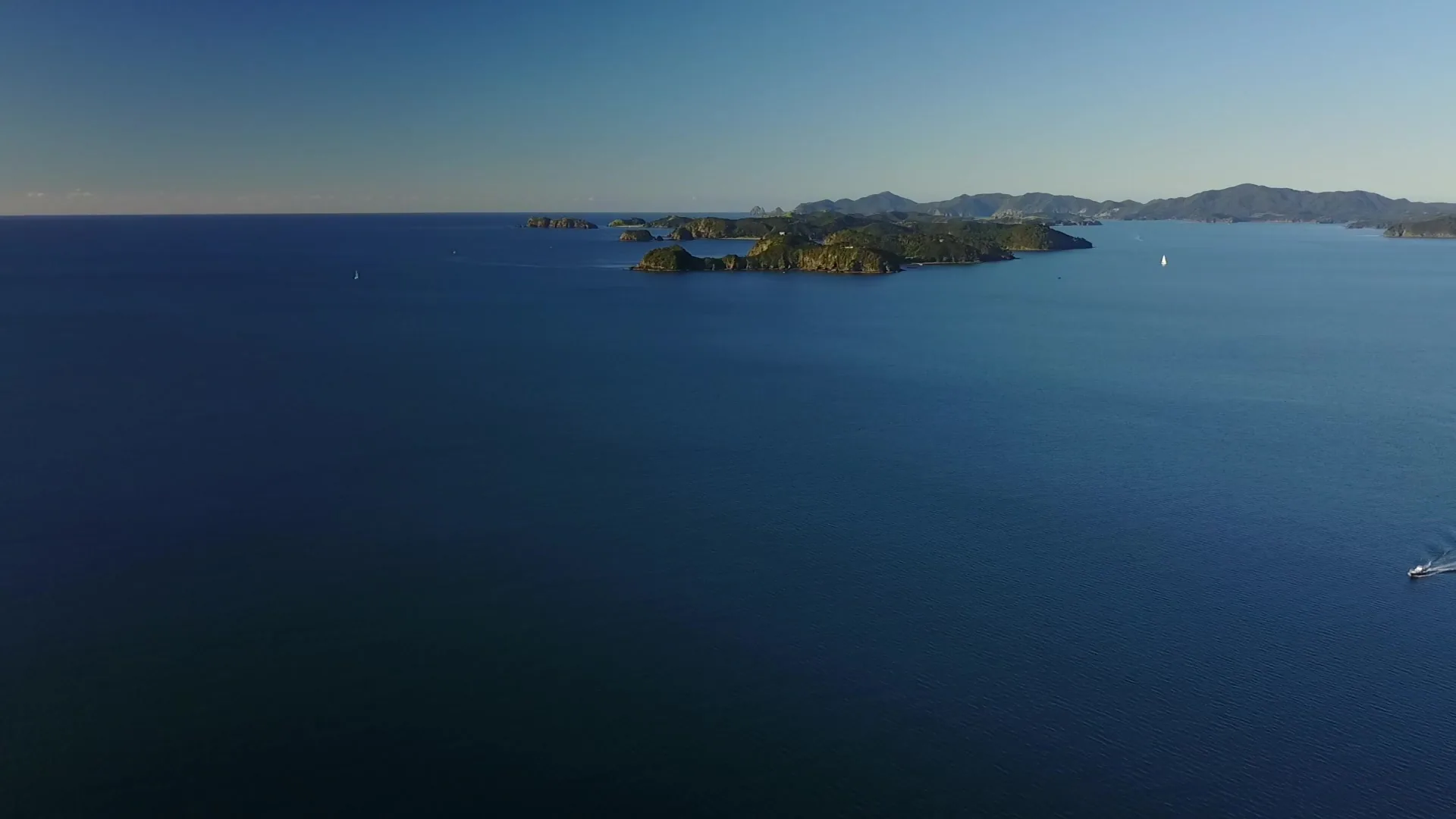
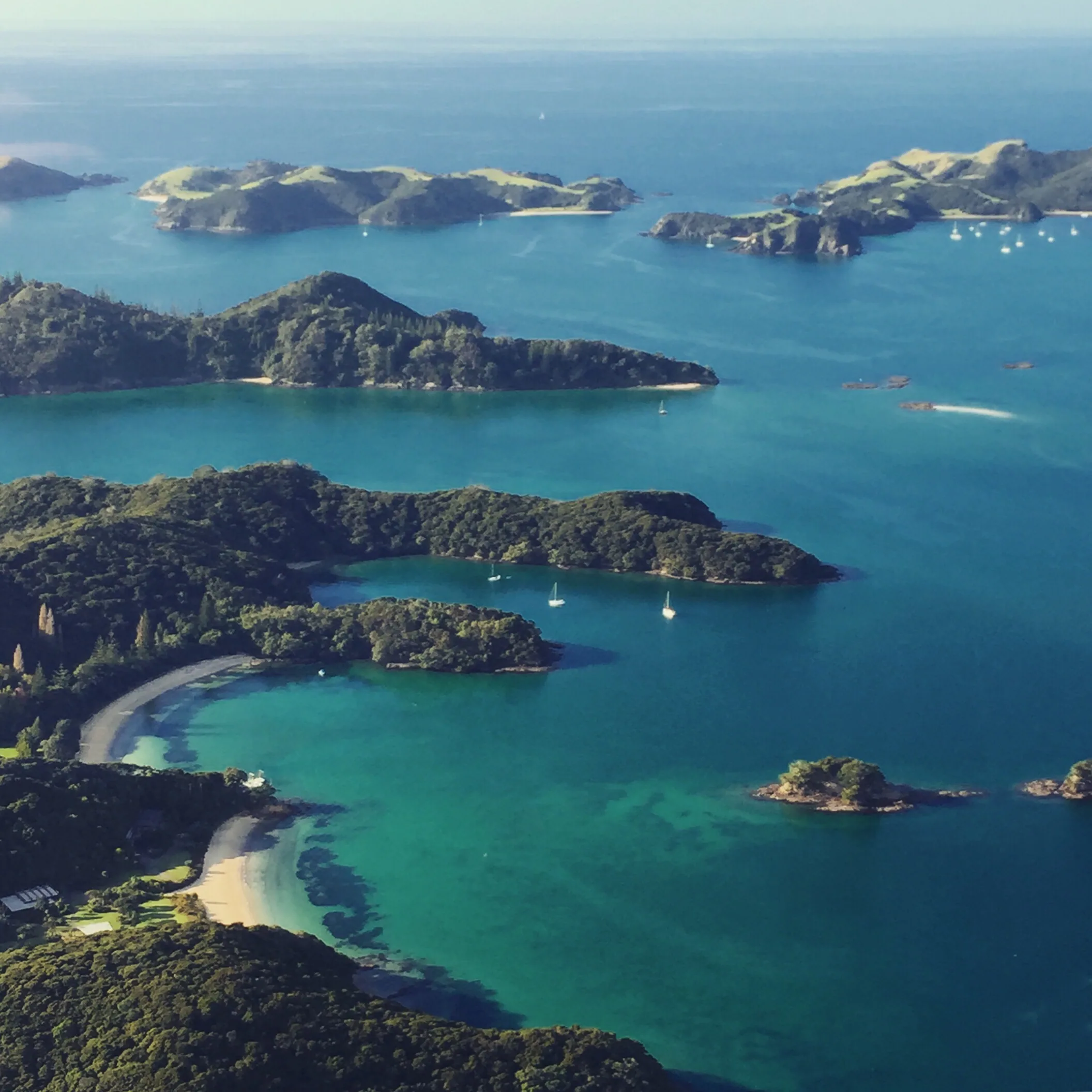
If you’re spending more than a week in the North Island, yes. The Bay of Islands is the warm-water counterweight to the alpine south, a sheltered cluster of 144 islands strung along the Northland coast, with the kind of clear subtropical water that doesn’t really exist elsewhere in mainland New Zealand. It’s also the country’s most historically loaded landscape, the place where Māori chiefs and the British Crown signed the Treaty of Waitangi in 1840, and where the first permanent European settlement at Russell briefly served as the country’s capital.
The catch: it’s a long way from anywhere. Paihia is a three-hour drive north of Auckland on a road that gets twisty past Whangarei, and once you’re up there the towns are small, the dining scene is limited compared to Auckland or Queenstown, and the weather can shut down water activities for days at a time. Peak summer (Dec 26 to Jan 15) brings serious crowds, traffic into Paihia backs up, and accommodation prices double or triple.
The honest version: come for three nights, do one big water trip (the Hole in the Rock cruise or a full-day sailing charter), spend a morning in Russell and an afternoon at Waitangi, eat well in Kerikeri, then either head further north to Cape Reinga or back south. Don’t try to fit it into a one-day round trip from Auckland, the drive ruins the day. And if you’re coming in January, book everything months ahead.
Getting there
From Auckland (drive)
The drive from Auckland to Paihia is roughly 3 hours on a good run, longer in summer traffic or on a Friday afternoon. You take SH1 north to Whangarei (about 2 hours), then continue on SH1 through Kawakawa to the SH11 turnoff at Pakaraka, which drops you into Paihia. Check the NZTA Journey Planner for closures and slips.
Two things worth knowing. First, the road past Whangarei is windy in patches, build in a stop and don’t try to drive it after a red-eye flight into Auckland. Second, the route passes through Kawakawa, home to the Hundertwasser public toilets (genuinely a tourism stop, ten minutes off the main road) and a working steam railway. Worth a leg-stretch.
If you’re hiring a car at Auckland Airport, factor in an hour minimum just to get out of Auckland’s northern suburbs. Leave early.
Flying in (Kerikeri)
Kerikeri / Bay of Islands Airport (KKE) sits 25 minutes from Paihia and 5 minutes from Kerikeri town. Air New Zealand runs direct domestic flights to and from Auckland on the ATR turboprops, around 50 minutes in the air. It’s the only mainstream scheduled commercial route in, no direct international service.
Fares vary widely by booking lead time and season, check the Air New Zealand site for current pricing. For a family of four, the drive almost always wins on cost; for a couple flying in from Wellington or Christchurch with onward connections through Auckland, the KKE flight is often worth it just to skip the drive.
From KKE, there’s no public transport. Pre-book a rental car (Avis, Budget, and Thrifty have desks), or arrange a shuttle. Taxis are limited.
Top things to do
Hole in the Rock cruise
The signature trip. A four to four-and-a-half hour cruise out of Paihia (and Russell) through the islands to Cape Brett, where, conditions permitting, the boat passes through the Hole in the Rock, a sea cave at the tip of Motukokako Island. Most cruises include a one-hour stop at Urupukapuka Island for a walk or a swim.
The main operator is Fullers GreatSights (part of the Explore Group family), running modern catamarans. Tickets are currently NZD $170 per adult and $85 per child for the 4.5-hour cruise. From September to May there are two daily departures; June to August drops to one daily departure. Check the official site for current schedules and seasonal changes.
Worth knowing:
- If the sea state past Cape Brett is rough, the boat won’t go through the Hole. You’ll still see it from outside. Check the forecast and book a morning departure for calmer seas.
- Bring layers, sun protection, and motion sickness tablets if you’re prone. The ride out is sheltered, the ride past the Cape is not.
- Photographers want to be on the front of the upper deck. Get on early.
Russell (the historic side)
Across the harbour from Paihia by a 15-minute passenger ferry (check the official site for current fares) or a longer car-ferry crossing from Opua. Russell was the first permanent European settlement in NZ, briefly the capital, and once nicknamed the “hellhole of the Pacific” for its whalers-and-grog reputation. Today it’s the prettiest town in the bay, all white weatherboard cottages, pohutukawa trees, and a long waterfront promenade.
Half-day plan: ferry across, walk The Strand, visit Christ Church (NZ’s oldest surviving church, with musket-ball holes in the walls), climb Flagstaff Hill for the view, lunch at The Duke of Marlborough (NZ’s first licensed hotel), ferry back.
Waitangi Treaty Grounds
The most historically significant site in NZ, a 10-minute drive or 30-minute walk from Paihia. This is where the Treaty of Waitangi was signed in February 1840, the founding document of modern New Zealand. The grounds include the Treaty House, the carved meeting house Te Whare Runanga, the world’s largest ceremonial war canoe, and a strong museum (Te Kongahu).
Allow three to four hours. Entry includes a guided tour and cultural performance, check the official Waitangi Treaty Grounds site for current adult pricing and pass options (NZ/AU residency rates may apply). It is the single most worthwhile non-water thing in the bay. Go in with at least surface knowledge of the Treaty and what it means today, the experience is much richer for it.
Dolphin swimming and wildlife
The Bay of Islands has a resident population of bottlenose dolphins and visiting common dolphins, plus orca, fur seals, and the occasional Bryde’s whale. Dolphin-encounter cruises operate out of Paihia, typically three to four hours. Fullers GreatSights is one of only two operators licensed by the Department of Conservation to interact with marine mammals in the bay; check the official site for current pricing.
Important caveat: DOC tightened the rules around in-water dolphin swims in 2019 to protect the resident pods. Swims are at the operator’s discretion based on the day’s encounter (mothers and calves are protected, certain group compositions can’t be swum with). Sightings are common, swims are not guaranteed. Go for the cruise itself and consider the swim a bonus.
Kayaking and sailing
The sheltered inner bay is brilliant for paddling. Half-day guided kayak trips run from Paihia and Te Tii, usually exploring the Haruru Falls inlet or the inner islands. Check operator sites for current pricing. Self-launch hire is available from waterfront operators if you have the experience.
Full-day sailing trips on catamarans like The Rock, R. Tucker Thompson, or smaller charter yachts are arguably the best way to experience the bay. You sail to a remote anchorage, swim, snorkel, sometimes paddleboard, and have lunch on deck. Pricing varies significantly by duration, whether lunch is included, and shared versus private charter, check the official operator site before booking. If you can only do one water activity and you’re not fixed on the Hole in the Rock, the sailing day is the better day out.
Where to base yourself (Paihia vs Russell vs Kerikeri)
The three main towns are each a 15 to 30 minute trip from the others. Pick based on what you want your evenings to feel like.
Paihia is the obvious base for most first-time visitors. It’s the tourism hub, every cruise and shuttle leaves from the wharf, and you can walk to dinner. Downsides: it’s the busiest, the strip is functional rather than charming, and waterfront accommodation in peak season is expensive. Best for families and anyone without a car.
Russell is the prettier, quieter choice. Smaller, more characterful, better-rated restaurants for its size (The Duke, Hone’s Garden, Gables), and the waterfront is a proper Pacific village. Trade-off: you’ll ferry across to Paihia for most cruises (check the official site for current ferry timetables), and the dining scene is small enough that you’ll see the same waitstaff twice. Russell skews more boutique and premium on accommodation, while Paihia carries the broader budget and mid-range inventory. Best for couples and second-time visitors.
Kerikeri sits 20 minutes inland and feels more like a working Northland town than a tourism resort. The food and wine scene is the strongest in the region (Marsden Estate, Ake Ake Vineyard, Old Packhouse Market on Saturdays), and you’re close to historic sites like the Stone Store and Kemp House (NZ’s oldest building). Trade-off: you’ll drive 25 minutes to Paihia for every water trip. Best for foodies, anyone with a car, and travellers staying 4+ nights.
A common pattern: two nights in Paihia for the cruises and Waitangi, one night in Russell or Kerikeri for variety.
When to go
Northland’s visitor patterns are clearly seasonal: December to February is the busiest stretch, driven by school holidays and summer weather, with the strongest demand for accommodation, cruises and sailing. For peak summer stays (especially Dec 26 to Jan 15) book accommodation at least six months ahead; shoulder and winter stays can usually be locked in a few weeks out.
- December to February (summer): warmest water, longest days, peak crowds, peak prices. Dec 26 to Jan 15 is the worst window for crowds and cost, the entire Auckland region decamps north. February is the locals’ favourite, warm and quieter.
- March to April (autumn): arguably the best window. Water still 20+ degrees, settled weather, school back, prices drop noticeably. Operators all still running full schedules.
- May to August (winter): mild by NZ standards (highs 15 to 17 degrees), greener, much cheaper. Cruise frequency drops to one daily Hole in the Rock departure and some operators reduce schedules, but the major cruises still run. Bring a jacket but it’s not really cold.
- September to November (spring): variable. October and November can be lovely or wet. Whale-watching odds improve in spring. Prices low until late November.
Skip this if…
A few honest reasons the Bay of Islands might not be your trip:
- You hate the water. The entire point of the region is on, in, or beside the sea. If a boat trip isn’t on your list, you’ll wonder what you came for.
- You’ve already booked the Coromandel and only have time for one. The two scratch a similar itch (warm-water coastal NZ) and you don’t need both.
- You’re chasing dramatic landscape. The bay is pretty, sheltered, and gentle, it’s not Milford Sound. Northland’s drama is further north at Cape Reinga and the Ninety Mile Beach end.
- You’re on a tight one-week NZ trip and only have a few North Island days. Rotorua and Taupo are closer to Auckland and easier to slot in. The Bay of Islands deserves three nights or skip it.
- You’re prone to seasickness and won’t take medication. The marquee cruises all involve open-water sections that can be bouncy.
The practical stuff nobody mentions
- Book accommodation for peak summer (Dec 26 to Jan 15) at least six months out. This is not Queenstown where you can find something on the day. Whole-town sellouts happen.
- The Paihia to Russell passenger ferry is much faster than driving. It runs roughly every 20 to 30 minutes during the day, takes 15 minutes, and saves you a 45-minute drive via Opua. Use it.
- Fill the tank before driving into the region. Petrol in Paihia and Russell is noticeably more expensive than in Whangarei or Kerikeri. Top up on the way through.
- Sandflies and mosquitoes exist but it’s not Fiordland. Bring insect repellent for dusk on the waterfront, especially January and February.
- The water is clear, not Caribbean clear. Visibility is typically 5 to 10 metres on a good day, less after rain. Snorkelling is decent but manage expectations.
- Cell signal is good in Paihia, Russell and Kerikeri, patchy on the outer islands and back roads. Download offline maps before a Cape Reinga day trip.
- If you have an extra day, drive north to Cape Reinga. It’s a 3-hour drive each way from Paihia, the long beach (Ninety Mile) and the lighthouse at the meeting of the Tasman and Pacific are worth the day. Tour-bus options exist if you don’t want to drive.
- The Hole in the Rock cruise is operator-cancelled in poor weather. Book for the first day of your stay so you have a backup day if it gets bumped. Refunds are issued, but a missed cruise on your last day is a missed cruise.
- Eat in Kerikeri at least once. Even if you’re based in Paihia, drive 25 minutes for dinner at Food at Wharepuke or Saturday morning brunch at the Old Packhouse Market. The food scene is genuinely better.
The Bay of Islands rewards travellers who slow down, pick one or two on-water experiences, and let the bay set the pace. Try to do too much and you’ll spend the trip in the car between towns. Do less, on the water, in warm clothes if it’s winter and sunscreen if it isn’t, and it’s one of the most relaxing weeks New Zealand offers. Pair with our 14-day New Zealand itinerary for the wider route, and the packing list for subtropical layers.