
Wellington: an honest visitor's guide
What to do in Wellington: where to eat and drink, how to get there from Auckland or the South Island, and whether the famous wind ruins it.
Should you go?
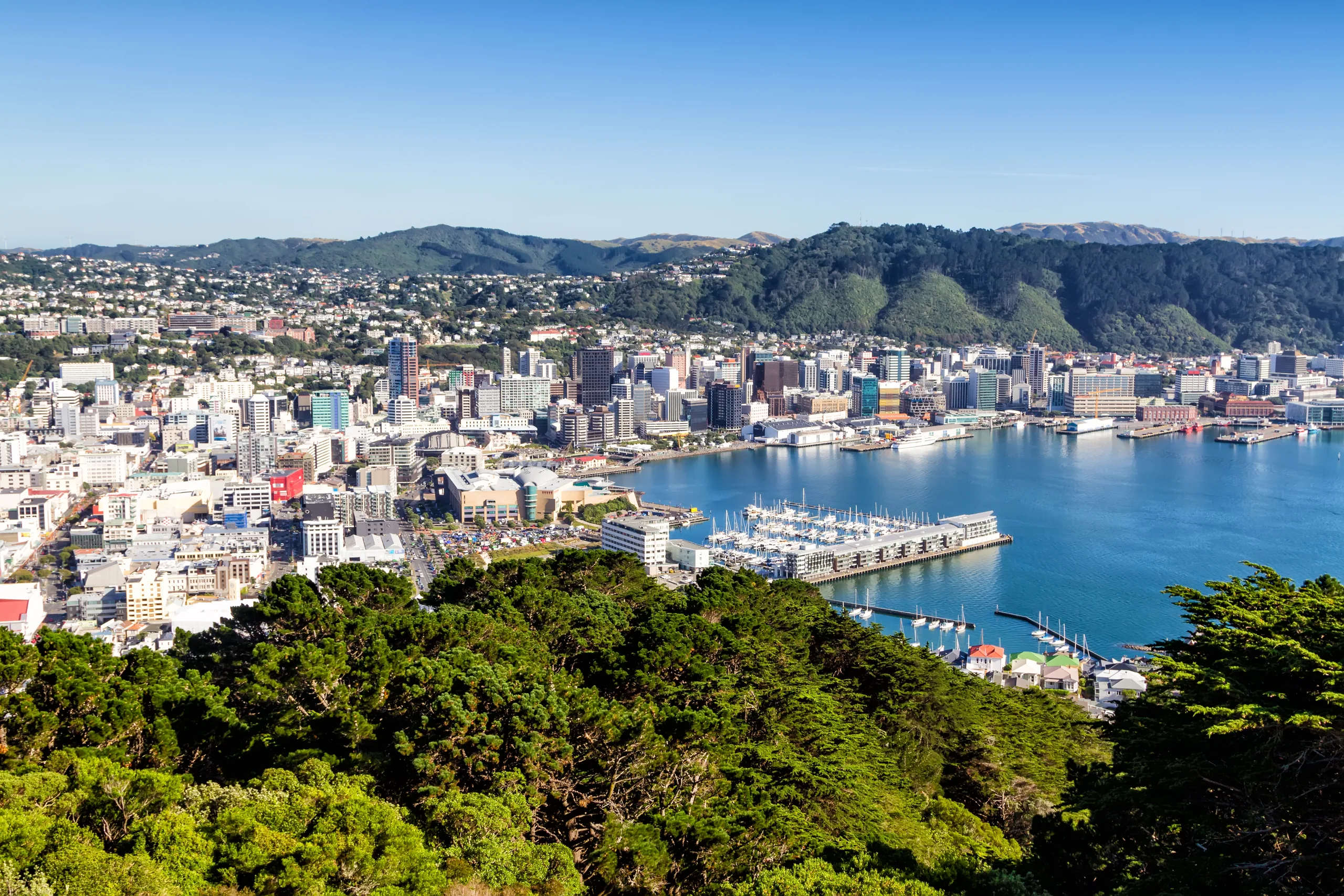
Wellington has spent the last decade selling itself as “the coolest little capital in the world.” It’s a marketing line, but it isn’t a lie. Compressed into a flat strip between steep green hills and a deep working harbour, the central city is genuinely walkable in a way Auckland isn’t. The food is the best in the country. The coffee is the best in the country. The craft beer scene is the best in the country. Te Papa is one of the best national museums anywhere (free for locals, paid for international adults). And the Wellywood film industry (Weta Workshop, Park Road Post, Stone Street Studios) gives the place a creative pulse that most cities its size don’t have.
Then there’s the wind. Wellington sits at the southern end of the North Island, right in the funnel of Cook Strait, and it is genuinely one of the windiest cities on earth. The locals are unbothered. Visitors who weren’t warned can be miserable. A bad-weather Wellington (low cloud, sideways rain, 80kph gusts on the waterfront) is a hard sell. A good-weather Wellington (clear, calm, harbour glittering, every cafe table outside on Cuba Street) is one of the best two days you’ll have in New Zealand.
The honest take: don’t skip it because someone told you it’s “just the capital.” Skip it only if your trip is genuinely landscape-only and you’d resent a day in a city. For everyone else, build in two nights, eat hard, drink well, walk Mt Victoria at sunset, and accept the wind as part of the deal.
Getting there
Wellington is at the bottom of the North Island, which makes it the natural hinge point between the two islands. Most travellers arrive one of two ways.
From Auckland (flight)
Auckland to Wellington is a 1 hour 5 minute flight and one of the busiest air routes in the world. Air New Zealand and Jetstar between them run dozens of daily services, often hourly at peak times. Fares vary wildly: book a few weeks out and you’ll often find one-way fares from around NZD $80 to $150. Same-day walk-up fares can hit NZD $400+. Check the official airline sites for current timetables.
Wellington Airport (WLG) sits just 8 km from the CBD, on a famously short runway wedged between two bays. The approach is dramatic. The Metlink Airport Express bus, an Uber, or a regular taxi all take 15 to 25 minutes into town depending on traffic. Full options in our airport transfers guide.
If you’re flying in from overseas, you’ll almost always connect through Auckland. A few direct international services run to Australia (Sydney, Melbourne, Brisbane), but Wellington is mainly a domestic hub.
From the South Island (Cook Strait ferry)
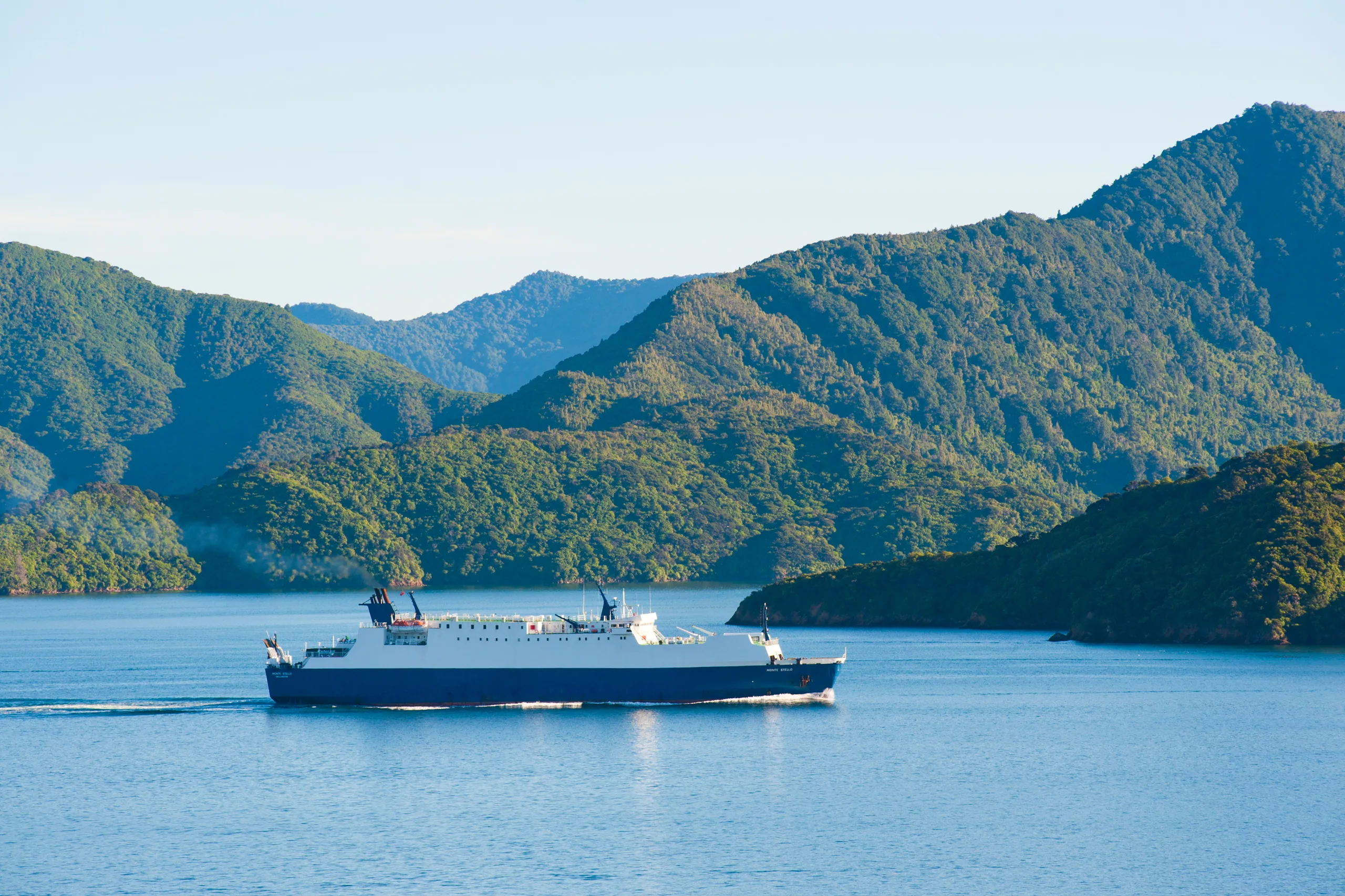
If you’re arriving by ferry, you’re coming from Picton, the small port at the top of the South Island. Two operators run the route: Interislander (KiwiRail) and Bluebridge. The crossing is roughly 3 hours 30 minutes and one of the great underrated travel experiences in the country. The first half (open Cook Strait) can be rough in southerly weather. The second half winds through the Marlborough Sounds and is reliably gorgeous, all bush-clad headlands and sheltered green water.
A few practical points:
- Sailings book up, especially in summer and especially with a car or campervan. Book weeks ahead in peak season. Foot passenger tickets are easier to grab last-minute.
- The terminals are not in town. The Interislander terminal is about 2.5 km north of central Wellington, Bluebridge is closer (right by the railway station). Both run shuttles to the city centre.
- It’s not always smooth. Cook Strait can get genuinely rough. If you’re prone to seasickness, take something before you board, sit low and central, and pick a sailing with a good forecast.
- The ferries are being replaced. New larger vessels are due to enter service later in the decade. Until then, expect occasional mechanical delays. Build a buffer day if you’ve got a flight to catch.
- Fares are dynamic. Adult foot passenger one-way fares typically range from around NZD $70 to $120, while car plus driver is often NZD $200+ one-way in peak periods. Cheaper if you book well ahead, more expensive close to sailing or during summer, public holidays and school holidays. Check the Interislander and Bluebridge sites for current prices.
If you’re tight on time and don’t have a car, flying Wellington to Christchurch or Queenstown is usually cheaper and faster than driving plus ferrying. If you do have a vehicle, the ferry is almost always worth it.
Top things to do
You can do the headline list in two well-planned days. Here’s what’s actually worth your time, in rough order of how essential they are.
Te Papa Museum (best free museum in NZ)
Te Papa Tongarewa is the national museum, sitting right on the waterfront. General museum entry is free for New Zealanders and residents; international visitors aged 16+ pay NZD $35 (valid for 48 hours), and under-16s enter free. What makes it great is how well it does both natural history and Māori culture under one roof. The colossal squid is here (the largest ever recovered, preserved in a tank). The Gallipoli: The Scale of Our War exhibit, with its 2.4x life-size soldier figures sculpted by Weta Workshop, is one of the most powerful museum experiences anywhere. Check the official site for the current exhibition lineup. The Awesome Forces earthquake house simulates a real quake (and the Wellington fault runs straight through the city). Allow at least 2 to 3 hours.
Tip: special exhibitions, guided tours and some family experiences are ticketed separately. The permanent galleries remain free for locals.
Wellington Cable Car and Botanic Garden
The bright red cable car climbs from Lambton Quay (downtown) to Kelburn (a leafy university suburb) in about five minutes. It’s a working piece of public transport that doubles as one of the most photographed objects in the country. One-way is the move: ride up, then walk back down through the Wellington Botanic Garden, which spills 25 hectares of rose gardens, native bush and the city’s old observatory back down towards town. Allow 90 minutes for the round trip. The small Cable Car Museum at the top is free and worth ten minutes.
Mt Victoria lookout
The single best view of Wellington is from Mt Victoria (Matairangi), 196 metres above the city. You can drive up, take the number 20 bus, or walk up through the Town Belt in around 40 minutes from Courtenay Place. The reward is a 360-degree view: harbour, airport runway, Cook Strait, the South Island on a clear day, and the city laid out flat below. Sunset is the right time if it’s not too windy. Lord of the Rings fans will recognise the wooded trails on the way up: parts of the Hobbiton scenes were filmed here.
Cuba Street and the food scene
Cuba Street is the spine of Wellington’s eating, drinking and people-watching. A pedestrianised section of independent cafes, vintage shops, tattoo parlours, dive bars and some of the country’s best restaurants. The Bucket Fountain is a much-loved ugly sculpture in the middle of it. Don’t try to “do” Cuba Street as a tick-box; just plan to spend half a day eating and wandering. We go deeper on food below.
Weta Workshop or Weta Cave (for Lord of the Rings nerds)
Weta Workshop in Miramar (10 minutes from the airport, 20 from the CBD) is the effects studio that built Middle-earth. Two options:
- Weta Cave is the free mini-museum and shop. Quick visit, good photo ops, decent if you’re not paying for a full tour.
- The Workshop Experience is the paid behind-the-scenes guided tour: prop demos, real artists at work, deep nerdery. Expect to pay on the order of a few dozen dollars per adult depending on the tour, and it’s worth it if you care about film, sculpting or props. Check the official site for current pricing and book ahead, it sells out.
If you’re a serious LOTR fan, Wellington is the city that built Middle-earth. There are also separate location tours (Hobbit’s Hideaway and similar) that drive you to filming sites around the wider region.
Zealandia and the wildlife
Zealandia is a 225-hectare predator-fenced eco-sanctuary 10 minutes from the CBD, the only one of its kind in the world inside a capital city. Walk the bush trails and you’ll see (and hear) tui, kākā, saddleback, takahē and, if you’re really lucky, tuatara. The night tour is the one to book if you can: that’s when you actually hear and sometimes see kiwi in the wild, a few kilometres from downtown. Daytime entry for international adults sits around the mid-$20s NZD, with children and Wellington residents discounted; night tours cost more. Check the official site for current prices. Allow at least 3 hours, half a day if you’re a birder. Part of the wider Predator Free 2050 movement.
Eastbourne / Days Bay ferry day trip
If the weather is good, the East by West ferry runs from Queens Wharf in the CBD across the harbour to Days Bay in about 25 minutes. Days Bay and Eastbourne are a string of pretty bayside villages with cafes, a beach, a beautiful regional park (Butterfly Creek walk) and the kind of slow Saturday afternoon Wellington locals love. Cheap, scenic, and the easiest way to feel like you’ve left the city for the day without renting a car. Check the official site for the current timetable.
Food and drink (the real Wellington strength)
If you only do one thing right in Wellington, eat. The city is famous for having one of the highest concentrations of cafes and restaurants per capita anywhere, and unlike Auckland the scene is packed into a small enough area that you can walk between five great places in an evening.
Coffee. Wellington is widely considered the birthplace of New Zealand specialty coffee, and the standard is absurdly high. Customs by Coffee Supreme, Flight Coffee Hangar, Pour & Twist, Lamason Brew Bar and Mojo are all worth a stop. The flat white is the local order. Drip and filter are normal here in a way they’re still not in the rest of the country.
Craft beer. Wellington punches harder than any New Zealand city for beer. Garage Project in Aro Valley is the marquee brewery, with a cellar door and tap room that pours experimental and one-off beers you can’t find elsewhere. Heyday Beer Co., Fortune Favours, Parrotdog and the dive-y but excellent Rogue & Vagabond and Goldings Free Dive round out a proper crawl. Most central breweries are walkable from each other.
Eating. Highlights worth booking: Hiakai (modern Maori, world-renowned, book months ahead), Logan Brown (long-time fine dining institution), Ortega Fish Shack (seafood, Mt Vic), Loretta (smart all-day Italian), Shepherd (modern bistro), Egmont Street Eatery, Fang’s (regional Chinese done seriously). For casual: Sweet Mother’s Kitchen for diner food, Wellington Sea Market for the country’s best fish and chips, and the Sunday Harbourside Market at the waterfront for cheap fresh eats.
You can eat extremely well here on any budget. If you only do one expensive meal in New Zealand, do it in Wellington.
Where to stay
Wellington is small enough that you can stay almost anywhere central and walk to most things. Three areas worth knowing:
- Lambton (CBD). The business end of town. Closest to Parliament, the cable car, the railway station and the ferry shuttle drop-offs. Tends to be quieter at night, more chain hotels (InterContinental, QT, Sofitel, Naumi). Best if you want a polished stay and easy onward travel.
- Te Aro and Cuba Quarter. The cool half of the central city. Surrounded by the bars, restaurants, breweries and indie shops. Better for nightlife, slightly louder. Mix of boutique hotels (Ohtel, QT Museum Wellington sits between the two), apartments and hostels. Best for most leisure travellers.
- Mt Victoria. A leafy residential suburb climbing the hill east of the CBD, full of restored wooden villas. Quieter, more characterful, walking distance to Courtenay Place and Oriental Bay. Mostly Airbnbs and small B&Bs. Best for repeat visitors and longer stays.
Skip staying out near the airport unless you have an early flight: it’s a 15 minute drive from everything you came for.
When to go (and the wind)
Wellington has a maritime climate with no real extremes, but it has more wind than weather. Some context:
- Wellington records gale-force wind gusts (above 60 kph) on roughly 170+ days a year according to long-running NIWA climate data, with spring (September to November) the windiest stretch. Don’t pack a hat you can’t lose.
- Summer (December to February) is the best window: long evenings, warm-but-not-hot days (typically 18 to 24C), busy outdoor dining, and the Wellington Sevens / Cuba Dupa / WOMAD events scattered through the season. Tourism New Zealand data shows international visitor arrivals to Wellington peak from December through February, with February the busiest single month and the Sevens / Cuba Dupa weekends spiking accommodation demand citywide. Book central hotels at least 2 to 3 months ahead for peak summer dates, longer for major event weekends.
- Autumn (March to May) is the locals’ favourite: still warm, less wind on average, fewer crowds, golden afternoon light.
- Winter (June to August) is grey and damp but rarely freezing. The food and drink scene is fully indoors anyway, so winter can work for an eating trip. Bring a real coat.
- Spring (September to November) is genuinely windy. Manageable, but the day you climb Mt Victoria, do it on the calmest morning of your trip.
A useful local truth: in Wellington you can get four seasons in an afternoon. Layers, always.
Skip this if…
We don’t tell every traveller to come here. Honest reasons to skip Wellington:
- You’re on a 7-day landscape-first trip and your priorities are Tongariro, Milford, Mount Cook and glaciers. Drop Wellington and fly Auckland to Queenstown direct. The capital can wait.
- You hate cities, you hate museums and you don’t drink coffee or beer. There genuinely is not much for you here.
- You’re transiting through and the forecast is a full week of southerly gales. A single grim winter night in Wellington can sour the city. Stay in Martinborough or Picton instead and just do the ferry.
- You don’t have at least one night. A daytime stopover doesn’t do it justice. Eat dinner here or don’t bother.
The practical stuff nobody mentions
- The city is walkable, the suburbs aren’t. The flat CBD is small (you can cross it in 20 minutes on foot). Anything past the Town Belt (Mt Victoria, Karori for Zealandia, Miramar for Weta) needs a bus, Uber or car.
- Public transport is decent. The Metlink network covers buses, trains and harbour ferries on a single Snapper card (the local tag-on card, pick one up at any dairy or the railway station). Single fares start at a couple of dollars. Full primer in our transport cards guide.
- Wellington Airport’s runway is short and exposed. Crosswind landings and the occasional diversion to Palmerston North are normal. Build a buffer day before international flights.
- Cellphone signal is universal in the city but can drop quickly once you climb into the bush of Zealandia or the upper Town Belt. Not a real problem for most visitors, worth knowing if you’re hiking.
- Tipping isn’t expected. It’s appreciated for exceptional service but it isn’t built into the menu price. Confidence-build by not over-thinking it.
- The harbour is colder than it looks. People do swim at Oriental Bay and Freyberg Beach in summer (and at Days Bay), but the water is North Pacific cold even in February. Bring expectations down accordingly.
- Parking in town is expensive and limited. If you’ve ferried over with a car, consider parking it on the edge of the CBD and walking, or returning it to a depot if you’re not driving north for a few days.
- Cuba Street is “Cuba” after the ship, not the country. It comes up. Now you know.
Wellington isn’t the prettiest city in New Zealand, and it isn’t the easiest. What it is, on its good days, is the most fun. Two nights, a couple of great meals, a walk up Mt Victoria, a wander through Te Papa, and you’ll leave understanding why the locals are smug about it. From here, the Interislander drops you into the South Island or fly to Christchurch or Queenstown.