
Lake Tekapo: an honest visitor's guide
What to do at Lake Tekapo, how long to stay, and the truth about lupins, the Church of the Good Shepherd and Mt John stargazing.
Should you go?
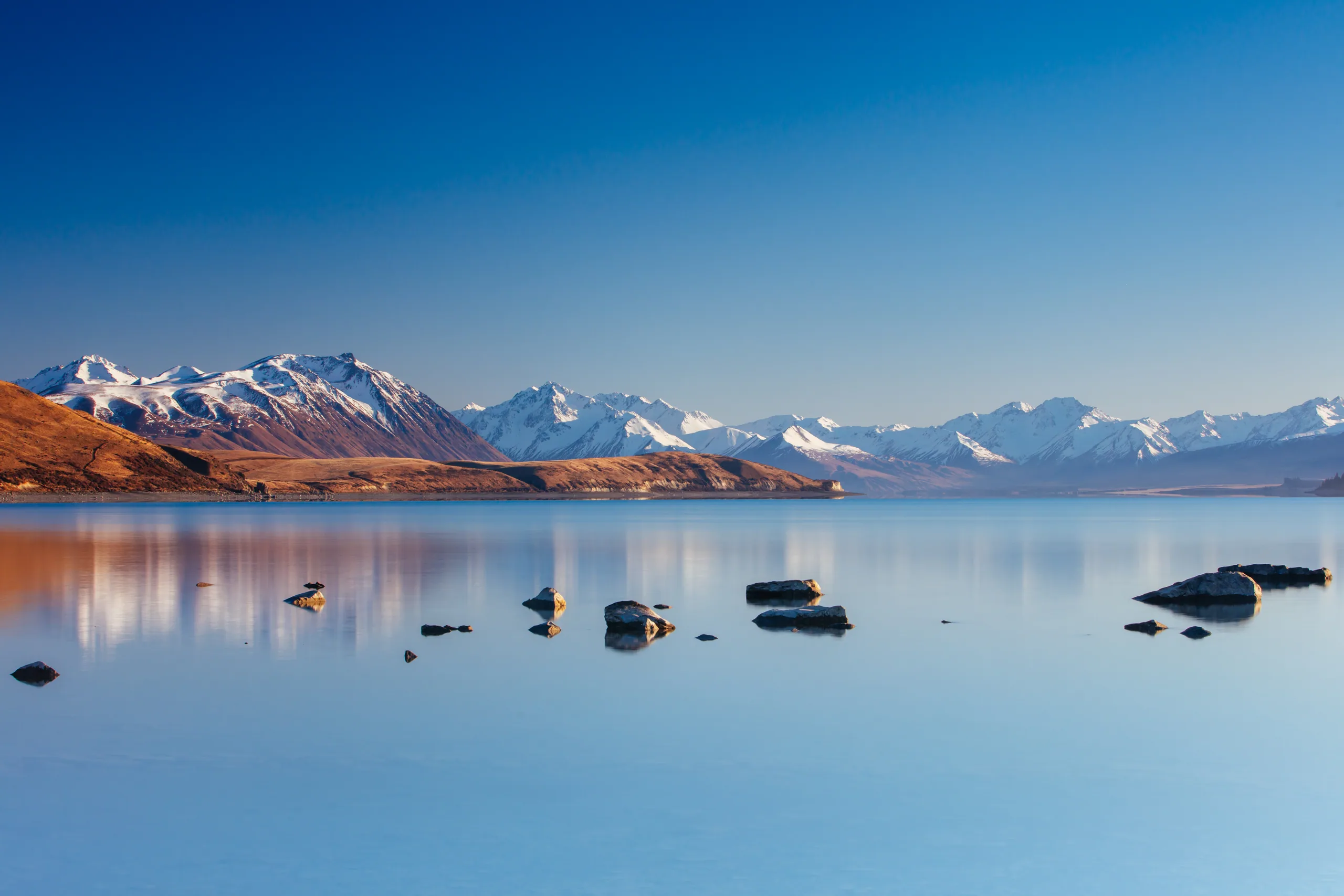
Lake Tekapo is the most photographed lake in New Zealand and one of the most photographed in the southern hemisphere. The water really is that colour. The church really is that pretty. The night sky really is that dark. None of that is exaggeration.
It is also a tour-bus stop. In peak season the lupin fields around the church can have a hundred people in them, several drones overhead, and a line for the photo from the wooden bridge. Coaches arrive on a schedule. The cafés in the village are pleasant but stretched. If you arrive at 11am in December expecting the dreamy empty shots you saw on Instagram, you will be disappointed.
The trick to Tekapo is timing and intent. Most travellers see it as a lunch stop on the 6 to 7 hour drive between Christchurch and Queenstown, and that is a completely reasonable use of the place: pull off State Highway 8, walk down to the church, take the obligatory photo, eat something, get back on the road. Two to three hours and you have ticked the box honestly.
The deeper version of Tekapo asks for one night. Sunset over the lake, dinner in the village, a Mt John stargazing tour after dark, sunrise at the church before the coaches arrive at 9.30am. That is a genuinely memorable 18 hours, and it is the only version of Tekapo that we would actively recommend going out of your way for. Anything longer than one night and you are paying premium accommodation prices for a small village whose main attractions you have already seen.
The Mackenzie Country around the lake is the real story: vast tussock basins, the braided turquoise rivers, the snow line on the Two Thumb Range, the night sky that earned the international Dark Sky Reserve status in 2012. If you only see Tekapo from the church car park, you are missing it.
What to actually do here
The headline attractions all sit within five kilometres of each other on the south end of the lake, which is convenient if you are short on time and slightly anticlimactic if you were hoping for a sprawling adventure base. Here is the honest ranking.
Church of the Good Shepherd
The reason most people stop. A small stone church built in 1935 as a memorial to the early Mackenzie Country pioneers, perched directly on the lakeshore with the Southern Alps as backdrop. Inside, the altar window frames the lake instead of stained glass. It is one of the most genuinely lovely small buildings in New Zealand.
Real talk: you are not getting an empty photo between roughly 9am and 5pm in summer. The car park fills, coaches arrive in batches, and the church itself is sometimes closed to visitors for services or weddings. Go at sunrise (the light is warmer and the coaches are not yet running) or 30 minutes before sunset when the day-trippers are heading back to Christchurch. Both windows are dramatically quieter.
A request from the local community: it is still an active church. No drones over the building. No tripods on the altar. Be quiet inside. The rules exist because previous visitors did not follow them.
Mt John Observatory and Dark Sky Project tour
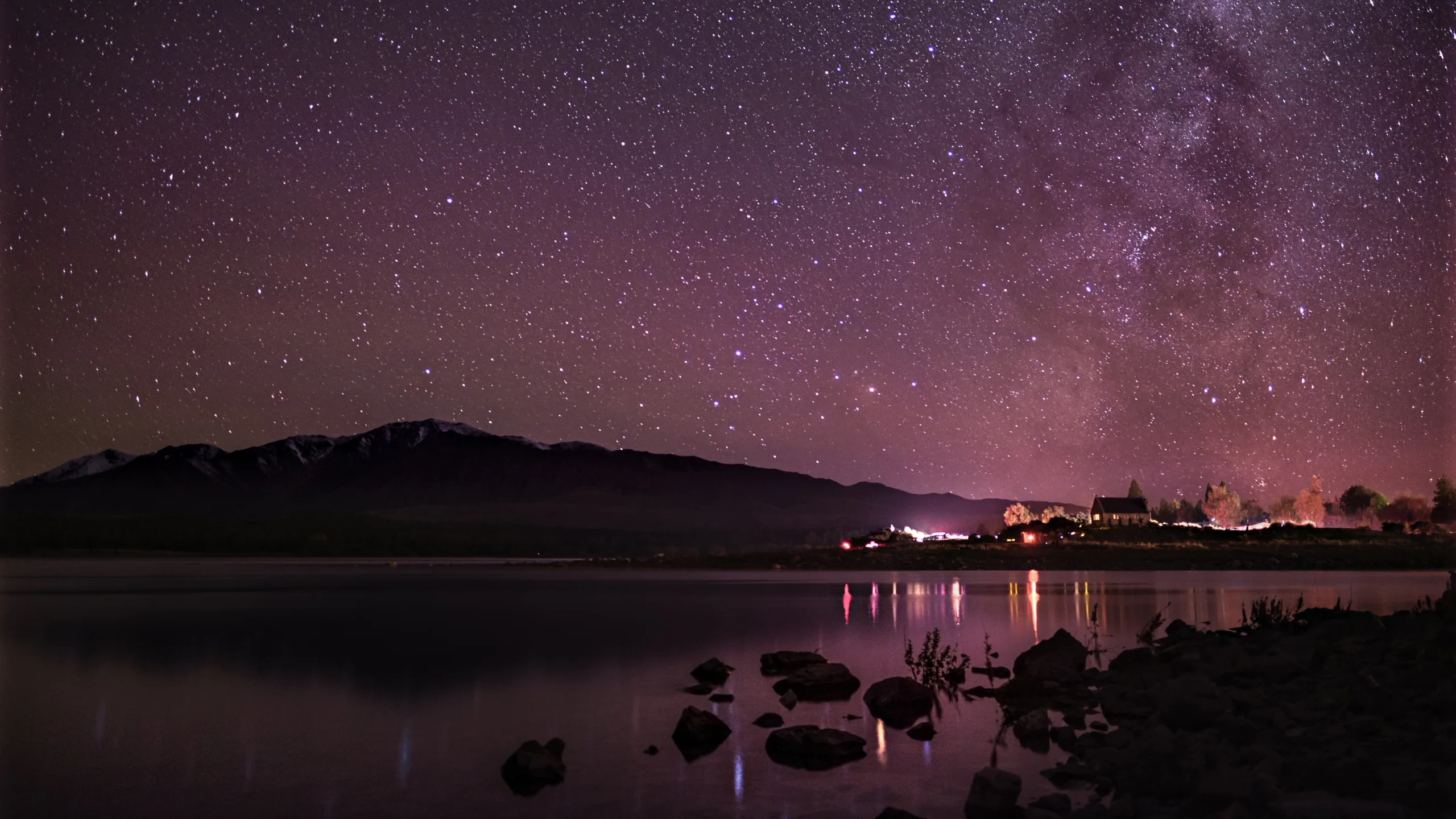
The single best thing to do in Tekapo, if the weather plays. Mt John University Observatory sits 1,029 metres above the lake, with telescopes including the 1.8m MOA (Microlensing Observations in Astrophysics) instrument used for real research. The Aoraki Mackenzie International Dark Sky Reserve is a 4,300 km square zone with some of the lowest light pollution on Earth.
Dark Sky Project runs the only public night access to the summit, the Summit Experience (currently around NZD $169 to $189 per adult). Small groups, multiple telescopes, hot drink, warm jackets provided. Roughly two hours on the mountain. Book ahead in summer, they sell out.
If Summit is booked or you want a lower-effort option, their Crater Experience runs in the village, uses outdoor telescopes and a heated indoor area, and costs less (around NZD $119). For families with younger kids the village option is more comfortable.
If both Dark Sky Project tours are sold out, Tekapo Stargazing runs a smaller outdoor tour from the Tekapo Springs ridge with telescopes and astrophotography guidance. Different vantage, similar idea, not on the summit. Around NZD $99 to $129.
A weather note: cloud cover kills stargazing. Tours run anyway and lean into the indoor astronomy content, but you are not seeing stars. If you have a flexible itinerary, book the first clear night you can.
Tekapo Springs hot pools
Three outdoor pools on the lakeshore, heated to between 28 and 38 degrees Celsius, with a direct view across the water to the Alps. Pleasant any time of year and genuinely magical on a clear winter night when there is snow on the surrounding peaks. They also run combo stargazing-and-soak tickets in winter that are worth the upgrade.
Adult day pass around NZD $32 to $39. Towel hire available. Avoid the middle of the day in school holidays unless you like other people’s children at close range.
Mt John Summit walk
The free version of the Mt John experience. A loop walk from the lakeshore car park to the summit and back, roughly 8 km and 2 to 3 hours, climbing through beech forest and tussock to the observatory and the (excellent) Astro Café at the top. Café food is solid, the view is the actual sell: 360 degree panorama over the lake, the Two Thumb Range, and the Mackenzie basin.
Easy to moderate effort, mostly graded track, suitable for fit walkers. Skip if it is raining or if the wind is up, the summit gets exposed.
The lupins (and why they are controversial)
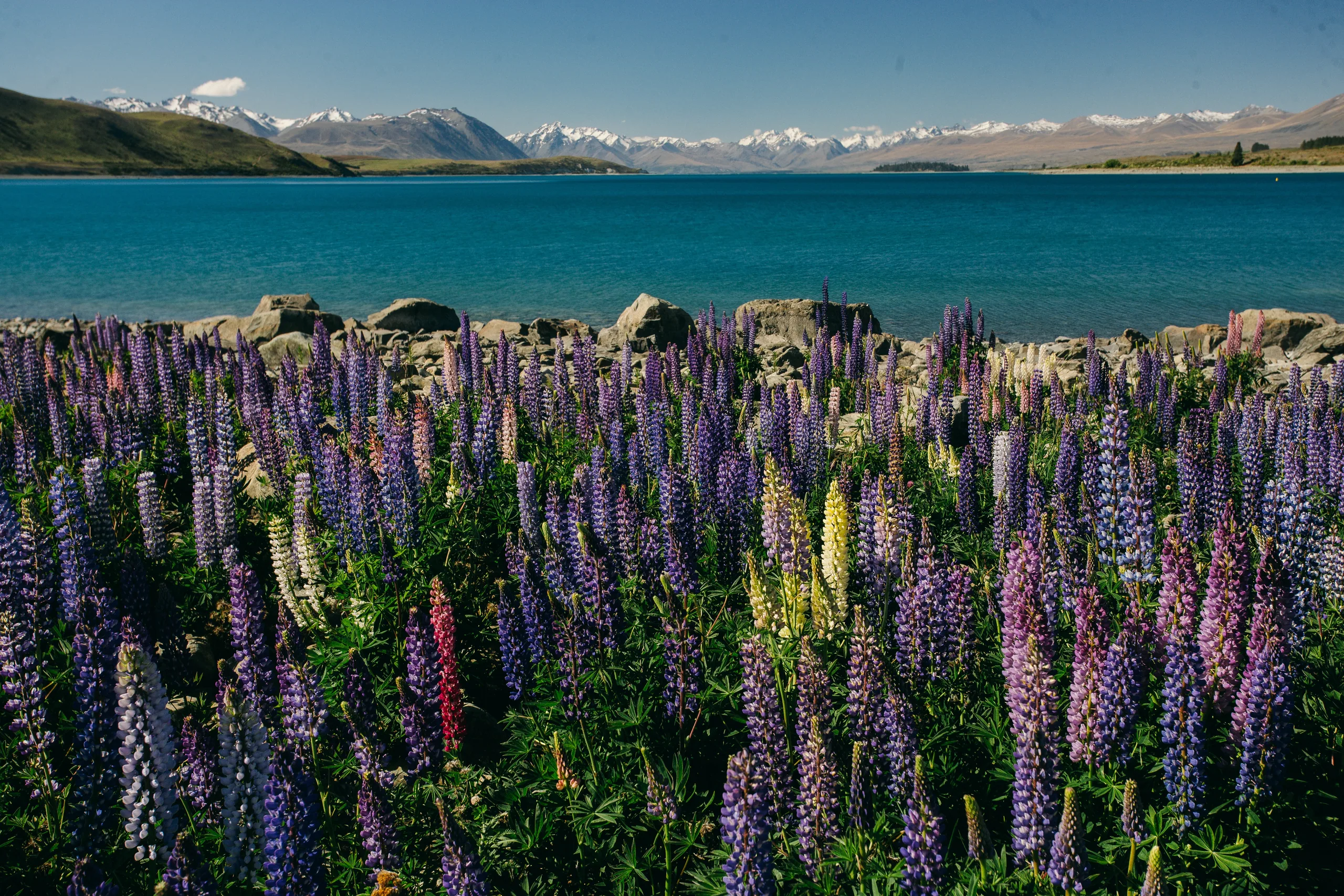
In late November through early January, the lakeshore and braided river deltas explode in pink, purple, yellow, and blue. The Instagram version of Tekapo is almost always lupin-season Tekapo. The flowers are vivid, the photos are real, the place looks unbelievable.
Here is the catch: Russell lupins are an invasive species in New Zealand. They were introduced for grazing and ornamental use, escaped into the Mackenzie braided river system, and now crowd out the native flora that birds like the wrybill and the kakī (black stilt) depend on. Department of Conservation actively spray and dig them out of priority river deltas.
The pragmatic position: enjoy the flowers, take the photos, do not pick them, do not scatter seeds, and try to step around plants rather than on top of them when you find a good shot. They will still be there next year. Many of the most-photographed lupin fields are on private or council land where they are tolerated. The river-delta populations are the ones DOC actively manages.
If you are coming specifically for the lupins, plan for the first two weeks of December. Late November is usually too early. Mid-January is usually past peak.
Getting there
Tekapo sits on State Highway 8, the inland route between Christchurch and Queenstown. Almost everyone who visits Tekapo passes through on this road. The lake is roughly equidistant from each city, which is why it gets the lunch-stop traffic.
From Christchurch (3 hours)
229 km, roughly 3 hours direct via SH1 south to Geraldine then SH79/SH8 inland to Tekapo. The drive from Christchurch itself is one of the better short road trips in New Zealand: flat Canterbury Plains, then a climb through Burkes Pass into the Mackenzie Basin, which opens out into a huge tussock plateau the moment you crest the pass. The first sight of Tekapo from the pass is genuinely good.
Realistic timings with stops: 3.5 to 4 hours. Worth stopping at Geraldine for coffee or the Barker’s berry shop, and the lookout at the top of Burkes Pass on a clear day.
No fuel between Fairlie and Tekapo, so top up at Fairlie if you are running low.
From Queenstown (3.5 hours)
258 km, roughly 3.5 hours from Queenstown via SH6 to Cromwell, SH8 over the Lindis Pass into the Mackenzie, past Omarama and Twizel, then up SH8 to Tekapo. Check the NZTA Journey Planner before alpine winter drives. The Lindis Pass section is the highlight: a long sweeping climb through golden tussock hills, often the part of New Zealand that surprises people most.
Realistic timings with stops: 4 to 5 hours. Worth a stop at the Lindis viewpoint, at Twizel (the closest service town to Aoraki Mt Cook), and at the Lake Pukaki lookout where the colour is, frankly, even more vivid than Tekapo’s.
From Auckland or further north
Fly to Christchurch or Queenstown and pick up the drive from there. There is no reason to attempt this in one go.
Combining with Mt Cook
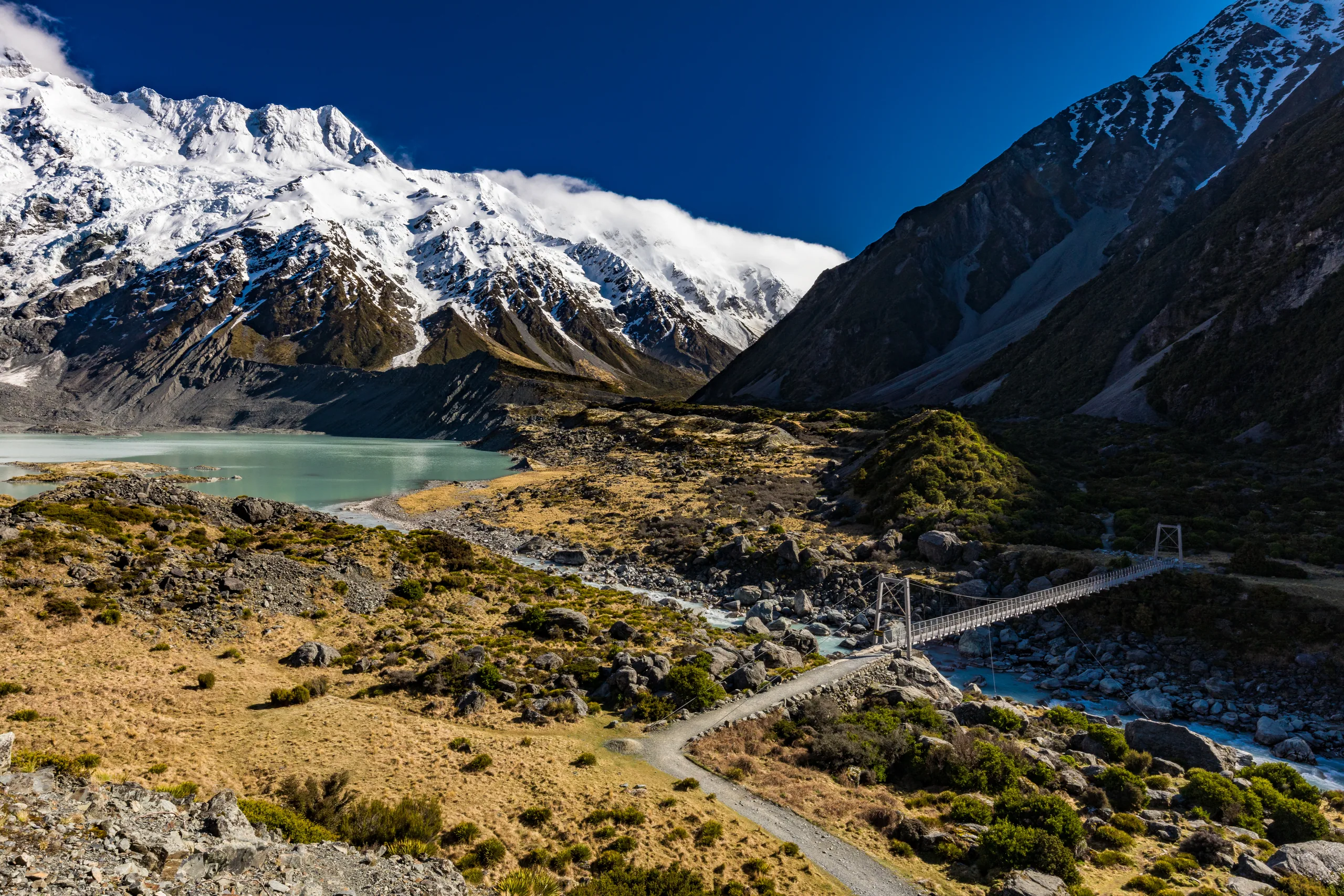
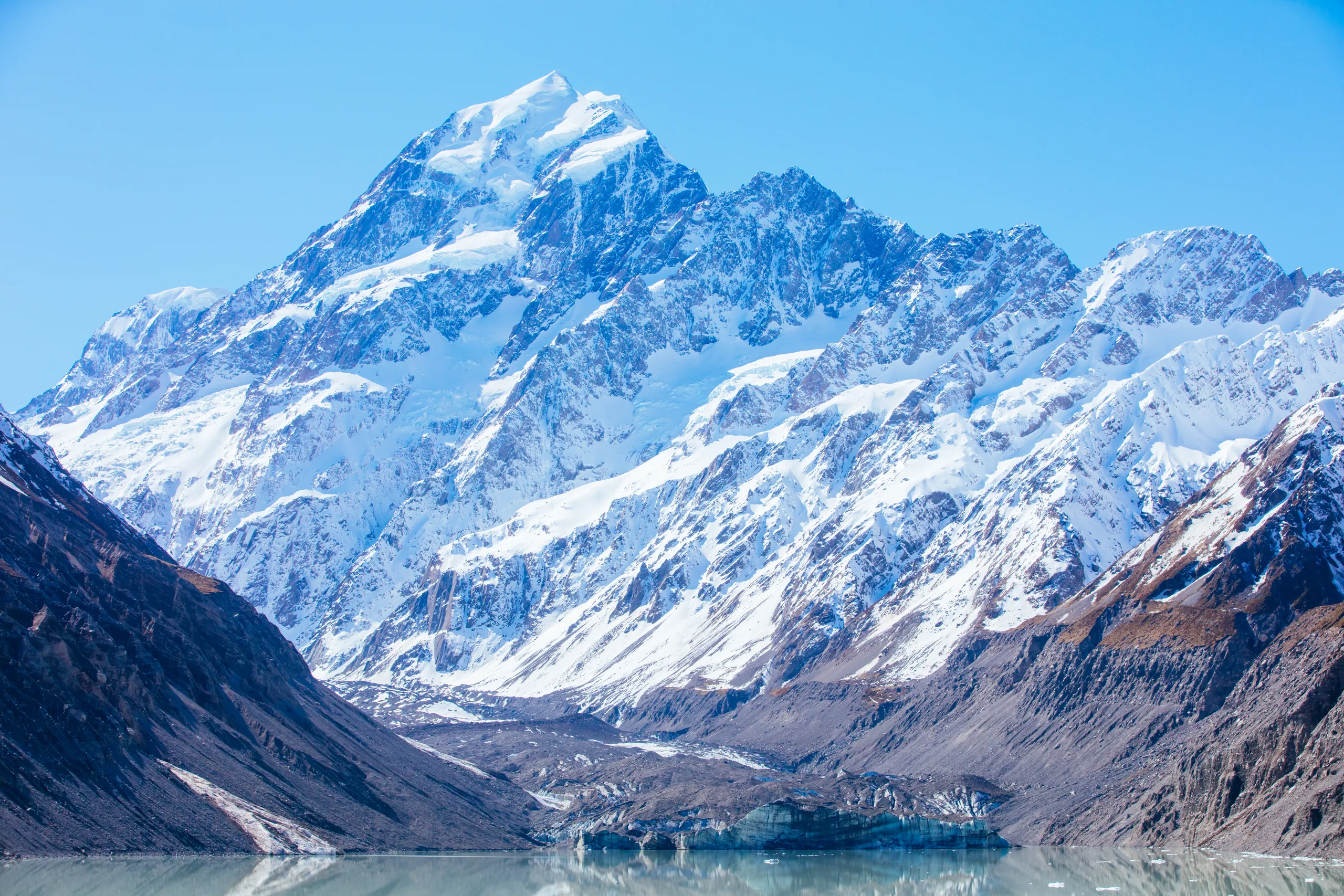
This is the smart move and surprisingly few first-time visitors plan for it. From Tekapo, Aoraki Mt Cook Village is 100 km and about 1 hour 15 minutes via SH8 to Lake Pukaki, then the Mt Cook Road (SH80) up the western side of the lake. The drive itself is one of the great short scenic drives in New Zealand, with Aoraki framed at the end of the lake the entire way. Day-trip from Tekapo, do the Hooker Valley Track, drive back. Or stay overnight in Aoraki Mt Cook Village if you want a less touristy night than Tekapo can offer.
Where to stay (and how long)
Tekapo Village is small. There is one main strip (Pioneer Drive) with most of the accommodation, restaurants, and the supermarket, then a handful of properties spread along the lakeshore and up toward Mt John.
The market has gone upmarket over the last decade. Backpacker beds and budget motels still exist but they get expensive in summer. New builds skew boutique and apartment-style. If you are booking December through February, lock in 3 to 6 months ahead, particularly for lakeview rooms.
One night is the right answer for the great majority of travellers. Arrive late afternoon, sunset at the lake, dinner, stargazing tour after dark, sunrise at the church, hot pools or Mt John walk before lunch, drive on. This is a genuinely great 18 hours.
Two nights if you want to add a Mt Cook day trip, or if you want a backup night for stargazing in case night one is cloudy.
Three or more nights is only worth it if you are a serious astrophotographer, you are working remotely with a view, or you are using Tekapo as a leisurely base for both the Mackenzie and Mt Cook. Otherwise you will have run out of new things to do and you will be paying $400+ a night for the privilege.
A note on alternatives: if Tekapo accommodation prices look insane (and in summer they will), look at Twizel (45 minutes south, smaller, cheaper, better food than people expect) or Aoraki Mt Cook Village (1h15m, fewer beds but real alpine surroundings). Both make sensible bases for the same region.
When to go
Choosing the season
November to February is summer. Long daylight (sunset after 9pm in December), warm days, the lupins, the busiest crowds, the highest prices. Bookings essential. Photography is harder than people assume because of midday haze and harsh light.
March to May is autumn. Cooler, quieter, the lupins are gone and the tussock turns gold. Often the best photography light of the year. Stargazing skies improve.
June to August is winter. Cold (overnight temperatures regularly below zero), occasional snow on the lakeshore, dramatic light, peak stargazing clarity. The lake does not freeze but the surrounding hills get a proper coat. Roads are sometimes icy at dawn but the main highways are well-maintained. This is the best season for serious stargazers and our personal favourite for the area.
September to October is spring. Variable weather, fewer crowds, still excellent night skies. Good shoulder option if your dates are flexible.
Best time of day at the lake
- Sunrise is the quietest window of the entire day, year-round. Coaches do not start until around 9am.
- Late afternoon (1 to 2 hours before sunset) has the warmest light on the church and the best sky over the Two Thumb Range.
- Astronomical twilight (roughly 90 minutes after sunset in summer, an hour after sunset in winter) is when the Milky Way starts to appear and Mt John tours begin.
Midday is the worst light of the day, the busiest crowds, and the hottest car park. Walk around the back of the church and along the shore east of the village to escape the photo queue.
Skip this if…
A few honest reasons to drive past or cut Tekapo short:
- You are travelling Christchurch to Queenstown via the coastal route through Dunedin. Tekapo is not on that road. Do not detour for a 90-minute photo stop.
- It is mid-December, you have not booked accommodation, and you are not willing to spend $450+ on what is left. Eat lunch, take the photo, drive on to Twizel or Wanaka.
- You have one week in the South Island and Mt Cook is on the list. Tekapo is included by default when you drive between the alps and Christchurch. Do not add a separate night unless you want a stargazing tour.
- The weather forecast for your one night is solid cloud and rain. There is genuinely not much to do in Tekapo when you cannot see the lake or the sky.
- You have specifically come for the lupins and it is February. You are too late. Reframe the trip around the lake itself.
The practical stuff nobody mentions
A short list of things that change the experience:
- The water is cold all year. Even in February the lake sits around 10 to 14 degrees Celsius. Swimmable for the brave for short periods, otherwise look but do not jump.
- Public toilets at the church car park are the main facility. They can have queues in summer. There are more discrete toilets at the lakefront playground a few hundred metres east.
- The supermarket is small and not cheap. If you are self-catering for more than a night, stock up at Fairlie (north) or Twizel (south) where prices are noticeably better.
- Lakeview rooms cost real money. They are worth it for one night in Tekapo specifically because the view is the entire point. A non-view room here is paying premium prices for a normal motel.
- Phone signal is generally fine in the village but patchy on the Mt John walk and at the back of the lake. Download offline maps before you head up.
- The road over Burkes Pass and Lindis Pass can ice up at dawn in winter. Slow down for the first hour after sunrise from June to September, particularly in shaded sections.
- Drone rules around the church are strict. No drones over or near the building, no drones over crowds, and DOC restrictions apply to many of the surrounding braided river areas. The fines are real.
- There is no rubbish collection at the lakeshore picnic spots. Take everything out, including the wrapper from the bakery. Locals notice.
- Petrol is available in Tekapo Village but it is pricier than Fairlie or Twizel. Fill up either side of the lake if you are price-sensitive.
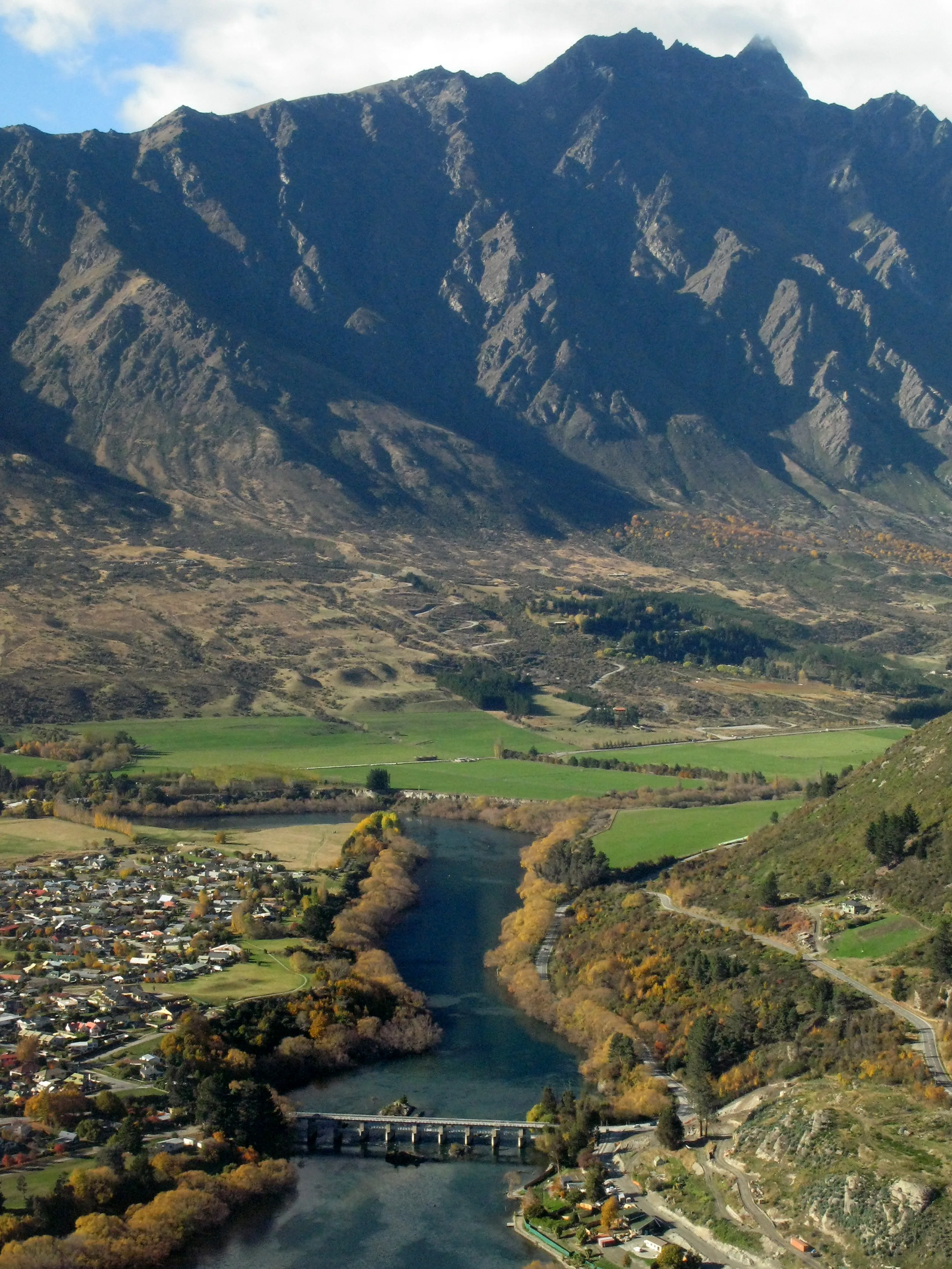
If you have one night and a clear sky, Tekapo earns it. If you have an afternoon and a coach schedule, take the photo at the church, eat well, and drive on toward something bigger. Both are reasonable. Just be honest with yourself about which trip you are on. The lake slots naturally into our 7-day South Island itinerary between Christchurch and Queenstown.
Frequently asked questions
# Is Lake Tekapo worth visiting?
# How long should you spend at Lake Tekapo?
# Why is Lake Tekapo so blue?
# When do the lupins bloom at Lake Tekapo?
# Is Mt John Observatory worth the money?
# How far is Lake Tekapo from Mt Cook?
# Can you swim in Lake Tekapo?
Other activities you might pair this with
Where to base yourself
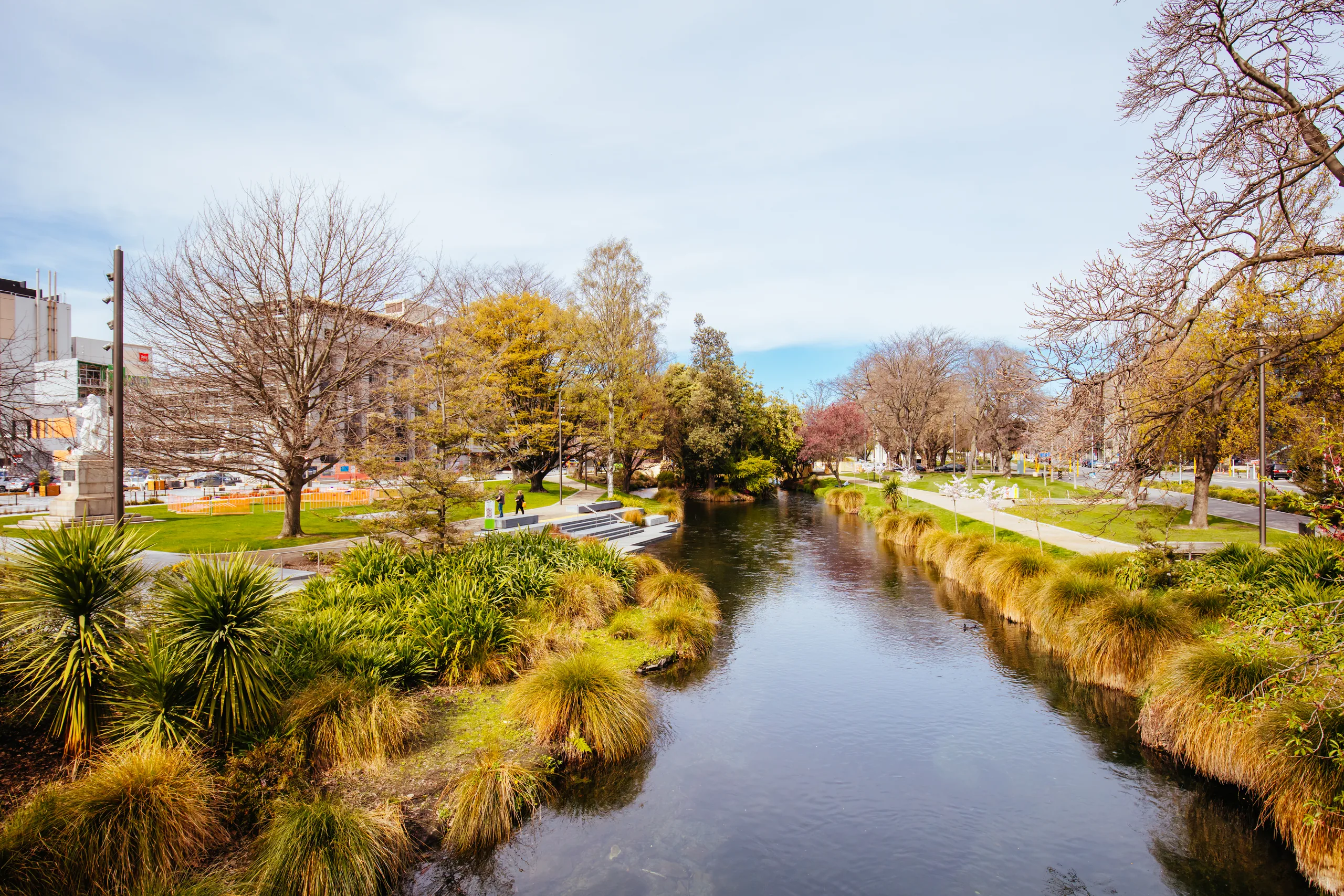
Christchurch: The honest guide to New Zealand's Garden City
What you need to know about Christchurch: what's worth your time post-rebuild, how to use it as a South Island base, and the stuff most guides skip.
Explore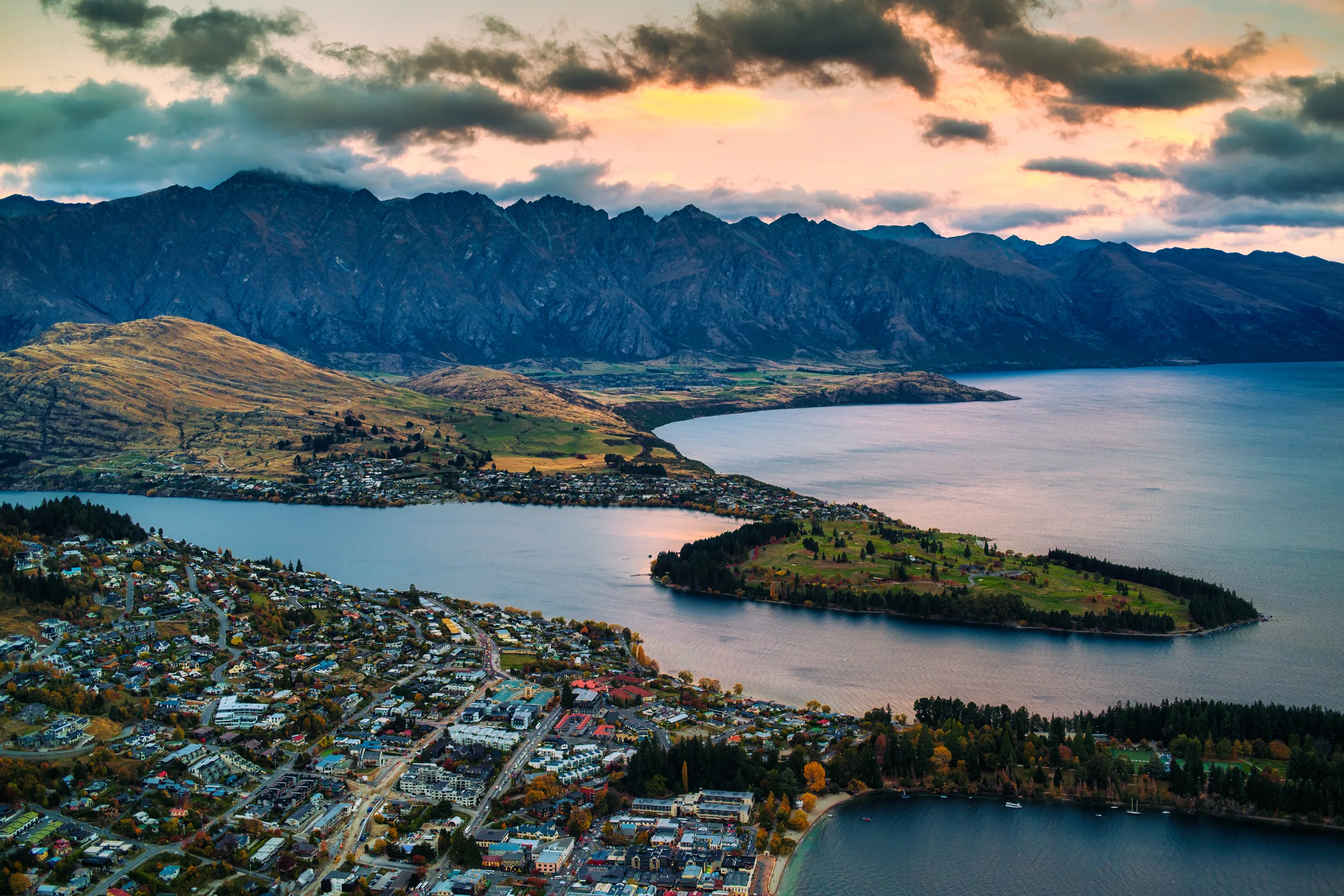
Queenstown: Honest guide to the adventure capital
What's actually worth doing in Queenstown, when to skip the crowds, and how to base yourself here for Milford Sound and the rest of the South Island.
Explore