
Franz Josef Glacier: New Zealand's most famous ice
What Franz Josef Glacier looks like in 2026 after years of retreat, and an overview of the heli-hike, scenic flight, and free valley walk options.
Should you go?
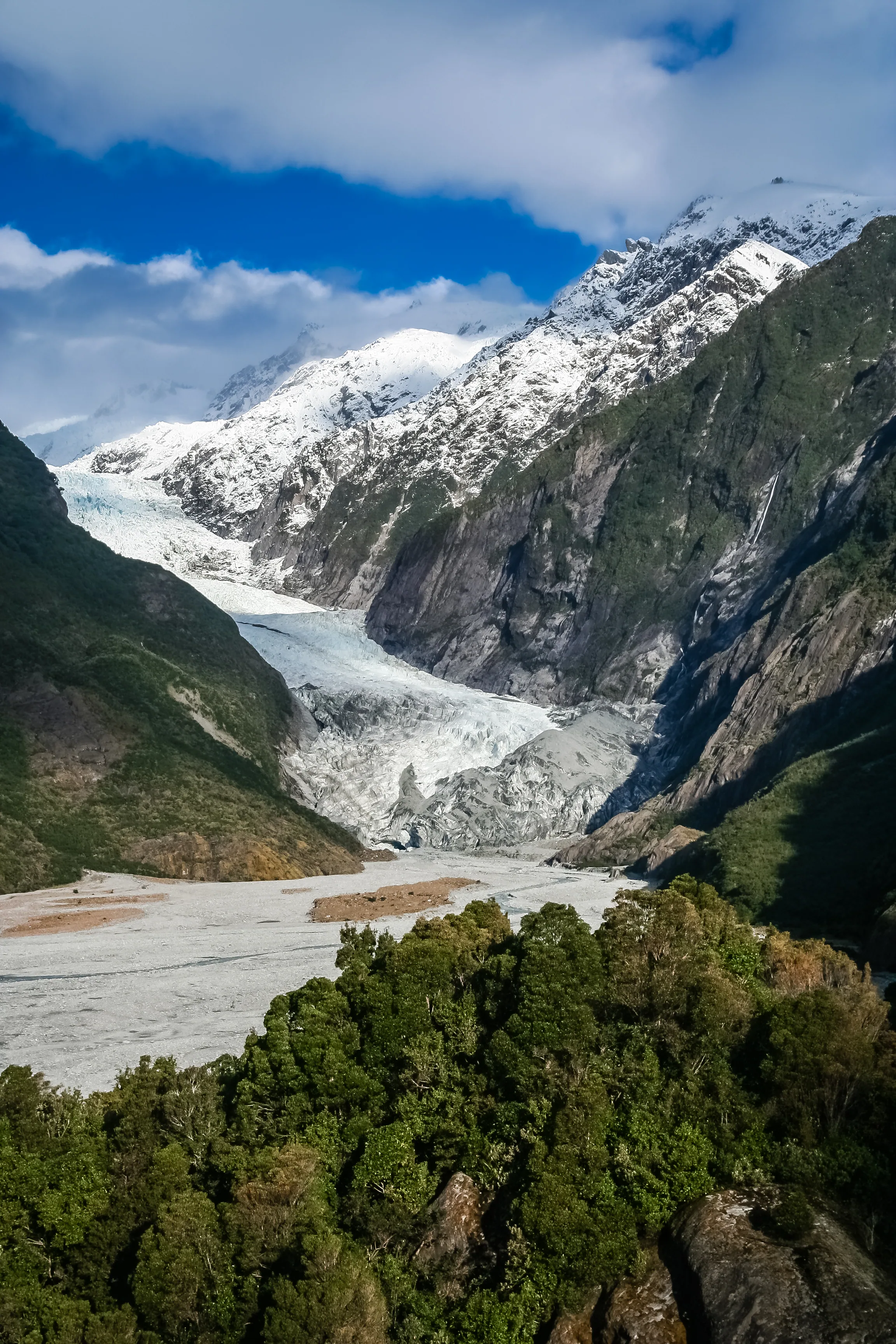
Franz Josef Glacier is one of the strangest landscapes in New Zealand: a 12 km river of ice flowing down out of the Southern Alps and almost into temperate rainforest, inside Westland Tai Poutini National Park. There is nothing else quite like it at this latitude. It is also a glacier that has retreated, hard, since 2008. The brochures and Instagram shots from a decade ago, of people walking up to the terminal face from the valley floor, are no longer the reality on the ground.
As of 2026 you cannot reach the ice on foot. The valley walk gets you close to the river that drains the glacier and gives you a clear view of the terminal face, but the face itself is roped off behind active rockfall zones and the ice is several hundred metres above the trail. To actually touch the glacier, you need a helicopter.
A heli-hike onto the upper ice is one of the best half-days available in New Zealand. The combination of a scenic flight, a guided ice walk through blue crevasses, and the rainforest village waiting below is hard to match. The scenic flight alone, without a landing, is the shorter version and still extraordinary. The free valley walk on its own is still beautiful, but it is a glacier viewpoint now, not a glacier experience.
What you can do (post-retreat reality)
Three options, in ascending order of how close they get you to the ice.
Heli-hike (the real glacier experience)
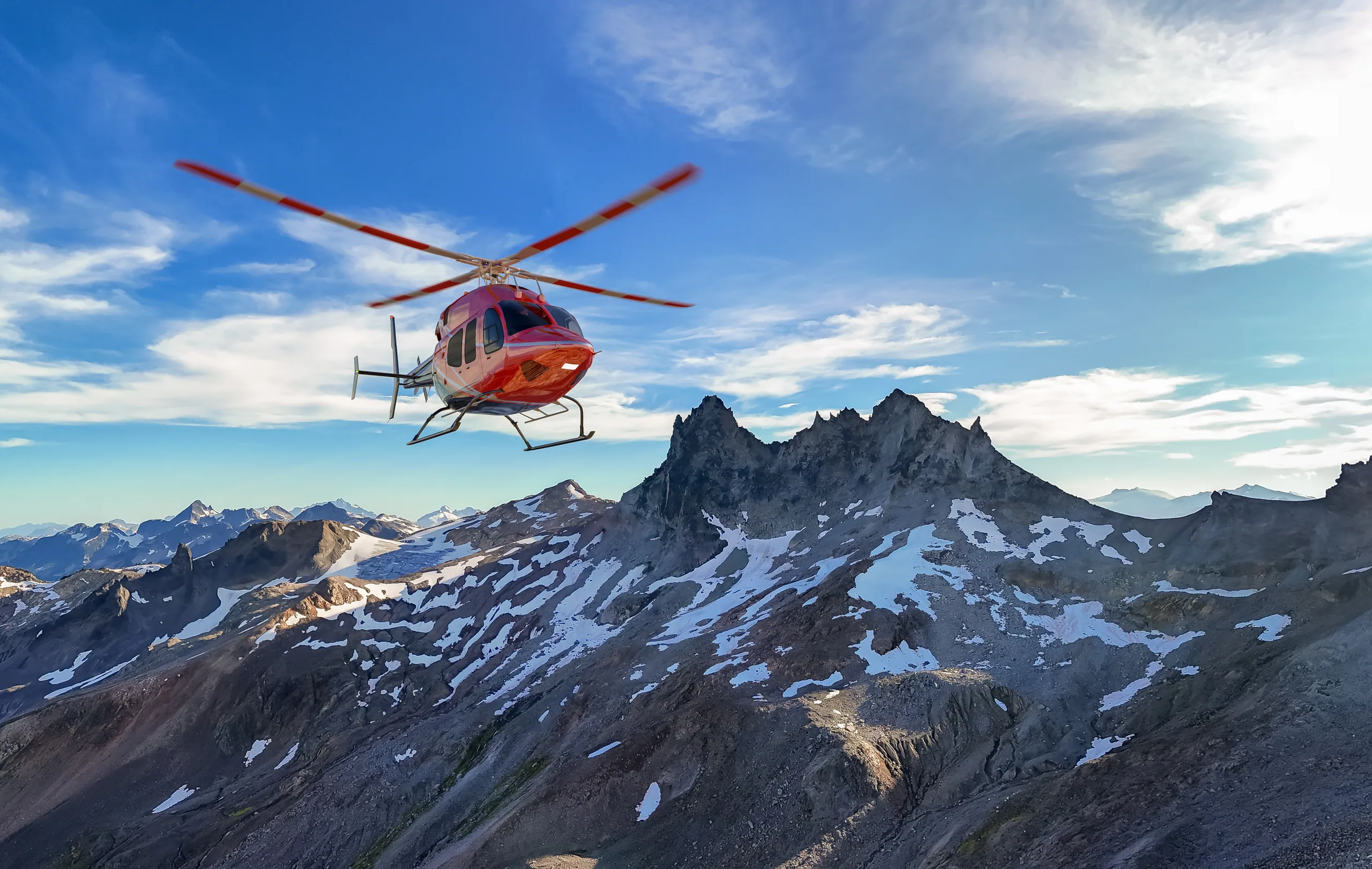
The heli-hike is what most people are picturing when they say “I want to do Franz Josef.” You meet at the operator’s base in the village, get kitted out with boots, crampons, waterproofs and a pack, get bussed to the heliport, and fly five to seven minutes up the valley to a landing zone on the upper glacier. From there a guide leads a small group (usually 8 to 10 people) on a 2 to 2.5 hour walk across the ice, through carved-out tunnels and around crevasses, before the helicopter picks you up and flies you home. Total experience is around 3.5 to 4 hours including briefing and kit-up.
The ice changes constantly. The guides cut new steps and tunnels every few weeks because the routes from last month have collapsed or moved. No two heli-hikes are the same.
Scenic flight (no landing)
A scenic flight is the shorter heli option. You get the spectacular ride up the valley, often a wider loop that takes in Mt Tasman and Aoraki / Mt Cook, and many include a brief snow landing in a high alpine basin (not on the glacier itself). Total time is 20 to 40 minutes in the air.
This is the right pick if your fitness or schedule rules out a half-day on the ice, or if the heli-hike is fully booked. You will not stand on Franz Josef itself, but you will see it from angles that are arguably more impressive than walking it.
Franz Josef Valley Walk (free, but doesn’t reach the ice anymore)
The Franz Josef Glacier Valley Walk starts from the car park 5 km south of the village on Glacier Access Road. It is around 1.5 hours return on a wide gravel track that follows the Waiho River up the U-shaped valley toward the terminal face. The viewpoint at the top of the trail is the closest you can get to the glacier without a helicopter.
It is no longer a “walk to the glacier” the way it was pre-2008. The Department of Conservation has steadily pulled back the safe viewing distance as the ice has retreated and the surrounding cliffs have become more unstable. Rockfall is real and people have been killed here. Stay on the marked track and behind the rope lines. Even with that caveat, the walk is worth doing for the scale of the valley, the rainforest at the start, and the perspective of how much ice used to fill the space you are standing in.
Operators
There are essentially two product categories: heli-hikes and scenic flights. Franz Josef Glacier Guides runs the guided walks on the ice itself, partnered with helicopter companies for the airlift. The pure helicopter operators run the scenic flights and snow landings.
Several helicopter operators (The Helicopter Line, Glacier Helicopters, Heli Services NZ) run essentially the same product: a 20 to 40 minute scenic flight up the Franz Josef Valley, often combined with Fox Glacier and a snow landing somewhere in the Southern Alps. The smaller operators tend to be more proactive about communicating delays and offering rebooking slots same-day. The Helicopter Line has the largest fleet and the most departures.
Franz vs Fox
Fox Glacier is 30 minutes south on State Highway 6 and the comparable product (heli-hike, scenic flight, valley walk) is run by Fox Glacier Guides and the same helicopter companies. The two glaciers are different in detail (Fox is longer, less steep, the ice colour reads slightly different) but the experience is broadly the same.
Reasons to pick Franz Josef: more accommodation, more restaurants, the Hot Pools, more flight slots per day, easier rebooking if you are weather-cancelled.
Reasons to pick Fox: smaller, quieter village, better odds on a quiet day on the ice in peak season.
A common approach: base in Franz Josef and book whichever glacier has the better forecast on the day. Drive 30 minutes south if Fox is flying and Franz is socked in.
Getting there
Franz Josef village sits halfway down the West Coast on State Highway 6. It is remote by South Island standards. Plan the drive seriously.
From Queenstown or Wanaka (5 to 6 hours)
The classic route is Queenstown to Wanaka to Haast Pass to Franz Josef on SH6. From Queenstown it is around 360 km and 5.5 hours of driving, longer with stops. The drive is genuinely beautiful: Lake Hawea, Lake Wanaka, the Haast Pass through Mount Aspiring National Park, the wild West Coast beaches at Bruce Bay and Knights Point, and then Fox Glacier village before Franz Josef.
Do not try to do it in one push if you can avoid it. Overnighting in Wanaka or Haast (basic but functional) breaks the day. If you are pushing through, leave Queenstown by 8 am to arrive in Franz Josef with daylight to spare.
From Christchurch (5 hours via Arthurs Pass)
From Christchurch it is around 390 km and 5 hours via Arthurs Pass on SH73, then SH6 south through Hokitika. This is the most scenic drive in the South Island for many people: alpine pass, braided river valleys, the dramatic descent through Otira Gorge, and then the West Coast highway down through small mining towns and rainforest. The TranzAlpine follows roughly the same route if you’d rather sit.
Arthurs Pass National Park itself is worth a stop. Plan for a half-day on the road with breaks, not a five-hour blast.
From Greymouth or Westport
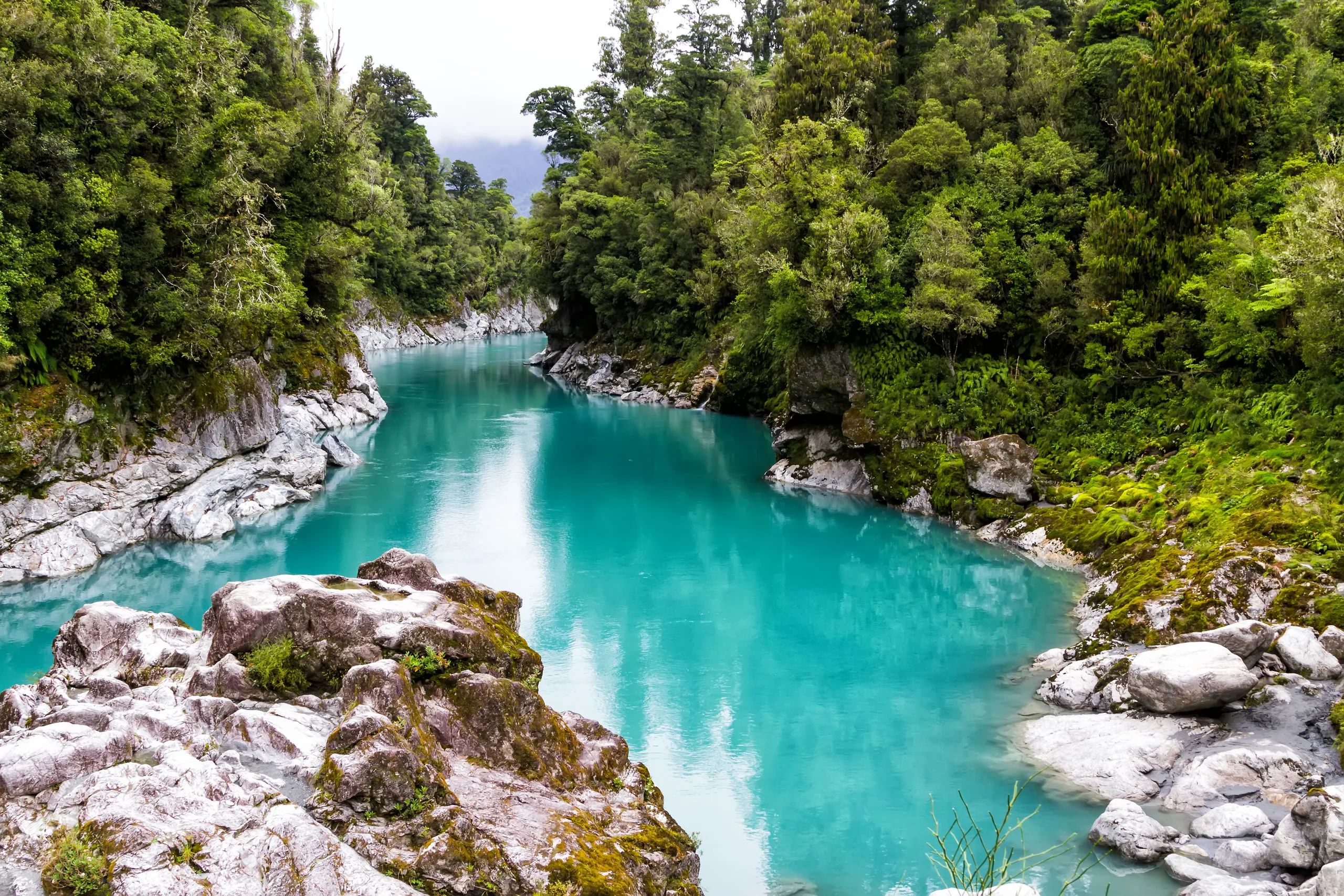
If you have come into the West Coast via the TranzAlpine from Christchurch, Greymouth to Franz Josef is around 2.5 hours and 200 km south on SH6. Hokitika is the obvious stop along the way (jade, beaches, the Hokitika Gorge). Westport to Franz Josef is closer to 4 hours.
A note on rental cars and shuttle buses
InterCity coaches connect Franz Josef to Queenstown, Wanaka, Christchurch and Greymouth daily but they are slow. A car rental is the right call for almost everyone. Watch for fuel: petrol stations are scarce on the West Coast and Franz Josef village has only one. Fill up wherever you see a pump.
Where to stay
Three realistic bases.
Franz Josef village is where most people stay and it is the right call for almost everyone. Walking distance to all the operator offices, the village restaurants, the Glacier Hot Pools, and the supermarket (such as it is). Accommodation ranges from the Te Waonui Forest Retreat at the top end to the Rainforest Retreat and Franz Josef Top 10 Holiday Park at the mid-range, down to the YHA and Chateau Backpackers for budget travellers. Book ahead in peak season.
Fox Glacier village is 30 minutes south. Smaller, quieter, less polished. The Westhaven Motel and the Fox Glacier Lodge are the workhorses. Good if Franz Josef is fully booked or you specifically want the smaller-village feel. You can still book heli-trips on the Franz Josef Glacier from here.
Hokitika or Greymouth is the long-drive-in option. Hokitika is 1.5 hours north and a more interesting town in its own right, with beaches, jade workshops, and the Hokitika Gorge nearby. If you are doing a wider West Coast trip and treating Franz Josef as a day visit, basing in Hokitika and driving down for the heli-hike is workable. Greymouth (2.5 hours north) is less appealing as a base for the glacier but useful if you are TranzAlpine-tied.
When to go (and the weather reality)
Franz Josef has some of the most volatile weather in New Zealand. The village sits at the foot of the Southern Alps where moist air off the Tasman Sea slams into the mountains, dumping 3 to 5 metres of rain a year. The upper glacier sits in a different microclimate that can be flying or not flying independent of the village.
November to April is the most stable flying period. Long days, warmest temperatures, the highest helicopter success rate. December and January get busy and accommodation prices spike. February and March are arguably the best weeks: stable, slightly cooler, fewer coaches.
May and September are the quiet shoulder months. Daylight is shorter but the odds of clear flying days are decent and prices ease off. Worth considering if you have flexibility.
June to August (winter) brings the bluest ice and fresh snow on the surrounding peaks, but daylight is short (sunset around 5 pm) and the heli cancellation rate climbs to 40 percent or higher in bad weeks. You will need a buffer of two or three days in town to have a realistic shot at flying. The trade-off when you do fly is real: winter Franz Josef ice is otherworldly.
A rule of thumb that matters: book your heli-hike for the first day of your stay in Franz Josef, not the last. If you are weather-cancelled, you want rebooking days available. Travellers who arrive on the morning of their only day in town and find the helicopters grounded are the ones who go home disappointed.
Skip this if…
A few reasons to leave Franz Josef off your itinerary, or downgrade the plan.
You only have one day and a heli-hike is not in the plan. The valley walk on its own is a 90-minute stop, not a destination. If a half-day heli-hike is out of scope and your itinerary is tight, the detour to Franz Josef village will feel underwhelming. Consider a scenic flight from Mt Cook or Queenstown instead, where you fly over multiple glaciers in one trip.
Your travel days are at the wrong end of a major storm. West Coast forecasts (MetService) run on 3 to 5 day horizons reasonably well. If the forecast is heavy rain and low cloud for your entire window in Franz Josef, you will not fly and the valley walk will be wet. Consider rerouting via Mt Cook (drier microclimate) or pushing the West Coast leg to a different week.
You are only on the West Coast for the glaciers. It is a long drive in and out for one half-day experience. If the broader West Coast trip (Pancake Rocks, Hokitika, the Oparara Basin, Lake Matheson) does not appeal, the glaciers alone are not enough to justify the detour. Aoraki / Mt Cook on the Canterbury side is the easier alternative for big-ice scenery.
Practical details
A few things worth knowing.
- Phone signal in Franz Josef village is limited. 4G is patchy and there is almost no signal up the valley or at the heliports. Download offline maps and your operator booking confirmation before you arrive.
- The Glacier Hot Pools are the obvious post-hike move. Three hot pools in the rainforest, 200 metres from the main road. Book ahead in summer.
- Sandflies are real and aggressive. Especially on the valley walk and at the heliport. Long sleeves, long pants, and DEET. The bites itch for days.
- Cancellations are common and the system is fair. If your heli-hike is cancelled by weather, you go back into the queue for the next available slot. You do not lose your booking. You may need to be flexible about flying with a different group than the one you booked with.
- The minimum age for the heli-hike is usually 9 or 10. Younger kids can do scenic flights but not the ice walk. The age limit is enforced.
- There is a weight limit. Helicopters have hard load limits and the ice-walking gear has size limits too. Most operators cap participants at 120 to 140 kg. Check directly when you book if this might apply.
- Bring layers. It can be 20 C in the village and freezing on the ice on the same day. Operators provide waterproofs and boots but you should wear a warm base layer and a fleece.
- Don’t drive the Glacier Access Road in flood. The Waiho River bridge has washed out before. If the West Coast is in active flood, ask in the village before you head up.
Franz Josef Glacier in 2026 is not the glacier from the old guidebooks. The ice has retreated up the valley and a helicopter is now the only way onto it. If you plan a heli-hike, book it on your first day in town and leave a buffer for weather. If a heli trip is not in the plan, the valley walk is still worth a stop, and a scenic flight from Mt Cook is a good alternative for big-ice scenery.
Frequently asked questions
# Can you still walk to Franz Josef Glacier?
# Is the Franz Josef heli-hike worth it?
# Franz Josef or Fox Glacier, which is better?
# How often are Franz Josef helicopter flights cancelled?
# When is the best time to visit Franz Josef Glacier?
# Do I need to book Franz Josef heli-hikes in advance?
# Is the Franz Josef heli-hike safe and how fit do I need to be?
Where to base yourself
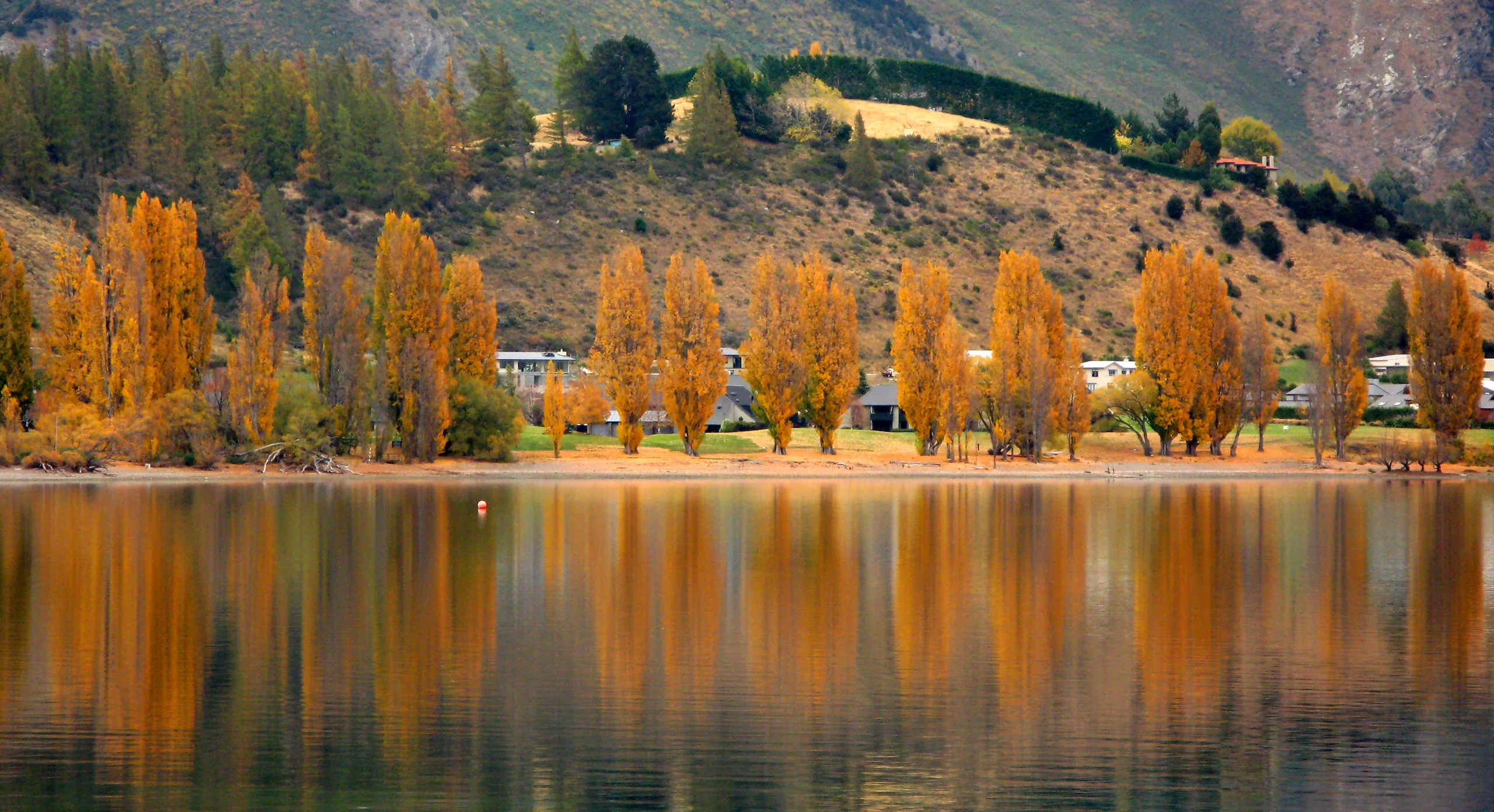
Wanaka: Queenstown's chiller cousin
Honest guide to Wanaka, NZ: Roys Peak, That Wanaka Tree, Rob Roy Glacier, Cardrona. How to get there, when to go and whether to base here.
Explore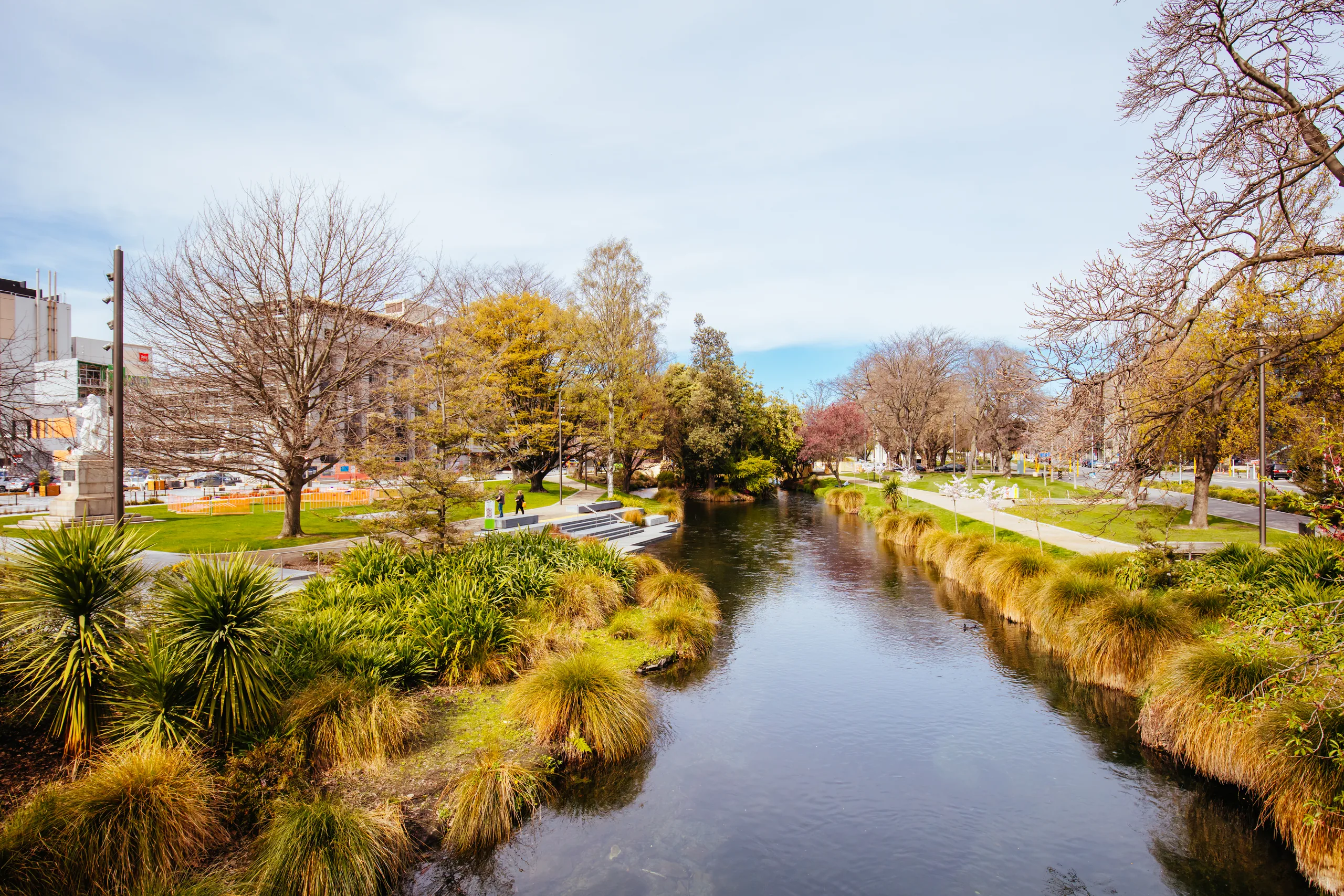
Christchurch: The honest guide to New Zealand's Garden City
What you need to know about Christchurch: what's worth your time post-rebuild, how to use it as a South Island base, and the stuff most guides skip.
Explore