
NZ power plugs & voltage: a traveller's guide
Practical guide to electrical outlets in New Zealand: Type I plugs, 230V/50Hz, what works from the US, UK and EU, and the small things travellers miss.
TL;DR (just the answer)
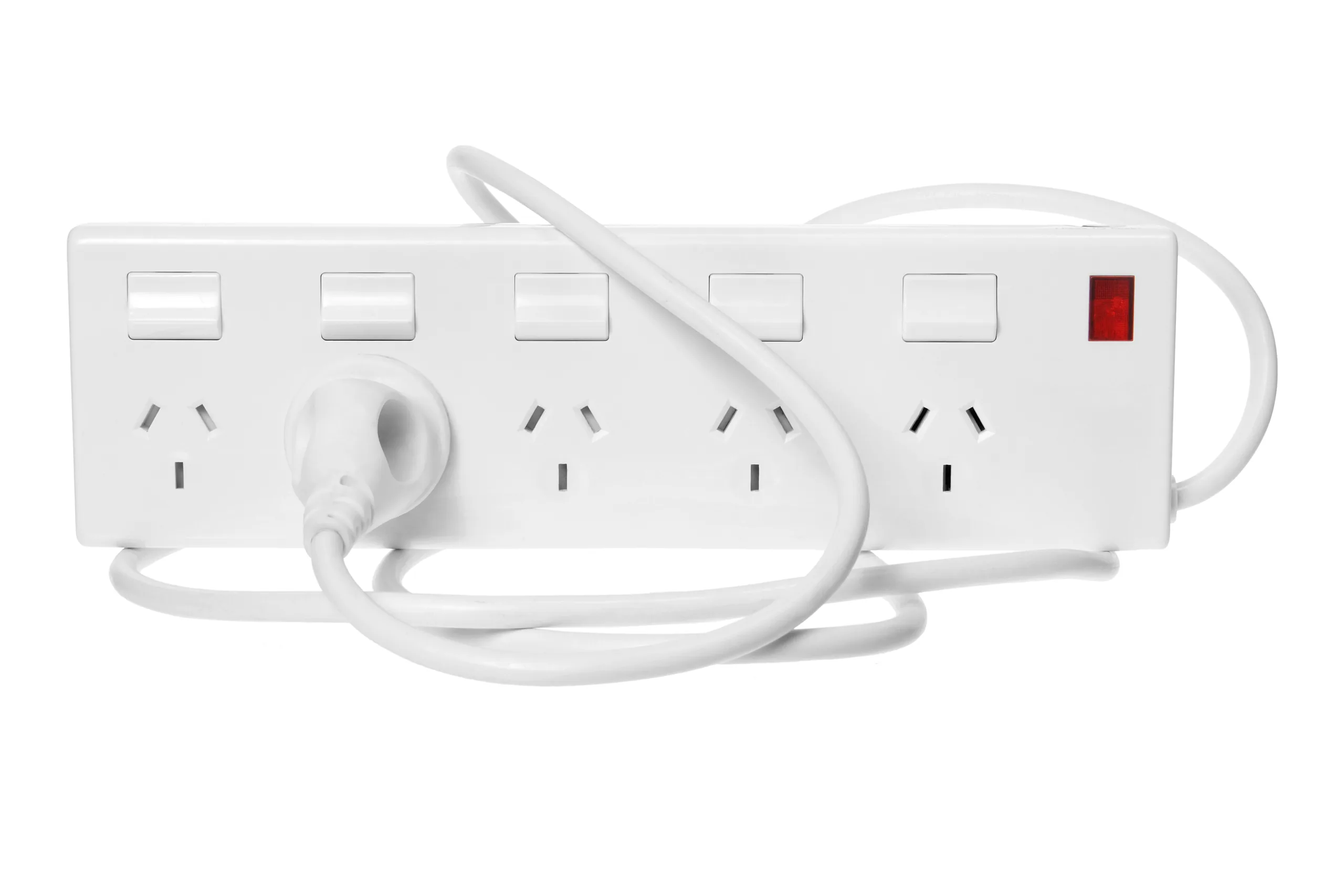
New Zealand uses the Type I plug (the same as Australia) — three flat pins in an upside-down Y configuration. Mains voltage is 230 volts at 50 Hz.
What you actually need to know:
- From the US, Canada, Mexico, Japan: bring a Type I adapter. Almost all modern electronics (phones, laptops, cameras, tablets) accept 100-240V input and just need the plug shape changed. High-wattage stuff like US hair dryers usually won’t work and aren’t worth bringing — borrow at the hotel or buy NZ.
- From the UK, Ireland: bring a Type G to Type I adapter. Voltage matches (230V), so no converter needed.
- From Europe (anywhere): bring a Type C/E/F to Type I adapter. Voltage matches.
- From Australia, Fiji, PNG, Argentina: same Type I plug as NZ. Nothing needed. Plug straight in.
Every wall socket in NZ has a small switch next to it that needs to be ON before power flows. This catches more travellers than the plug shape does.
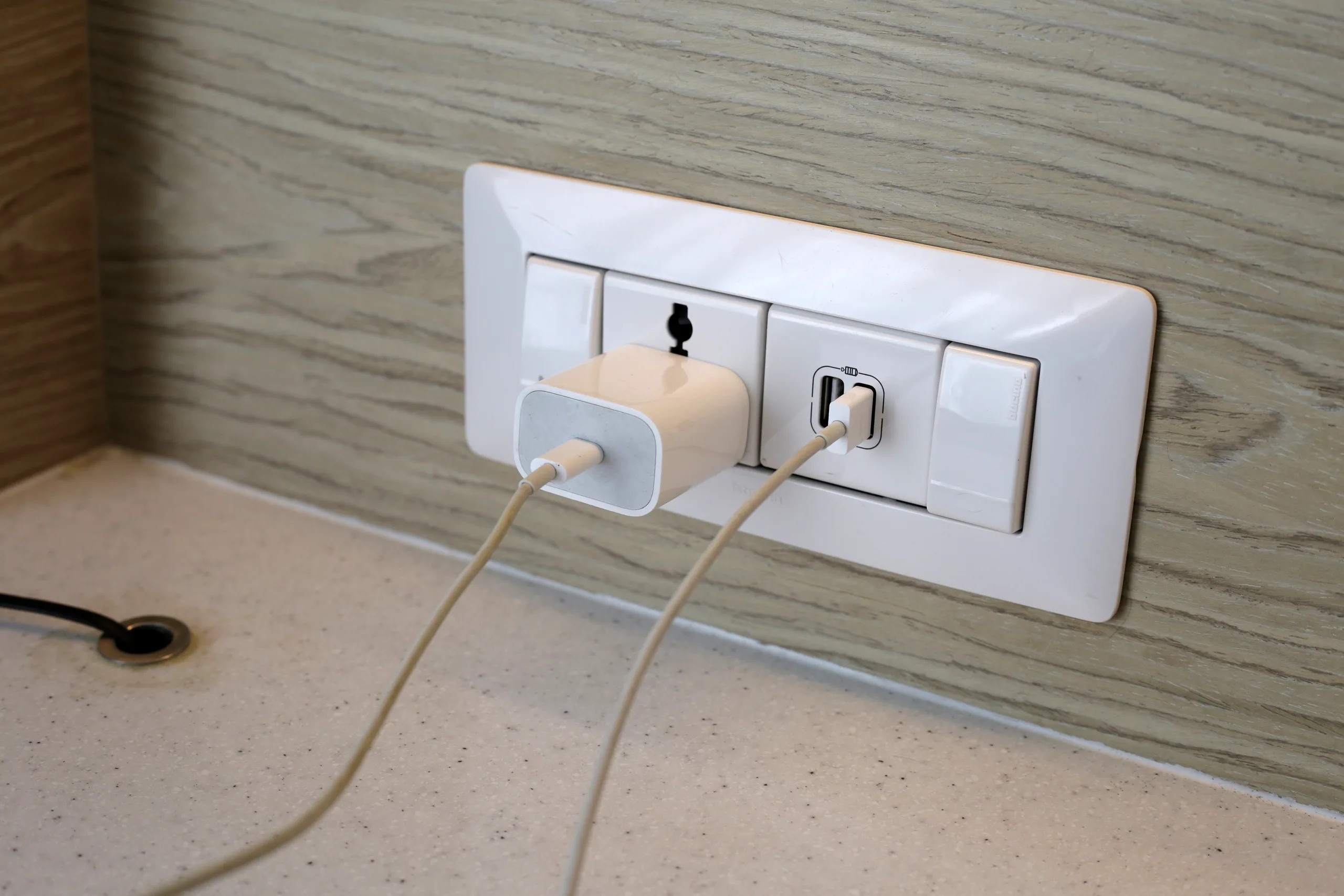
Modern hotels and hostels increasingly have USB-A and USB-C ports built into bedside sockets, so a phone charging cable plus a single adapter is often the entire kit you need.
The plug shape (Type I)
New Zealand uses the Type I plug, defined under AS/NZS 3112. It’s the same standard used across Australia, Fiji, Papua New Guinea, Kiribati, Tuvalu, Samoa, the Cook Islands, parts of Argentina, and a few other places. If you’ve travelled to any of those, your existing adapter works.
The plug has three flat pins:
- Two angled pins at the top forming an inverted V (these are the live and neutral)
- One vertical pin at the bottom (the earth/ground)
Two-pin Type I plugs (without the earth pin) are common on small low-power devices like phone chargers, lamps, and clocks. They fit the same socket.
Most NZ sockets are switched, meaning there’s a small rocker switch next to each outlet that controls whether power is supplied. The switch needs to be in the ON position (pressed toward the socket) before anything works. This is a deliberate safety feature — it lets you cut power to an appliance without unplugging it, useful for things like kettles, hair dryers, and heaters.
Sockets often come in double outlets (two sockets in one wall plate), with separate switches for each. A few newer installations have integrated USB-A and USB-C ports in the wall plate alongside the standard outlets, especially in airports, modern hotels, and newer apartments.
Voltage and frequency
NZ runs on 230 volts at 50 Hz. This is the same as:
- Australia (230V/50Hz)
- UK (230V/50Hz, nominally — actually 240V in practice)
- All of Europe (220 to 240V/50Hz)
- Most of Asia (220 to 240V/50Hz, except Japan and parts of Korea)
- South America (mixed, mostly 220V/50Hz)
- Africa (220-240V/50Hz)
This is different from:
- USA, Canada, Mexico (120V/60Hz)
- Japan (100V/50 or 60Hz depending on region)
- Brazil (mostly 127V or 220V/60Hz, varies by city)
What this means for travellers:
If you’re from a 230V country (UK, Europe, Australia, most of the world): your appliances will work in NZ without voltage conversion. You only need a plug adapter to physically connect.
If you’re from a 120V country (US, Canada): most modern personal electronics handle 100-240V automatically — they have a “switching” power supply built into the charger that detects voltage and adjusts. This includes essentially every smartphone, laptop, tablet, e-reader, camera, action cam, electric razor, electric toothbrush, and small charging device from the last 10+ years. Check the fine print on the brick — if it says “INPUT: 100-240V” or “100V-240V” anywhere, you’re fine in NZ with a plug adapter alone.
If you bring a 120V-only appliance to NZ and plug it in without a voltage converter, you’ll burn it out instantly. Common offenders: cheap US hair dryers, US-only curling irons, older US clocks, US bedside lamps with US-only bulbs, US window AC units. Don’t bring them. Buy or borrow in NZ.
What works without a voltage converter
Almost all of this just needs a plug adapter:
- Smartphones — iPhone, Pixel, Samsung, Sony, all of them
- Laptops and laptop chargers — MacBook, Dell, HP, Lenovo, ThinkPad, Surface, Chromebook, gaming laptops
- Tablets — iPad, Surface, Galaxy Tab, Kindle Fire
- E-readers — Kindle, Kobo, Nook
- Cameras and camera battery chargers — DSLR, mirrorless, point-and-shoot, GoPro, Insta360, DJI
- Bluetooth speakers (Bose, JBL, Sonos portable)
- Electric toothbrushes and razors — Oral-B, Philips Sonicare, Braun
- Headphone chargers — AirPods, Bose, Sony WH-1000XM
- Drones and drone battery chargers
- Nintendo Switch, Steam Deck, gaming handhelds
- CPAP machines (most modern ones, but check)
- Most travel-friendly hair tools marked as “dual voltage”
If the label says “INPUT: 100-240V” you’re fine. This covers 95% of what’s in a modern traveller’s bag.
What you need a voltage converter for
Voltage converters (also called “step-down transformers” if you’re stepping 230V→120V) are heavy, expensive (NZD$50 to $200+), inefficient, and you almost never need one. The main cases where you do:
- 120V-only US hair dryers, straighteners, curling irons that aren’t marked dual-voltage. Don’t bring these — buy a cheap NZ-compatible one for NZD$30 at The Warehouse or borrow at your accommodation.
- 120V-only US kitchen appliances (blenders, coffee makers, slow cookers). Don’t bring them. If you’re staying long-term in NZ, just buy locally.
- Some older US gaming consoles without dual-voltage adapters.
- Specialty medical devices that aren’t dual-voltage. Always check before flying.
The frequency difference (60Hz US/Japan vs 50Hz NZ) matters for devices with mechanical motors (some clocks, some industrial equipment, some old turntables) but is irrelevant for almost all modern electronics.
What adapter to buy
You want a simple, well-built Type I plug adapter. Two paths:
A single-country adapter for NZ/AU specifically: cheap (USD$3 to USD$10), small, fits in a coin pocket. Best if you only travel to NZ and Australia.
A universal travel adapter that supports Type I plus US, EU, UK in one device: NZD$20 to $50, larger but covers everywhere. Some include USB-A and USB-C outputs, surge protection, and dual outlets. Brands to look for: Anker, Epicka, Belkin, OnePlus, Mu, Twist Plus+. Avoid no-name cheap ones — bad earthing or undersized contacts can damage devices.
Power strip approach: bring a small Type I-pinned power strip (sold as “GPO multibox” in NZ, “powerboard” in Australia) and plug your home-country power strip into it. One adapter, ten devices. Especially useful for traveling families or remote workers with multiple devices.
For most short-stay travellers, the right kit is:
- One Type I plug adapter with USB-C and USB-A outputs (single adapter from Anker or similar, NZD$25 to $35)
- One USB-C cable
- One USB-A cable
- Optional: a small power bank for day trips
That covers a phone, headphones, laptop, camera, and a power bank from one wall socket.
USB ports in NZ accommodation
The good news: NZ has caught up fast on built-in USB charging. As of 2025 to 2026:
- Modern hotel rooms (post-2018 build/renovation): USB-A and increasingly USB-C built into bedside sockets, sometimes at the desk
- Airport lounges and gate areas: USB-A and USB-C plus Type I sockets at almost every seat
- Newer holiday parks and motel chains (TOP 10, Heritage, Sudima, Distinction): USB ports common in cabins
- Older B&Bs, hostels, rural lodges: wall sockets only, no built-in USB
- DOC huts and basic camp accommodation: no power at all in most cases
If you’re going to be in mixed accommodation (some modern hotels, some hostels, some lodges), bring at least one Type I plug adapter rather than relying entirely on USB.
Charging an EV in New Zealand
If you’re renting an electric vehicle (EV) — increasingly common with Hertz, Avis, JUCY, GO, and others now offering EV options — here’s what to expect.
Public charging network
NZ has around 1,200 public chargers as of 2025 to 2026, operated by:
- ChargeNet (the largest, around 350+ fast chargers nationwide)
- Tesla (Superchargers in main cities, accessible to non-Tesla EVs with adapters)
- Z Energy (at service stations)
- Mercury / BP Pulse / Meridian (smaller networks)
- Council-funded chargers in many towns
Most chargers are pay-as-you-go via app (PlugShare, ChargeNet app) with payment by credit card. Fast chargers typically cost NZD$0.40 to $0.85 per kWh.
Plug types
- CCS2 is the dominant fast-charging standard, equivalent to European CCS Combo. Most new EVs in NZ use this.
- Tesla Superchargers use Type 2 (Mennekes) connectors. Most are now open to non-Tesla CCS2 vehicles via the official Tesla adapter.
- CHAdeMO (Japanese standard, old Nissan Leaf) is being phased out but some older chargers still exist.
- Type 2 / Mennekes for slower AC charging.
If you’re renting an EV, the rental company provides the appropriate cables and usually a basic introduction. Ask about adapter inclusion if you’re picking up a non-Tesla brand.
Home (Type I) charging
Slow but workable. A normal Type I 10A socket delivers about 2.3 kW of power, which adds 8 to 15km of range per hour. Plugging in at your hotel/AirBnB overnight (8 hours) adds roughly 60 to 120km of range. Useful for top-ups, not for long-distance driving.
Tesla in NZ
Tesla operates Supercharger sites in Auckland, Hamilton, Taupō, Wellington, Christchurch, Tekapo, Queenstown, and Dunedin. There are also more charging stops being added regularly. Range between Superchargers is rarely an issue on the main highway routes.
Practical tips nobody tells you
Always flip the wall switch. Single most common day-one confusion. NZ sockets have a switch beside the outlet. Press it ON before plugging anything in.
Bring two adapters, not one. They get lost, broken, and inexplicably borrowed. A spare is NZD$20 of insurance against being stuck without a phone charge in Te Anau.
The Apple charger that came with your phone in 2020 may not have a plug. Apple shipped iPhones with USB-C-to-Lightning (or USB-C-to-USB-C) cables and no charging brick from 2020 onward. If you forgot the brick at home, any USB-C charging brick works. NZ supermarkets sell decent ones for NZD$20 to $40.
Hair dryers are usually in the room. Most NZ hotels above budget tier have a built-in hair dryer in the bathroom. Don’t waste packing space on yours unless you have specific styling needs.
NZ extension cords are cheap. If you’re staying somewhere long-term and need to power a desk setup, an NZD$10 extension cord with a 6-outlet board from The Warehouse or Bunnings beats trying to make travel adapters cover everything.
Don’t trust airport “universal” adapters bought in panic. Cheap airport adapters often have undersized pins that don’t make a solid contact, leading to overheating. If you forgot one, buy from an electronics store (Noel Leeming, JB Hi-Fi, Smiths City) on arrival, not the gate-side magazine shop.
Phone wireless charging works in NZ. All Qi-compatible wireless chargers function fine at 230V if their power brick is dual-voltage (almost all are). The pad itself is plug-and-play.
Power banks have airline limits. Most NZ flights (Air NZ, Jetstar, Qantas, etc.) limit lithium battery banks to 100Wh per battery and 2 spares per passenger in carry-on only. Anything over 100Wh requires airline approval. A standard 10,000 to 27,000 mAh power bank is fine.
Hotel rooms in older buildings sometimes have only one socket. Common in Victorian-era B&Bs, character motels, and historic lodges. A 4-way power strip from your home country (or bought on arrival) saves a lot of “whose turn to charge” arguments.
Solar isn’t enough for serious off-grid charging. If you’re camping or in a remote DOC hut for multiple days, a small fold-out solar panel + power bank combination keeps a phone alive but won’t recharge a laptop. Plan to recharge in towns.
Honest verdict
For 99% of visitors to New Zealand, the right answer is:
- One quality Type I plug adapter (universal multi-region or single Type I, doesn’t matter)
- Your normal phone, laptop, and camera chargers — modern ones work at 230V automatically
- The wall switch is on
That’s it. NZ uses the same plug as Australia, the same voltage as the UK and Europe, and the modern hotel infrastructure increasingly has USB built in so you sometimes don’t even need the adapter.
Don’t bring a voltage converter, don’t bring a US-only hair dryer, don’t panic-buy a NZD$80 universal adapter at the airport. A NZD$15 adapter from home and a single USB-C cable solves 95% of what you’ll need.
If you do forget everything, every NZ supermarket, electronics shop, and even most service stations sell a Type I adapter for under NZD$25. You’ll never be more than a 10-minute walk from a fix. For everything else, see our packing list and SIM card guide.