
14-day NZ campervan trip: both islands, slow
Honest 14-day campervan itinerary, both NZ islands, Auckland to Queenstown. Holiday parks, self-contained rules, ferry logistics and real costs.
Who this itinerary is for
This is the calm version of a North-and-South Island campervan trip. Two weeks, both islands, the headline stops, and just enough slack in the schedule that you’re not packing up and driving every single morning.
It’s designed for couples or small groups who want to see both islands at a steady pace, sleep in a van most nights, mix the convenience of holiday parks with a couple of quieter free or low-cost DOC sites, and not feel like the trip is one long drive. If you’ve done a campervan holiday before, you’ll find this pace familiar. If you haven’t, you’ll appreciate the rest days.
If you have only 10 days, this trip is too much. Cut Bay of Islands and Wellington and do an Auckland-Rotorua-Wellington-South Island sprint instead. If you have 21 days, slow this whole thing down further and add the West Coast glaciers, Abel Tasman, and the Catlins.
If you’re a solo traveller, the maths often doesn’t favour a campervan over a small car and hostels or motels. Run the numbers before booking.
Picking your campervan
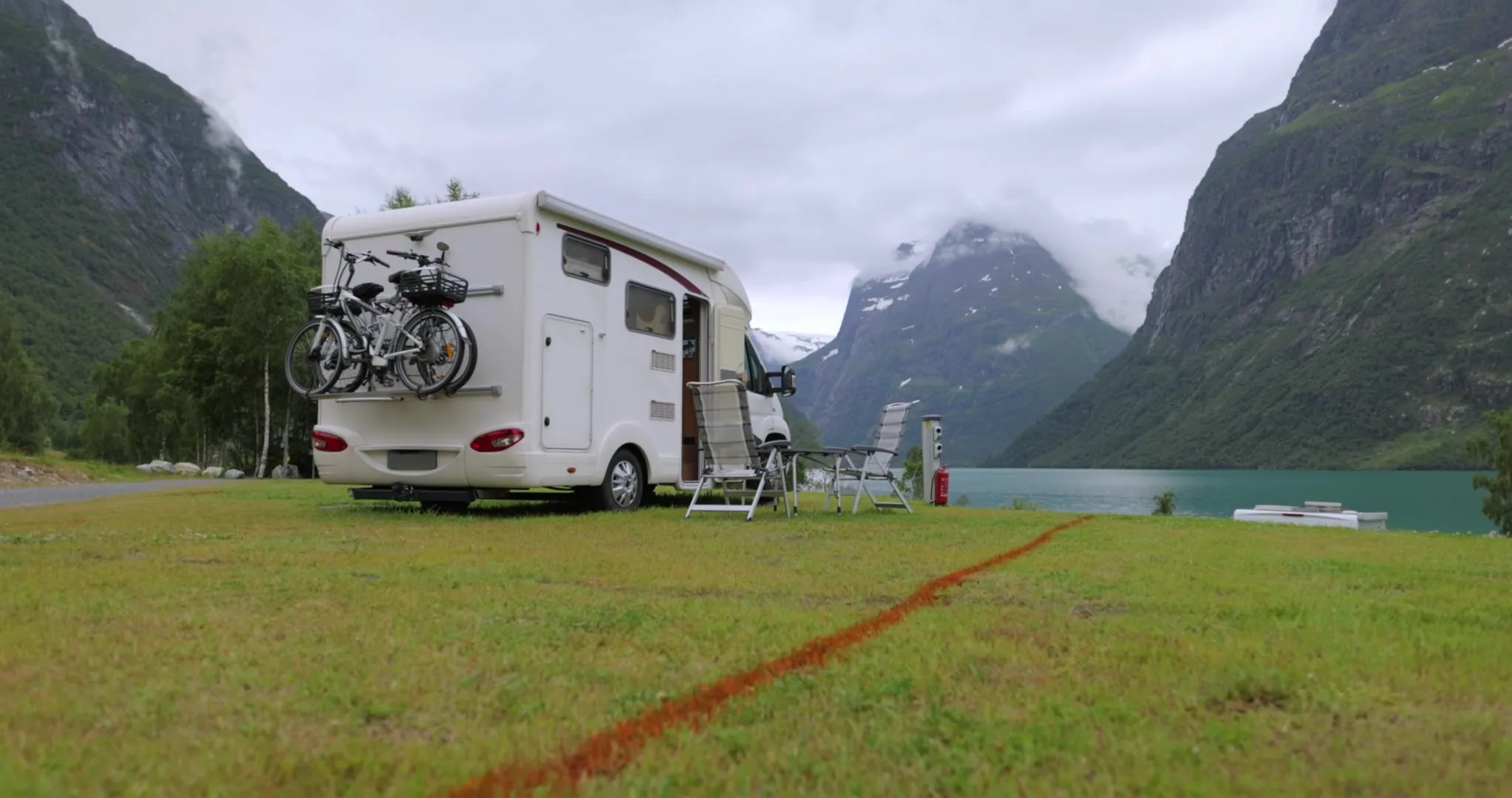
The van you choose shapes the whole trip. Read our New Zealand campervan hire guide for the full breakdown. Short version:
- 2-berth high-top (Britz Voyager, Maui Ultima, Apollo Hi-Top): best for couples. Fixed bed, internal toilet and shower, fits in regular car parks.
- 4-berth low-profile (Maui Cascade, Britz Discovery, Jucy Casa Plus): family of four, but the lower bed converts from the dinette each night.
- Budget 2-berth (Jucy, Spaceships, Mighty Highball): cheaper but no internal toilet on most models, which limits freedom camping options.
Reserve 4 to 6 months ahead for December to February travel, and check the self-contained certification sticker (more below). Confirm whether your rate includes unlimited kilometres, second driver, and insurance excess reduction. The advertised daily rate often jumps 30 to 50% once you add the basics.
Pick up in Auckland for this itinerary because most major fleets are based there. Drop in Queenstown for an extra one-way fee (NZD $250 to $450), or backtrack to Christchurch for a cheaper return.
Day 1: Auckland to Orewa
Most people land at Auckland International (AKL) on a long-haul flight and want to get straight into the van. Resist. Clear biosecurity (MPI), sleep at an airport hotel, do the depot pickup mid-morning the next day, drive an hour at most before stopping.
The depot pickup runs 90 minutes to 2 hours: walkthrough, paperwork, GPS, gas, dump valve, water tank, awning. Take notes. Then a supermarket shop (Pak’nSave Mt Albert or Westgate, cheaper than Countdown), stock up for 3 to 4 days.
Head 45 minutes to 1 hour up SH1 to Orewa. Easy first night, beachfront, get used to the van. See our Auckland guide.
Day 2: Orewa to Bay of Islands
Drive: 3 hours, 230km via SH1.
The drive winds through the Brynderwyn Hills, past Whangarei, into Northland’s pohutukawa country. Coffee stop at Kawakawa for the Hundertwasser toilets (public toilets, designed by an Austrian artist, somehow a tourist landmark).
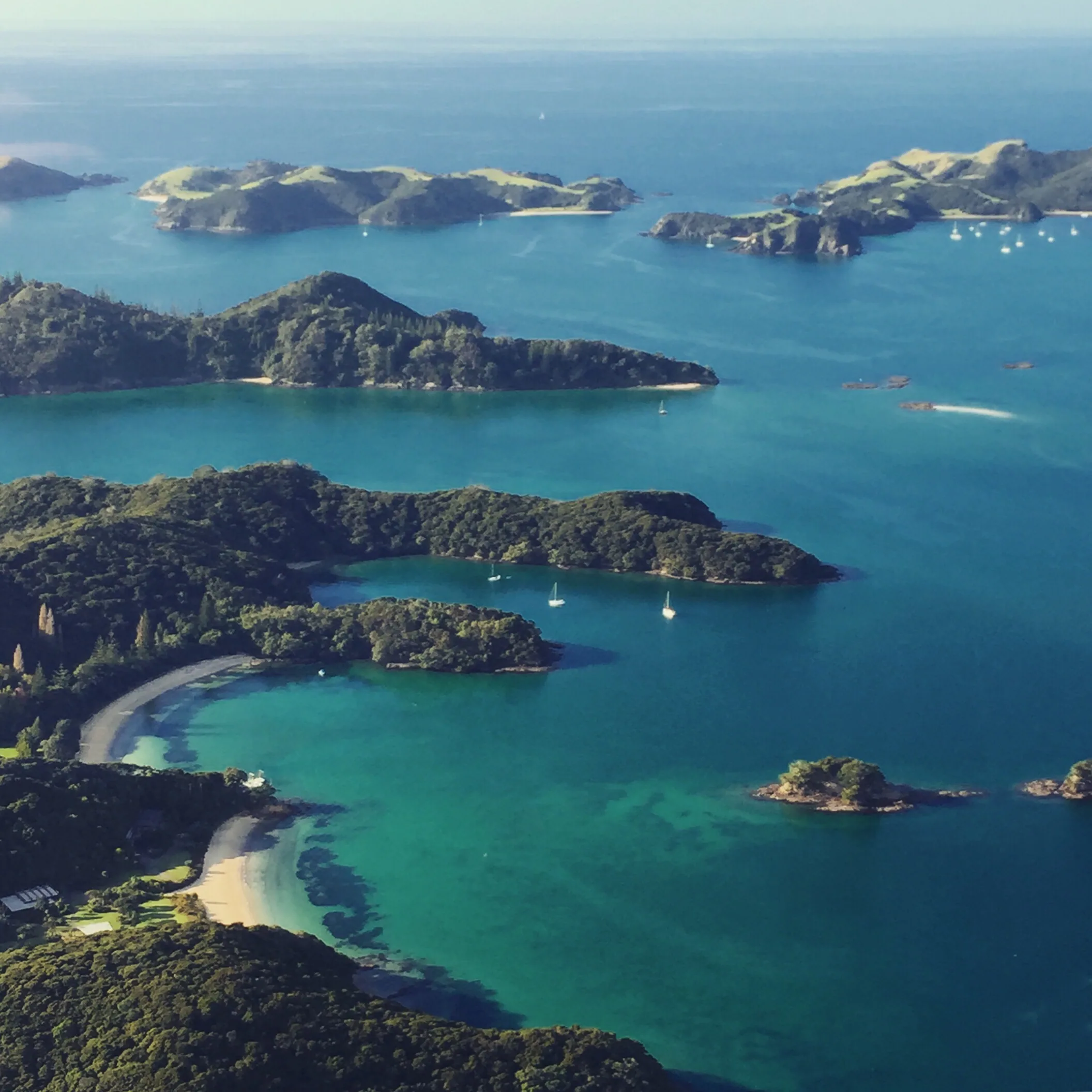
Arrive Paihia mid-afternoon. Park at a Bay of Islands holiday park, grab fish and chips on the waterfront, walk to Waitangi Treaty Grounds if there’s daylight. See our Bay of Islands guide.
Day 3: Bay of Islands
No long drive.
- Hole in the Rock cruise with Fullers or Explore (3 to 4 hours, NZD $130 to $160 per adult, weather-dependent)
- Car ferry across to Russell for lunch, walk up to Flagstaff Hill
- Return to the van, dinner cooked in the holiday park kitchen
Alternative: skip the cruise and do a paddleboard hire at Paihia, or drive 30 minutes to Haruru Falls.
Day 4: Bay of Islands to Rotorua
Drive: 5.5 hours, 470km. Longest day. Start early.
Out of Paihia by 8am. Lunch at Cambridge (Country Lane Cafe) or Tirau (corrugated-iron sheep and dog buildings on the main street). Arrive Rotorua by 4 to 5pm.
The sulphur smell hits before the signs do. It fades within an hour. Set up at the park, then head to Polynesian Spa adult-only pools. NZD $40, open until 11pm. See our Rotorua guide.
Day 5: Rotorua geothermal day
No drive of note.
Pick one geothermal park:
- Te Puia: in town, Pohutu geyser, kiwi house, Maori cultural performance. The all-rounder.
- Wai-O-Tapu: 30min south, Champagne Pool and Lady Knox geyser (erupts on cue at 10:15am).
- Waimangu Volcanic Valley: quietest, walking-focused.
Afternoon: Lake Rotorua walk, the Redwoods Treewalk (best at dusk when lit), or Hell’s Gate mud pools. Optional evening: Tamaki Maori Village hangi dinner.
Day 6: Hobbiton and Waitomo day trip
Drive: 50min to Hobbiton, 1.5hr to Waitomo, 2hr back to Rotorua. Big day but the van stays put.
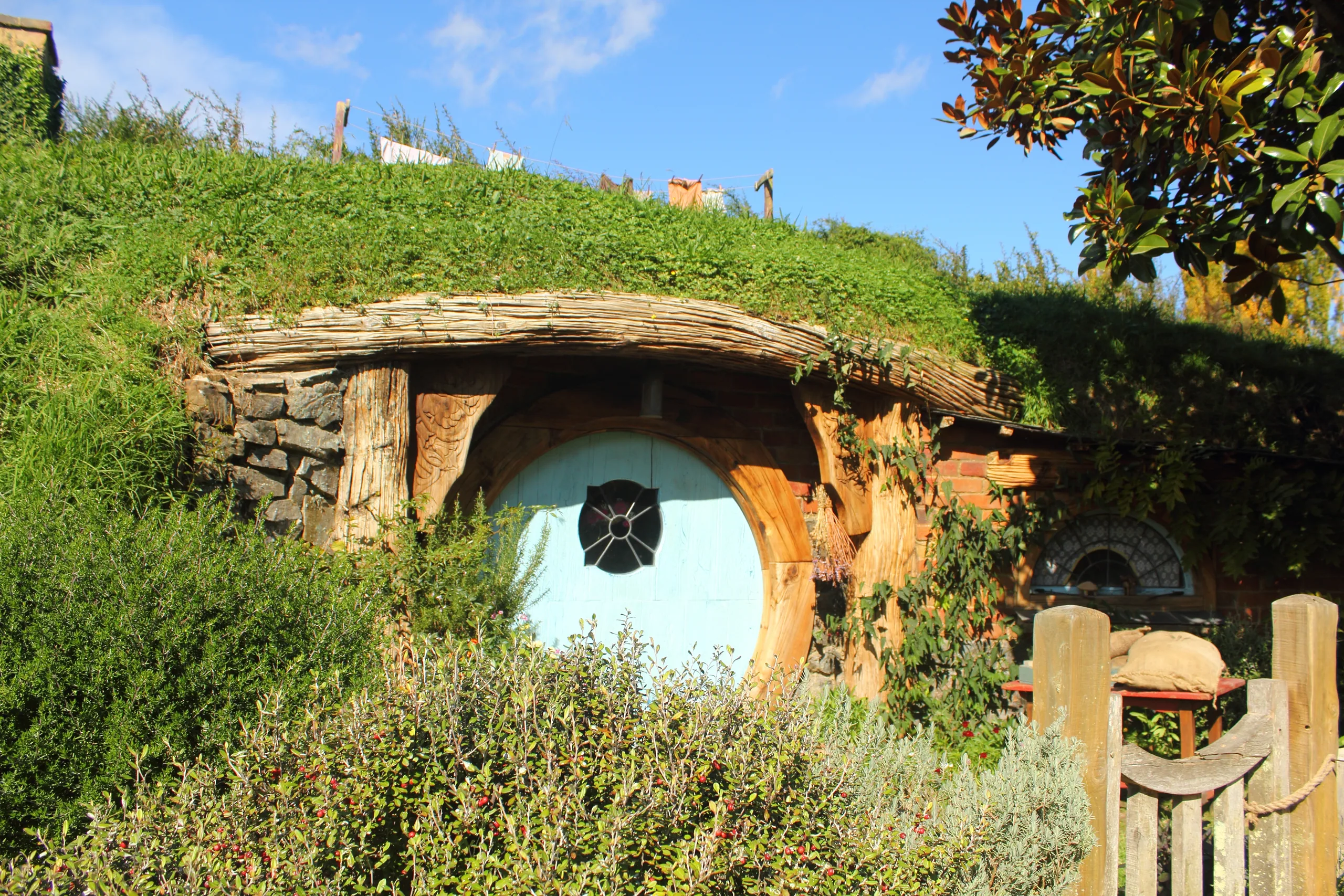
Drive an hour to Hobbiton in Matamata for a 9:30am or 10:30am tour (book ahead, NZD $120 per adult, 2 hours). Lunch at Shire’s Rest cafe.
South to Waitomo Glowworm Caves:
- Glowworm Boat Tour: standard, 45min, NZD $66
- Black-water rafting with The Legendary Black Water Rafting Co: 3 to 5 hours, NZD $170+, abseil and float through caves on inner tubes
Return to Rotorua. Around 200km total.
Day 7: Rotorua to Taupo
Drive: 1 hour, 80km via SH5.
Easiest drive day. Stop at Huka Falls (10 minutes off SH5 before Taupo, free, 30min walk, the volume of water is wild). Arrive Taupo by lunch.
Afternoon options:
- Spa Park hot springs at the river mouth: free, geothermal-meets-lake
- Mine Bay boat trip: 1.5 hours, the only way to see the Maori rock carvings (40m tall, carved in the 1970s)
- Craters of the Moon: smaller geothermal walk, NZD $10
Stay at Great Lake Taupo Holiday Park or Taupo Top 10.
Day 8: Taupo to Wellington
Drive: 5 hours, 380km via SH1 through the Desert Road.
The Desert Road crosses the central plateau between Ruapehu and Tongariro. Most exposed stretch in the North Island, closes in winter snow. Fuel up in Taupo, don’t count on cell signal.
Lunch at Bulls (every shop has a pun: “Const-a-bull”, “Soci-a-bull”), then push to Wellington. Arrive late afternoon.
Wellington complicates camping. Most travellers stay at the Top 10 in Lower Hutt (25min from the CBD) and train into town for dinner. Cuba Street, Ortega Fish Shack or Loretta, drinks at Goldings Free Dive. Last train back. See our Wellington guide.
Day 9: Wellington to Kaikoura (the ferry day)
Ferry: 3.5 hours across Cook Strait. Drive: Picton to Kaikoura 2 hours.
The most logistically sensitive day. Book the ferry months ahead. Check in 90 minutes before sailing for campervans.
- Interislander: bigger boats, government-owned, slightly nicer interior
- Bluebridge: smaller, often cheaper, terminal closer to Wellington CBD
Take a daytime sailing (8:15am or 1:45pm). The transit through Tory Channel and Queen Charlotte Sound is one of the trip’s scenic highlights. Dolphins are common. Don’t sleep through it.
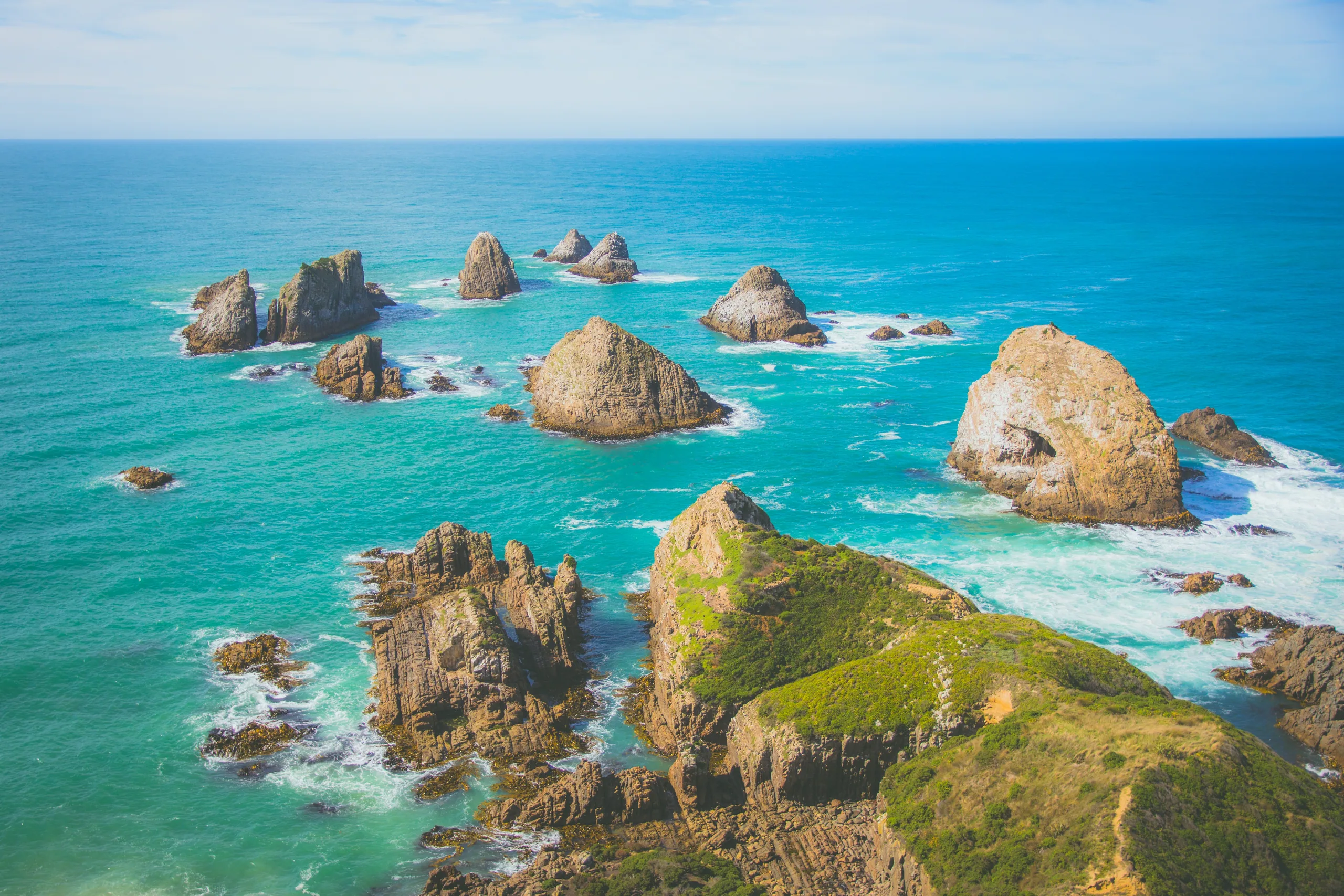
Picton arrival. Don’t linger. Drive south along the Kaikoura Coast Road, rebuilt after the 2016 earthquake. Road hugs the ocean, seal colonies on the rocks, mountains rising straight from the sea. Kaikoura by 5 or 6pm.
Day 10: Kaikoura
No drive day. Sea life.
Morning: Whale Watch Kaikoura, NZ’s most reliable whale watching (sperm whales year-round, often dusky dolphins). 3 hours, NZD $185 per adult, book ahead. Swell cancellations are common in winter; 80% refund. See our Kaikoura whale watching guide.
Alternatives:
- Encounter Kaikoura: dolphin or seal swim, smaller boats
- Albatross encounter: 2.5 hours, NZD $145
- Kaikoura Peninsula walk: free, fur seal colony at Point Kean
Lunch: the Kaikoura Seafood BBQ caravan on the south end of town. Crayfish, green-lipped mussels, paua patties at picnic tables overlooking the rocks. The actual best lunch in NZ.
Day 11: Kaikoura to Lake Tekapo
Drive: 5 hours, 430km via the Christchurch bypass and SH8.
Long but easy. Mostly flat through the Canterbury Plains. Skip Christchurch and push inland after Rangiora. Lunch at Geraldine (Berry Barn).
Arrive Tekapo mid-afternoon. Church of the Good Shepherd photo, Lake Tekapo Springs if you want warm pools. If the sky’s clear, stay up. Tekapo is inside the Aoraki Mackenzie International Dark Sky Reserve. No tour needed from your campsite, just look up. See our Lake Tekapo guide.
Day 12: Tekapo to Mt Cook to Wanaka
Drive: Tekapo to Mt Cook 1hr, Hooker Valley walk 3hr, Mt Cook to Wanaka 3hr.
The trip’s biggest single day. Start by 8am.
Drive along Lake Pukaki (more turquoise than Tekapo, fewer people) into Mt Cook Village. Park at White Horse Hill (DOC campsite, NZD $15 per person, no power but a stunning swap if you want it).
Walk the Hooker Valley Track: 3 hours return, three swing bridges, ends at Hooker Lake with icebergs and the south face of Aoraki. Free, easy, must-do.
Drive Mt Cook to Wanaka via the Lindis Pass, 3 hours (check the NZTA Journey Planner first). Stay at Wanaka Lakeview Holiday Park. See our Mt Cook guide and Wanaka guide.
Day 13: Wanaka to Queenstown
Drive: 1h15 via the Crown Range, or 1h30 via Cromwell.
The Crown Range is the highest sealed road in NZ. In summer it’s fine for a campervan; in winter check conditions and take SH6 via Cromwell if there’s any snow or ice. You’ll crawl up sections in second gear.
Stops: Crown Range lookout, Cardrona Hotel for coffee, Arrowtown for an hour.
Arrive Queenstown for lunch. Park at Queenstown Lakeview Holiday Park (most central, books months ahead) or a Frankton park. Afternoon: Skyline Gondola, Shotover Jet, AJ Hackett bungy, or the lakefront with a Fergburger. See our Queenstown guide.
Day 14: Milford Sound, then drop the van
Drive: Queenstown to Te Anau Downs 2.5hr, plus cruise, plus drive back.
Three options for the last day:
- Day trip to Milford from Queenstown: leave at 7am, cruise around 1 or 2pm, back by 8pm. Long but doable in the van.
- Coach tour: NZD $220 to $280, you don’t drive, cruise included.
- Add a day: extend rental by one night, sleep at Te Anau Top 10, fly out the next morning.
Most do option 1 because the Milford Road is worth driving (check the NZ Avalanche Advisory and NZTA Journey Planner in winter). Stops at Mirror Lakes, Eglinton Valley, the Chasm. See our Milford Sound guide.
Cruise back by evening (typically with RealNZ or Mitre Peak Cruises). Drop the van the next morning. Fly home from ZQN: direct to Sydney, Melbourne, Auckland, Wellington, Christchurch.
Holiday parks: which Top 10 are actually good
The Top 10 chain dominates NZ holiday parks. Reliably clean, proper kitchens, free wifi, ensuite cabins for nights out of the van. The ones on this route that punch above average:
- Bay of Islands Holiday Park: walking distance to Paihia, friendly staff
- Cosy Cottage Top 10 (Rotorua): hot mineral pool on-site, the dealbreaker
- Great Lake Taupo: lake-edge sites, kayak hire on the beach
- Wellington Top 10: not central but the train into town is the best workaround in NZ
- Kaikoura Top 10: walking distance to the Seafood BBQ caravan
- Wanaka Lakeview: lakefront sites are the best in town, book early
- Queenstown Lakeview: the only walk-to-town option
Independent picks: All Seasons (Rotorua), Peketa Beach (south of Kaikoura), Tekapo Motels and Holiday Park (lake views the Top 10 doesn’t have). DOC sites cost NZD $10 to $20 per person, no power. White Horse Hill at Mt Cook is the standout swap if your van is self-contained.
Self-contained certification (the 2023-24 rule change)
The single most important admin item for any campervan trip post-2023.
NZ used to be relaxed about freedom camping. The Self-Contained Motor Vehicles Legislation Act 2023 changed that, fully taking effect in June 2024.
What changed:
- Certification now requires a fixed, plumbed toilet (not a portable Porta-Potti)
- Vans must display a green warrant sticker with a unique certification number, replacing the old blue warrant
- Many councils added stricter bylaws on top: Queenstown Lakes bans most overnight parking in town; Westland is strict around glacier carparks
- Fines run NZD $200 to $1,000
What this means for you:
- Confirm with your rental company that the van has a current green self-contained warrant before you leave the depot. Ask for the certification number.
- Use CamperMate or the NZ Motor Caravan Association app to check legal sites in real time.
- If your van isn’t certified, you must stay in holiday parks or commercial campgrounds every night.
- Don’t park overnight where signs say no overnight parking. Enforcement officers do check.
Most major fleets (Britz, Maui, Apollo, newer Jucy models) certified their entire fleet through 2024. Budget operators with older vans may not have. Check before you book.
What this trip will cost (realistic, campervan-specific)
For two adults sharing a 2-berth mid-range campervan over 14 days, mixing holiday parks with the occasional DOC site:
| Line item | Cost (NZD, total for 2 people, 14 days) |
|---|---|
| Campervan hire (2-berth, 14 days, shoulder season) | $2,800 to $4,200 |
| Diesel + Road User Charges (RUC) | $700 to $900 |
| Cook Strait ferry (van + 2 pax) | $400 to $600 |
| Holiday park sites (powered, ~11 nights) | $660 to $880 |
| DOC + free sites (~2 to 3 nights) | $40 to $90 |
| Food (mostly self-catered, some restaurants) | $700 to $1,000 |
| Activities (Hobbiton, Hole in the Rock, Whale Watch, Milford cruise) | $1,200 to $1,600 |
| Geothermal park entry (Rotorua) | $130 |
| One-way drop-off fee (Auckland to Queenstown) | $250 to $450 |
| Contingency (gas refill, dump fees, parking) | $150 to $250 |
| Total per couple | $7,030 to $10,100 |
| Per person | $3,515 to $5,050 |
Budget travellers using a small sleeper-van (Jucy, Spaceships) and free/DOC sites only can do this trip for NZD $2,200 to $2,800 per person. Premium travellers in a 4-berth Maui Cascade with all activities can spend NZD $6,000+ per person.
The biggest variable is van category and season. December and January rentals are 50 to 80% more expensive than May and October for the same van.
When to do this trip
Best months: late October to early December, and late February to early April. Long days, settled weather, milder pricing.
Avoid: December 26 to January 15. NZ school holidays. Holiday parks book out 4 to 6 months ahead, prices spike 30 to 50%, the Cook Strait ferry vehicle decks sell out, and Hobbiton and Milford Sound tours fill weeks ahead.
Shoulder months (May, September, early October) are fine if you don’t mind shorter days and some closures. Whale Watch Kaikoura runs year-round but cancellations rise in winter swell. Milford Road can close in heavy snow (the operators run shuttles instead).
Winter (June to August) is possible for the North Island portion but tricky for the South. Crown Range needs chains, the Desert Road can close, Mt Cook walks ice up. Most campervan companies discount heavily June to August but you’ll want a diesel heater in the van.
The practical stuff nobody tells you
A few campervan-specific things that catch first-timers out:
- Road User Charges (RUC) apply to all diesel campervans. Most fleets include RUC in the daily rate but check. If excluded, budget NZD $7 to $9 per 100km on top of fuel.
- Freedom camping is allowed only with certification. See above.
- Dump stations are free and at most holiday parks and some service stations. Dump every 2 to 4 days. Wear gloves.
- Gas bottle swaps: 9kg or 4kg LPG bottles swap at any BP, Mobil, or Caltex with a gas exchange cage. NZD $25 to $35 per swap. One bottle lasts most couples 7 to 10 days.
- Power: holiday park powered sites give you mains. Off-grid you’re on the leisure battery (12 to 24 hours of lights, fridge, USB).
- Driving fatigue is the top tourist killer on NZ roads. Swap drivers every 2 hours. Don’t push past 5 hours total drive time. Add 20% to estimated drive times in a campervan.
- Restaurant bookings: in summer book dinner anywhere you actually want to eat. Queenstown and Wanaka especially.
- Travel insurance with adventure cover is essential. See our travel insurance guide.
- Cell signal is patchy outside main hubs. Download offline Google Maps and check our SIM card guide for carrier coverage.
- Weather changes fast. Pack layers — full list in our NZ packing guide. Even in February, alpine areas can drop to 5 degrees overnight.
This is the cleanest 14-day both-islands campervan route we’ve put together. It hits every iconic stop, gives you genuine downtime, and respects how slow a campervan actually moves through a country built on switchback roads. If you finish it wanting more, you’ve done it right. Come back for the West Coast and the Catlins.
Day by day
- Day 1
Auckland: Your honest first stop in New Zealand
- Pick up campervan from Auckland depot (most fleets are based here)
- Run the briefing slowly, ask about RUC, dump valve, gas, water
- Quick supermarket shop at Pak'nSave Mt Albert or Westgate
- Drive 45min to 1hr north to Orewa, settle in early
Stay: Orewa Top 10 Holiday Park or Whangaparaoa
- Day 2
Bay of Islands: an honest visitor's guide
- Orewa to Paihia, 3 hours via SH1
- Coffee stop at Kawakawa, see the Hundertwasser toilets
- Afternoon walk along Paihia waterfront or Waitangi grounds
- Easy evening, cook in the van
Stay: Bay of Islands Holiday Park or Russell Top 10
- Day 3
Bay of Islands: an honest visitor's guide
- Hole in the Rock cruise or Rock the Boat overnight (skip if rough seas)
- Car ferry across to Russell, walk Flagstaff Hill
- Lunch at The Gables or Duke of Marlborough
- Return to van for the night
Stay: Same Bay of Islands park
- Day 4
Rotorua: an honest visitor's guide
- Long drive south, 5.5 hours via SH1 and SH5
- Lunch stop at Cambridge or Tirau
- Arrive Rotorua late afternoon, the sulphur smell hits before the signs do
- Polynesian Spa adult pools to unwind
Stay: Cosy Cottage Top 10 or All Seasons Holiday Park
- Day 5
Rotorua: an honest visitor's guide
- Te Puia for the geysers and Maori cultural performance
- Or Wai-O-Tapu Thermal Wonderland for the Champagne Pool and Lady Knox geyser
- Lake Rotorua waterfront walk
- Optional Tamaki Maori Village evening (hangi dinner)
Stay: Same Rotorua park
- Day 6
Rotorua: an honest visitor's guide
- Day trip west to Hobbiton (Matamata), 50min drive, 2hr tour
- Continue to Waitomo Glowworm Caves, 1.5hr from Matamata
- Back to Rotorua base, 2hr drive
- Long day, but you skip moving the van
Stay: Same Rotorua park
- Day 7
Taupō: an honest visitor's guide
- Short drive Rotorua to Taupo, 1 hour via SH5
- Huka Falls walk, free, 30min
- Lake Taupo lakefront, swim if it's warm
- Sunset at Mine Bay (boat trip to see the Maori rock carvings)
Stay: Great Lake Taupo Holiday Park or Taupo Top 10
- Day 8
Wellington: an honest visitor's guide
- Taupo to Wellington, 5 hours via SH1 through the Desert Road
- Lunch stop at Bulls or Bulls' Bull Shed cafe (it's a thing)
- Arrive Wellington late afternoon
- Walk Cuba Street, dinner along the waterfront
Stay: Wellington Top 10 in Hutt Valley
- Day 9
Kaikoura whale watching: an honest visitor's guide
- Interislander or Bluebridge ferry, 3.5 hours across Cook Strait
- Book this leg months ahead in peak season
- Picton to Kaikoura, 2 hours via SH1 coastal road
- Arrive Kaikoura late afternoon, sea lions on the rocks
Stay: Kaikoura Top 10 or Peketa Beach Holiday Park
- Day 10
Kaikoura whale watching: an honest visitor's guide
- Whale Watch Kaikoura morning trip (book ahead, weather-dependent)
- Or Encounter Kaikoura dolphin or seal swim
- Lunch at the crayfish caravan on the south end of town
- Easy evening, peninsula walk if the weather holds
Stay: Same Kaikoura park
- Day 11
Lake Tekapo: an honest visitor's guide
- Kaikoura to Lake Tekapo, 5 hours via Christchurch bypass
- Lunch in Geraldine
- Arrive Tekapo mid-afternoon, Church of the Good Shepherd
- Stargaze from the campsite if it's a clear night
Stay: Lake Tekapo Motels and Holiday Park
- Day 12
Wanaka: Queenstown's chiller cousin
- Tekapo to Mt Cook, 1 hour via Lake Pukaki
- Hooker Valley Track, 3 hours return
- Drive Mt Cook to Wanaka, 3 hours via the Lindis Pass
- Settle in lakefront, sunset on Roys Peak ridgeline
Stay: Wanaka Lakeview Holiday Park
- Day 13
Queenstown: Honest guide to the adventure capital
- Wanaka to Queenstown via Crown Range, 1h15
- Stop at Crown Range lookout and Cardrona Hotel
- Arrowtown for an hour
- Lakefront afternoon, Skyline gondola or Shotover Jet
Stay: Queenstown Lakeview Holiday Park or Frankton
- Day 14
Te Anau: Your gateway to Fiordland and Milford Sound
- Queenstown to Te Anau, 2 hours, then onward to Milford if time permits
- Milford Sound cruise from Te Anau Downs (book ahead)
- Drive back to drop the campervan at Queenstown depot
- Or extend by a day if you want to keep the van overnight in Te Anau
Stay: Drop off, or Te Anau Top 10 if extending